
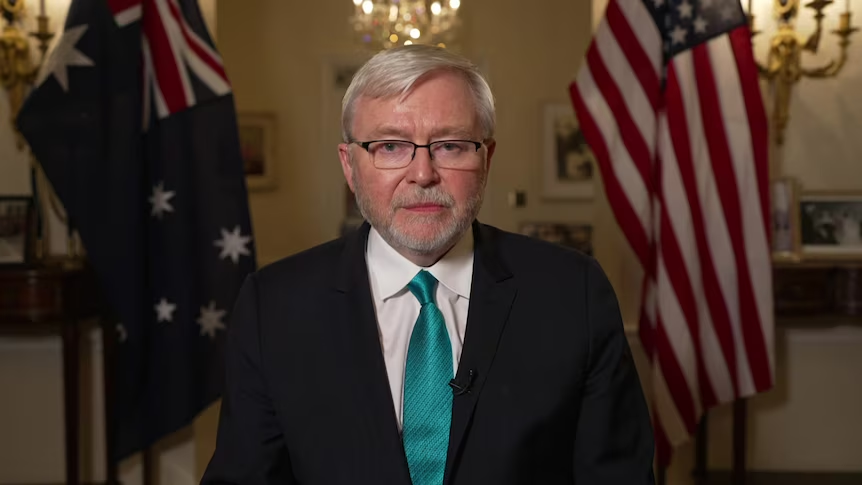
Kevin Rudd Takes on Trump Over Steel and Aluminium Tariffs: What’s at Stake for Australia?

Australia’s ambassador to the United States, Kevin Rudd, has promised to fight hard to secure better trade relations with the U.S. as tensions rise over President Donald Trump’s steel and aluminium tariffs. Despite diplomatic efforts, Australia’s exemption from these tariffs was denied, leaving Prime Minister Anthony Albanese and other Australian leaders frustrated. In this article, we’ll break down the latest developments, why this matters for Australia, and how the government plans to handle the rough road ahead.
Kevin Rudd’s Plan to Tackle Trump’s Tariffs
Kevin Rudd, who is now Australia’s ambassador to the U.S., has made it clear that he’s going all-in to try to improve trade relations with the Trump administration. Speaking recently, Rudd vowed to put his “shoulder to the wheel” in efforts to negotiate a better deal for Australia. However, he also admitted that the road ahead wouldn’t be easy, with Trump’s administration being known for its “hardline” stance on tariffs and trade.
The Tariff Dispute: What’s Happened So Far?
The situation hit a snag when the U.S. refused to grant Australia an exemption from the steel and aluminium tariffs it imposed. This has caused a political uproar back in Australia. Prime Minister Anthony Albanese was quick to call out the decision, describing it as “not the way to treat a friend” and “entirely unjustified.” For Australia, a close ally of the U.S., this tariff exemption was seen as a key part of maintaining strong trade relations.
Albanese’s remarks reflect the frustration felt by many in Australia, who expected more fair treatment given the longstanding alliance between the two countries. The denial has raised questions about the future of Australian exports to the U.S. and the broader economic impact on both nations.
Why Does This Matter for Australia?
The denial of a tariff exemption is more than just a diplomatic setback. It impacts Australia’s economy, especially the industries tied to steel and aluminium production. These sectors play a vital role in Australia’s economy, and the tariffs make it more expensive for Australian producers to sell their goods in the U.S., one of the world’s largest markets.
1. The Economic Impact of Tariffs
The U.S. tariffs on steel and aluminium have created significant trade barriers. These taxes effectively raise the cost of exporting Australian-made steel and aluminium to the U.S., putting Australian producers at a disadvantage compared to competitors from countries that have secured tariff exemptions. For Australian businesses, this means higher costs and less competitive pricing, which could lead to lost sales and slower economic growth in these key industries.
2. Diplomatic Relations Between the U.S. and Australia
The trade dispute also puts a strain on the relationship between Australia and the U.S., both of whom are strong allies. While trade policies are a common point of tension in international relations, this particular issue feels personal. Australia has been a long-time supporter of the U.S. in various global matters, and many Australians feel that this tariff denial goes against the spirit of their friendship and cooperation.
Political Reactions in Australia
Back home, the tariff issue has sparked a series of strong reactions from both sides of Australian politics. Prime Minister Albanese has taken a firm stand, publicly criticizing the U.S. decision. His frustration is clear, as he believes that Australia deserves better treatment from a country with which it shares such a close relationship.
Opposition Leader Peter Dutton’s Criticism
On the other hand, opposition leader Peter Dutton has weighed in, accusing Albanese and former Prime Minister Kevin Rudd of mishandling the issue. Dutton suggested that the Australian government had “had a shocker” in their approach to the tariff dispute. He also pointed out that many political experts had warned that it would be difficult to sway Trump’s views on tariffs, especially since the U.S. president has long championed protectionist policies.
While Dutton’s remarks may be politically motivated, they underline the challenges facing Albanese as he tries to navigate complex relations with Trump’s administration. It also shows how difficult it can be to handle trade negotiations with a president who is unpredictable and often resistant to traditional diplomatic methods.
Rudd’s Efforts: Will They Pay Off?
As Australia’s ambassador to the U.S., Kevin Rudd now finds himself at the forefront of these diplomatic battles. While he’s committed to doing everything in his power to resolve the issue, Rudd is aware that this won’t be an easy task. The Trump administration is known for its tough stance on trade, and Rudd has acknowledged that the road ahead will be “rough.”
But, Rudd’s deep understanding of international diplomacy and his experience as a former Australian Prime Minister could give him an edge in navigating these tense negotiations. Whether or not he can sway the Trump administration remains to be seen, but Rudd’s efforts could play a key role in how Australia’s trade relations with the U.S. evolve in the future.
What’s Next for Australia’s Trade with the U.S.?
As the situation develops, there are several potential outcomes that could shape the future of Australia’s trade with the U.S. Here are a few possibilities:
1. Continued Tensions and Negotiations
If the U.S. continues to deny tariff exemptions and pushes ahead with its protectionist policies, the trade tension between the two countries may continue to rise. Australia could face a difficult decision on whether to retaliate or try to find alternative solutions to improve trade relations. With Kevin Rudd leading diplomatic efforts, there may still be hope for finding common ground through direct negotiations.
2. Potential for a Change in U.S. Trade Policy
Though the Trump administration has been adamant about its tariffs, trade policies can evolve over time. The political landscape in the U.S. may shift, particularly as the next presidential election approaches. If a new administration comes to power, Australia may have a better chance at securing an exemption or negotiating more favorable terms for its steel and aluminium exports.
3. Diversifying Trade Partners
While Australia is heavily reliant on its trade relationship with the U.S., the country may look to diversify its trade partners to mitigate the impact of these tariffs. By strengthening relationships with other countries, Australia could reduce its dependence on the U.S. and maintain a more balanced global trade portfolio.
The Road Ahead for Australia and the U.S.
Australia’s battle to secure better trade terms with the U.S. over steel and aluminium tariffs is far from over. With Kevin Rudd working hard to sway the Trump administration, the outcome of these negotiations could significantly impact both countries’ economies and diplomatic relations. While the future remains uncertain, one thing is clear: Australia will continue to fight for a fair deal and maintain its longstanding alliance with the U.S.
As the situation unfolds, all eyes will be on the ongoing talks between the two nations, with trade and diplomacy at the forefront of Australia’s foreign policy priorities.

