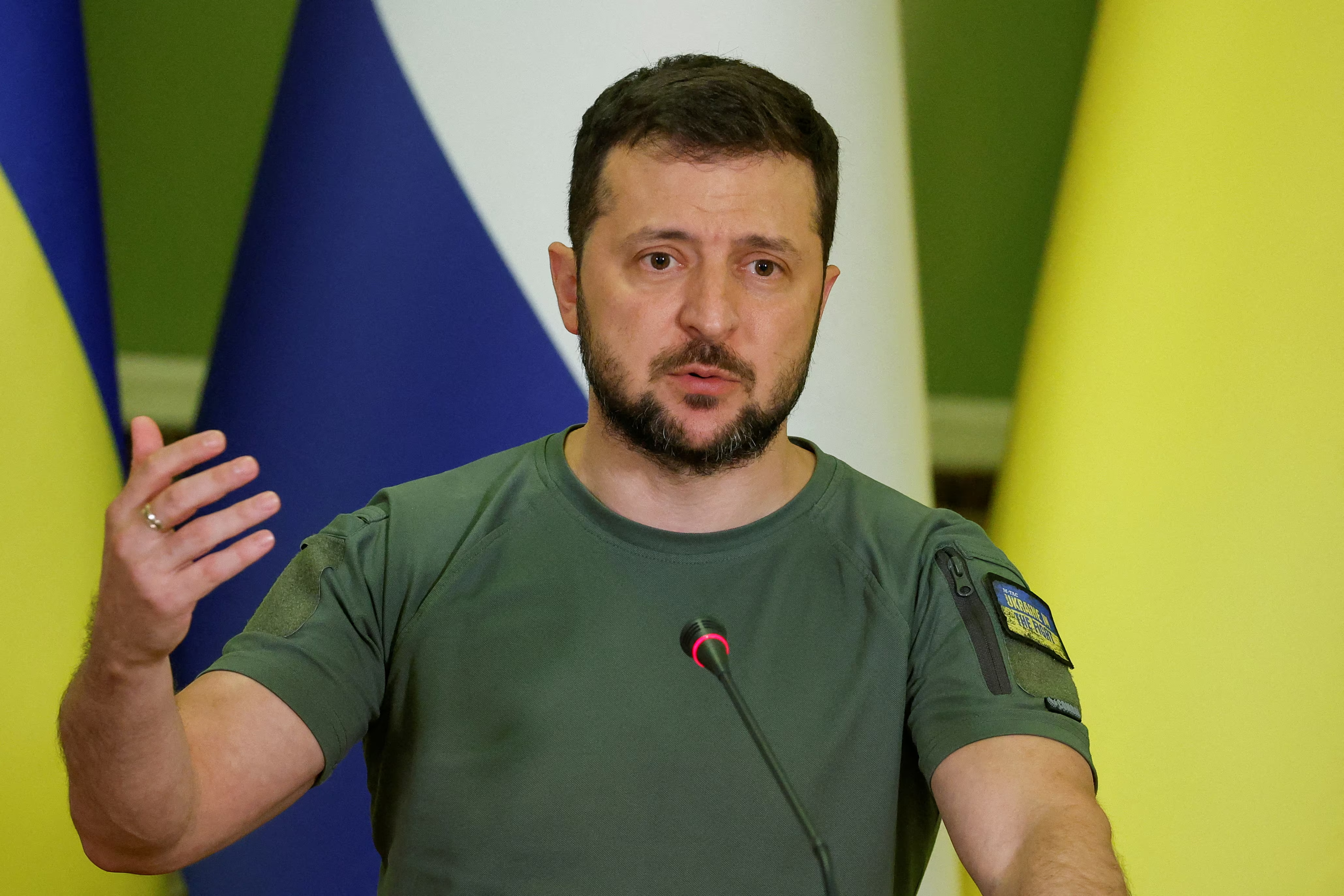

Ukrainian President Volodymyr Zelenskyy has accused Russia of intentionally delaying a ceasefire deal, claiming the lack of a meaningful response from Moscow shows their intention to continue the war in Ukraine. Despite efforts by the United States to negotiate a 30-day ceasefire, Russia’s refusal to engage seriously is leaving the world wondering what comes next in this ongoing conflict.
Zelenskyy Calls Out Russia’s Refusal to Respond to Ceasefire Proposal
Ukraine’s President, Volodymyr Zelenskyy, has made it clear that Russia is not interested in peace, at least not for now. In a statement on social media, Zelenskyy expressed his frustration, stating that the world had not received any meaningful response from Moscow regarding a proposal for a 30-day ceasefire.
“Regrettably, for more than a day already, the world has yet to hear a meaningful response from Russia to the proposals made,” Zelenskyy wrote. He emphasized that Russia’s silence demonstrated their desire to prolong the war rather than seek peace. Ukraine had hoped that pressure from the U.S. would push Russia into agreeing to a ceasefire.
The U.S. Ceasefire Proposal and Ukraine’s Demands
The U.S. had proposed a 30-day ceasefire in an effort to reduce tensions, allowing time for diplomatic talks and a potential pathway to peace. However, the details of this proposal have not been shared publicly, leaving the world speculating about what such an agreement would entail.
In parallel, Ukraine’s officials entered talks at a summit in Saudi Arabia with three key demands:
- A complete end to all aerial attacks, which have caused massive destruction and loss of life.
- Safe transportation of shipping goods, crucial for economic stability in the region.
- The release of all prisoners of war and civilian detainees held by Russia.
Despite these concerns, Russia has yet to engage seriously with the proposal, with Ukrainian officials worried that the delay only benefits Russia’s military plans.
Russia’s Response: A ‘Temporary Respite’ for Ukraine
Russia, on the other hand, seems uninterested in the ceasefire as it stands. Kremlin aide Yuri Ushakov has dismissed the idea of a ceasefire, calling it nothing more than a temporary break for Ukraine’s forces. He suggested that such a pause would only give Ukrainian troops time to regroup, which Russia doesn’t see as productive.
Ushakov made these remarks in a TV interview, where he revealed that he had spoken with U.S. National Security Adviser Mike Waltz the day before. The Russian position remains clear: they are seeking a long-term settlement that takes Russia’s interests into account, rather than a short-term ceasefire that might only give the Ukrainian military a chance to recover.
According to Ushakov, “This is nothing other than a temporary respite for the Ukrainian military, nothing more.” He also highlighted that Russia’s focus remains on defeating Ukraine in the long term, with the primary objective of securing its territorial goals.
The Growing Tensions and Global Impact
The failure to agree on a ceasefire is creating increasing tension not only in Ukraine and Russia but also among the international community. The U.S. has continued to support Ukraine with weapons and intelligence-sharing, but the delayed ceasefire proposal raises questions about whether diplomacy can play a meaningful role in ending the war.
Zelenskyy’s call for global pressure on Russia to end the conflict echoes the frustration of many who are watching the war drag on. The longer the conflict continues, the higher the toll on civilian lives, infrastructure, and the global economy. The war has already caused massive displacement, destruction, and human suffering, with no clear end in sight.
Why the Ceasefire Matters for Ukraine
The proposed ceasefire is seen by many as a crucial step toward peace. For Ukraine, it’s an opportunity to stabilize the situation, rebuild military strength, and provide humanitarian aid to the affected regions. A ceasefire could also create an opening for meaningful dialogue between the two countries, which could eventually lead to a peaceful resolution.
For the international community, a ceasefire would help alleviate some of the global consequences of the war, such as the disruption of food and energy supplies. Ukraine is a major producer of grain, and the conflict has disrupted global food markets, leading to shortages and rising prices in many parts of the world.
What’s Next for Ukraine and Russia?
As the war rages on, the question remains: will Russia ever agree to a ceasefire? While Zelenskyy hopes that international pressure, particularly from the United States, will force Russia to change course, the Kremlin has shown little interest in halting military operations.
Ushakov’s statement underscores Russia’s stance—that a ceasefire is merely a pause, not a solution. Russia is determined to achieve its goals, which include controlling parts of Ukraine and establishing a more favorable geopolitical balance in the region.
The road to peace looks uncertain, and many are left wondering how long this conflict will last. Will the pressure from the U.S. and its allies force Russia to the table? Or will the war continue to escalate, with devastating consequences for both sides?
The failure to reach an agreement on a ceasefire highlights the deep divide between Ukraine and Russia, with both sides unwilling to compromise on their core demands. While Ukraine is pushing for peace and international support, Russia remains focused on its military objectives.
As the war drags on, the world watches, hoping for a breakthrough that could bring an end to the suffering. The next few weeks could prove crucial in determining whether diplomacy or force will ultimately decide the outcome of this devastating conflict.