
Albanese Shrugs Off DiCaprio’s Criticism on Forest Clearing and Other Key Updates from Australia’s March 13 News

In today’s news, Australia’s political landscape had a busy day with key statements from the government and some heated debates. Prime Minister Anthony Albanese faced criticism from actor Leonardo DiCaprio over the government’s decision to allow native forest clearing for bauxite mining. Meanwhile, trade and economic discussions continued, with significant remarks from government ministers. Here’s a rundown of what happened in Australia on March 13.
Albanese Dismisses DiCaprio’s Criticism on Forest Clearing
One of the biggest talking points of the day was the criticism from Hollywood star Leonardo DiCaprio over Australia’s decision to allow the mining company South32 to clear native forests in Western Australia (WA) for bauxite mining. The actor, known for his environmental activism, took to social media to highlight the issue, drawing global attention to what some consider a controversial move by the Australian government.
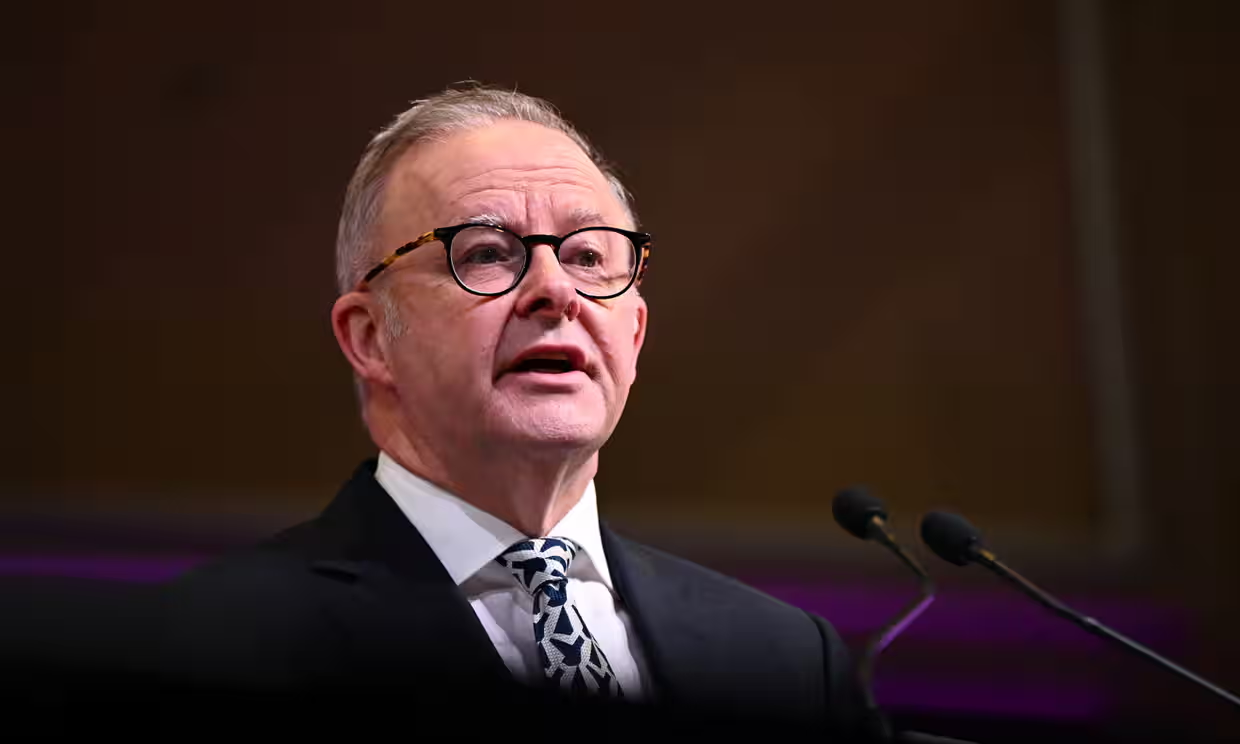
However, Prime Minister Anthony Albanese didn’t seem fazed by DiCaprio’s remarks. He brushed off the criticism, defending the decision and pointing out that the mining activities were in line with the country’s regulations. While DiCaprio’s post sparked outrage among environmentalists, Albanese’s stance shows his commitment to supporting the mining industry, which plays a key role in the Australian economy.
What Is the Controversy About?
The issue stems from the approval of clearing native forests in WA to mine bauxite, a key material used in aluminum production. Environmentalists argue that clearing these forests could have devastating effects on local ecosystems, while supporters of the project claim that it will generate jobs and contribute to economic growth. It’s a classic clash between environmental concerns and economic development.
Trade Minister Blasts U.S. Tariffs on Aluminium and Steel
In a separate story, Australia’s Trade Minister Don Farrell criticized the U.S. for imposing tariffs on aluminium and steel imports, which include products from Australia. Farrell described the move as self-destructive, claiming that it harms the U.S. economy by driving up costs and disrupting trade relationships.
Impact on Australia
The U.S. tariffs have created tension between the two nations, especially since Australia has long been a key ally and trading partner to the U.S. Farrell’s comments highlight the ongoing trade frustrations, with Australia hoping for a more favorable trade relationship.
In response to this issue, Prime Minister Albanese announced that the upcoming federal budget, due on March 25, will include additional support for an initiative called “Buy Australian.” This campaign aims to encourage consumers and businesses to purchase Australian-made products, helping to strengthen the domestic economy and reduce reliance on imports, especially in light of the tariffs.
Deputy PM Warns Against Retaliation on U.S. Tariffs
The issue of tariffs also sparked reactions from Deputy Prime Minister Richard Marles. He emphasized that retaliatory tariffs on the U.S. would not be in Australia’s best interests. Marles warned that such measures could harm the Australian economy and hurt Australian workers, suggesting that the government would prefer to resolve the issue diplomatically rather than through escalatory economic measures.
This statement reflects the Australian government’s cautious approach to the trade dispute, with an emphasis on finding solutions that avoid further economic strain.
Opposition Leader Peter Dutton Responds to Coalition Discontent
In another political development, opposition leader Peter Dutton responded to reports of growing discontent among Coalition MPs. There have been whispers of unrest within the Coalition, as some MPs express dissatisfaction with current government policies and the handling of various issues. Dutton’s comments show that the opposition is staying active in holding the government accountable, even as it deals with its own internal tensions.
NSW Premier Chris Minns Stands Firm on Hate Speech Laws
On a different front, New South Wales Premier Chris Minns made headlines by standing firm on the state’s controversial hate speech laws. Minns confirmed that he would not repeal these laws, despite revelations that some recent antisemitic attacks in the region were not genuine hate crimes but rather part of a scheme by organized crime figures to manipulate police and influence court cases.
The Premier’s stance is significant because the hate speech laws have been a point of contention in the state, with many arguing that they are too restrictive on free speech. However, Minns’ decision to maintain the laws shows his commitment to combating hate speech, even if it means facing criticism.
The Bigger Picture: What Does This All Mean for Australia?
The events of March 13 highlight some of the most pressing issues facing Australia today: the balance between environmental protection and economic development, the impact of global trade disputes, and internal political dynamics. Here’s a deeper look at how these issues could play out:
1. Environmental vs. Economic Priorities
The debate over native forest clearing for mining is a prime example of the ongoing struggle between economic development and environmental protection. While the mining industry contributes significantly to Australia’s economy, many Australians are increasingly concerned about the long-term environmental impacts of such projects. As climate change and sustainability become more central to global conversations, Australia will likely face more pressure to reconsider its environmental policies.
2. Trade Relationships and Tariffs
The trade tensions with the U.S. are just one example of how global economic issues can impact domestic policies. The Australian government is caught between wanting to protect its economy and avoiding escalating tensions with major trading partners like the U.S. By supporting a “Buy Australian” campaign, the Albanese government hopes to shield the country from the adverse effects of international trade disputes.
3. Hate Speech Laws and Free Speech
The debate over hate speech laws in NSW also highlights the tension between protecting individuals from harm and maintaining freedom of expression. While the state government is committed to combatting hate crimes, the revelations about organized crime complicate the issue, leaving many questioning the effectiveness and fairness of these laws.
The Road Ahead for Australia
March 13, 2025, was a day full of political developments in Australia, ranging from criticism of environmental policies to trade disputes and debates about hate speech laws. The government, led by Prime Minister Albanese, faces a range of challenges in balancing economic growth with environmental protection, managing international trade relations, and addressing internal political friction.
As Australia heads toward the federal budget announcement later this month, the political landscape will likely continue to shift, with these key issues remaining at the forefront of public debate. The coming weeks could bring more twists and turns, particularly in how the government navigates the complex relationship between economic development, international diplomacy, and domestic policy.