
Trump Rejects Australia’s Request for Exemption from Steel and Aluminum Tariffs: What’s Next for Trade?

A Blow to Australia’s Steel and Aluminum Industry
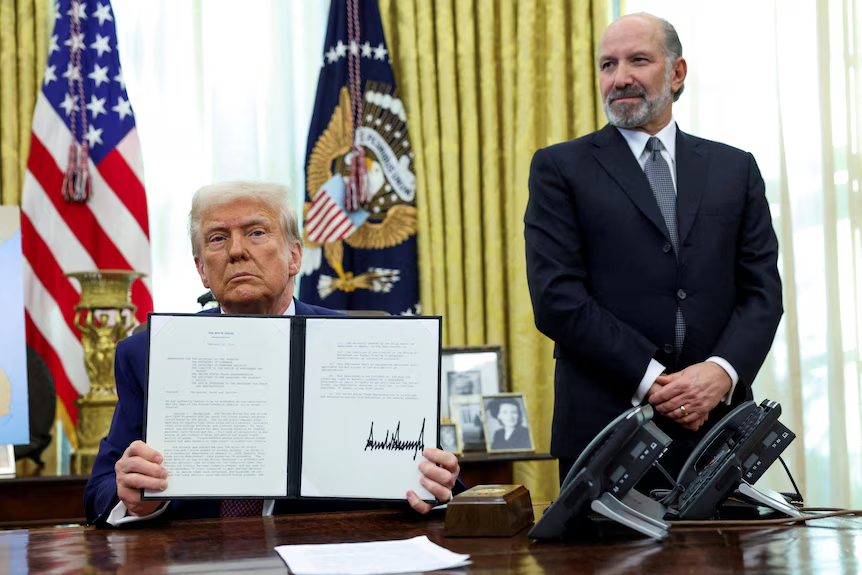
In a move that has sent shockwaves through international trade, President Donald Trump has rejected Australia’s request for an exemption from the U.S. tariffs on steel and aluminum. This decision came just hours before the tariffs were set to go into effect, marking a significant moment in the ongoing trade tensions between the two countries. Despite Australia’s strong lobbying efforts, the White House confirmed that no exemptions would be granted.
With tariffs set to take effect on Wednesday afternoon, Australian officials are now left grappling with the consequences of this trade standoff, while U.S. officials continue to push their “America First” agenda. But what does this mean for Australia and its relationship with the U.S., and what are the next steps for both nations?
Let’s break down what happened, why it matters, and what comes next for Australia and the United States.
Why Did Trump Reject Australia’s Request?
The decision to deny Australia an exemption from the tariffs was confirmed by White House spokeswoman Karoline Leavitt, who explained that President Trump had “considered” the request but ultimately decided against granting an exemption.
According to Leavitt, the primary reason for rejecting the request is rooted in Trump’s “America First” trade policy. She bluntly stated that if Australia wanted to be exempted from the tariffs, it should consider moving its steel manufacturing to the United States. The 25% tariffs, which are set to target steel and aluminum imports, are part of Trump’s broader effort to protect American industries and reduce foreign competition.
Australia’s Response: A Stinging Rejection
Australia’s reaction to the decision has been one of frustration and disappointment. Prime Minister Anthony Albanese called the decision “entirely unjustified,” saying it went against the longstanding friendship between the two nations. He pointed out that Australia and the U.S. have had a strong economic partnership for more than 70 years, and the imposition of tariffs on Australian steel and aluminum seemed to undermine that bond.
Albanese said, “This is against the spirit of our two nations’ enduring friendship” and vowed to continue working to find a better outcome. Australian officials made it clear that they would keep lobbying for a resolution, despite the setback.
While the Australian government has not ruled out retaliatory tariffs, it has pledged not to take immediate action. Instead, it will continue to engage in discussions with the Trump administration in hopes of finding a resolution.
Trump’s Trade Adviser Doubles Down on the Tariffs
The decision to deny Australia’s request is part of a broader policy stance that has been championed by Peter Navarro, Trump’s trade adviser. Navarro was outspoken in his comments about the tariff exemptions, claiming that many countries, including Australia, had “abused” the exemptions granted during Trump’s first term in office.
Navarro stated that the exemption system had ultimately weakened the tariffs, rendering them ineffective. He explained that countries like Australia had taken advantage of the exemptions, undermining the protection they were intended to offer American industries. As a result, Navarro argued that exemptions for any country would be counterproductive to the U.S. economy.
The U.S. Tariffs: What’s the Bigger Picture?
The 25% tariffs on steel and 10% tariffs on aluminum are part of Trump’s “America First” policy, which aims to protect U.S. industries and reduce reliance on foreign imports. The idea behind the tariffs is to boost domestic manufacturing and ensure that American products are not undercut by cheaper foreign steel and aluminum.
These tariffs have been a point of contention since they were first introduced in 2018. While they are designed to protect American jobs in the steel and aluminum sectors, they have also led to tensions with key trade partners, including the European Union, Canada, and Australia.
In addition to the direct economic impact, the tariffs are also part of Trump’s broader trade war with countries like China. The U.S. has imposed a range of tariffs on foreign goods in an effort to address trade imbalances and reduce the trade deficit with other nations.
What Happens Next for Australia and the U.S.?
With the tariffs set to go into effect, Australia faces a significant challenge. The steel and aluminum industries in Australia are key to the country’s export economy, and the imposition of these tariffs will likely increase costs for manufacturers and consumers alike.
Australia is still in the midst of lobbying for a last-minute reprieve, but with the White House making it clear that no exemptions will be granted, the path forward remains uncertain.
The Australian government has also indicated that it will not impose retaliatory tariffs immediately. However, this could change if the situation escalates further, especially if trade relations between the two countries continue to sour.
The Impact on Australia’s Steel and Aluminum Industry
For Australia’s steel and aluminum producers, the tariffs could result in higher costs for exports to the U.S. market. This could lead to a reduction in sales and increased prices for U.S. companies that rely on Australian materials.
Aluminium is used in a wide range of industries, from automobiles to aerospace, and the steel market is similarly vast, with Australian companies playing an important role in supplying raw materials for U.S. infrastructure projects. Higher tariffs could push up the price of finished goods in the U.S., potentially affecting consumers.
Could This Lead to Retaliation?
Although Australia has said it will not immediately impose retaliatory tariffs, the country’s economic retaliation remains a possibility. Australia has previously implemented counter-tariffs in response to U.S. trade policies, and the government has not ruled out doing so again if negotiations fail to produce a favorable outcome.
The U.S.-Australia trade relationship has long been considered a partnership built on shared values and mutual economic interests. However, as global trade tensions continue to rise, both countries will need to carefully consider the long-term effects of this tariff dispute.
What Does This Mean for Global Trade?
The rejection of Australia’s request for an exemption from U.S. tariffs represents a significant chapter in the ongoing trade conflict between the U.S. and its allies. While Trump’s administration maintains its “America First” approach, the move could strain relations with one of its closest partners in the Pacific.
As the tariffs take effect, Australia will continue to fight for a better outcome, but the future of U.S.-Australia trade remains uncertain. With the prospect of retaliatory tariffs looming, both countries will need to engage in careful diplomacy to avoid a broader trade war that could hurt industries and consumers alike.

