
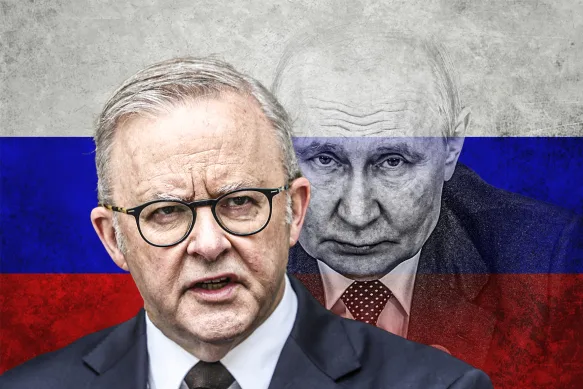
Russia Warns Australia: ‘Grave Consequences’ for Peacekeeping Troops in Ukraine

Tensions Rise as Russia Threatens Australia Over Ukraine Peacekeepers
In an escalating diplomatic standoff, Russia has warned Australia of “grave consequences” if the Australian government proceeds with its plans to send peacekeeping troops to Ukraine. The warning, issued by the Russian embassy in Canberra, came as Prime Minister Anthony Albanese confirmed ongoing talks with British officials about Australia potentially joining a peacekeeping force following a ceasefire in the Russia-Ukraine war.
This latest development has sparked concerns of further strain between the two nations. Let’s take a deeper dive into this heated diplomatic exchange, the potential risks involved, and the implications for Australia’s involvement in the ongoing conflict.
Russia’s Stark Warning to Australia: ‘Grave Consequences’ Ahead
On Sunday, Australia’s Prime Minister, Anthony Albanese, confirmed that he had discussed the possibility of sending peacekeeping forces to Ukraine in the event of a ceasefire. The peacekeepers would help ensure stability and assist in a potential resolution between Russia and Ukraine.
However, Russia quickly responded with a forceful message. The Russian embassy in Canberra called such a move “unacceptable” and warned of “grave consequences” if Australia were to participate in a so-called “coalition of the willing.”
According to the Russian statement, “Once again, Western boots on the ground are unacceptable for Russia, and we will not remain passive observers. To those inclined to construe the above as a threat: it is not; it is a warning.”
Russia’s remarks underline the high-stakes nature of the ongoing conflict in Ukraine, and the global ramifications of any foreign involvement in the war.
Why Russia is Concerned: The Threat of Western Troops in Ukraine
The core of Russia’s response lies in its longstanding opposition to Western intervention in Ukraine. Since the beginning of the war, Moscow has consistently rejected foreign troops, especially those from NATO and other Western countries, on Ukrainian soil.
The term “Western boots on the ground” is a phrase frequently used by Russia to refer to the presence of troops from countries like the United States, the United Kingdom, or Australia in Ukraine. Russia has framed the war as not just a conflict with Ukraine, but a larger struggle against Western influence in the region.
In this case, Russia’s warning seems to be directed not only at Australia, but also at the broader Western alliance, which continues to support Ukraine militarily and diplomatically. The involvement of peacekeeping forces could be viewed by Moscow as an escalation, adding another layer of tension to the already volatile situation.
What’s at Stake for Australia: Navigating a Delicate Balance
Australia’s involvement in the Ukraine conflict is a delicate matter. The country has been a strong supporter of Ukraine, providing humanitarian aid, sanctions against Russia, and military assistance to Kyiv. However, the idea of sending peacekeeping troops is a significant step that could lead to greater international involvement in the conflict.
The warning from Russia puts Prime Minister Albanese in a tough spot. He must weigh the potential benefits of supporting Ukraine’s efforts toward peace and stability against the risks of angering one of the world’s most powerful nations. It’s also important to consider the potential backlash domestically, as sending troops into a foreign conflict carries inherent risks to Australian lives and could have political consequences at home.
Australia’s government has been careful not to escalate the situation further. At this stage, sending troops to Ukraine is still a concept under discussion, and the country is waiting for a ceasefire or peace agreement before any decisions are made. Nevertheless, the mere possibility has triggered strong reactions from Russia, highlighting how sensitive the situation remains.
What Does ‘Grave Consequences’ Really Mean?
Russia’s warning of “grave consequences” is likely not an empty threat, but a clear message that it views any foreign military presence in Ukraine as an unacceptable provocation.
In geopolitical terms, “grave consequences” could refer to several potential actions:
- Increased Military Tensions: Russia may escalate its military operations in Ukraine or the surrounding regions if it perceives further foreign intervention as a direct challenge to its authority.
- Diplomatic Isolation: Russia could retaliate diplomatically by reducing relations with Australia or taking actions that weaken Australia’s position in international forums.
- Economic Sanctions: Russia could impose economic or trade sanctions on Australia, further complicating the bilateral relationship. Given the global economic context, this could have negative effects on Australia’s trade and economy.
- Broader Escalation: While unlikely, there is a risk that Russia could interpret foreign peacekeeping forces as an expansion of Western involvement, leading to heightened military action or greater instability in the region.
It’s clear that Russia’s warning goes beyond just the threat of direct military action. The Kremlin’s messaging seems to suggest that any such involvement would be viewed as a serious provocation that could lead to broader consequences, both in the military and diplomatic arenas.
The Bigger Picture: Global Reactions and the Role of International Peacekeeping
The issue of peacekeeping forces in conflict zones is always contentious, as the presence of foreign troops can complicate an already volatile situation. Historically, peacekeeping missions have been sent to conflict zones where there is a need to maintain order and facilitate negotiations. However, the political and military context of the Russia-Ukraine war is unlike most conflicts, making any peacekeeping mission more complex.
The U.N. and other international organizations typically play a key role in peacekeeping efforts, but Russia’s opposition to any Western presence in Ukraine could limit the scope of such operations. Even in the case of a ceasefire, the presence of international forces may not be welcomed by Moscow unless they are neutral and non-Western.
Australia’s decision to participate in any peacekeeping mission will depend on the situation in Ukraine and the guidance of international allies. But one thing is clear: Russia’s reaction underscores the sensitive nature of any involvement by foreign powers, and the risks that come with it.
Australia at a Crossroads
Australia finds itself at a crossroads, balancing its support for Ukraine with the need to avoid unnecessary escalation with Russia. The prospect of sending peacekeeping troops to Ukraine may be driven by humanitarian intentions, but it comes with serious political and diplomatic consequences.
As tensions between Russia and the West continue to rise, Australia’s involvement in any peacekeeping mission could have far-reaching consequences, not just for its relationship with Russia, but also for its role in the international community. Prime Minister Albanese will have to carefully navigate these treacherous waters, weighing the potential risks and benefits as the situation in Ukraine continues to unfold.