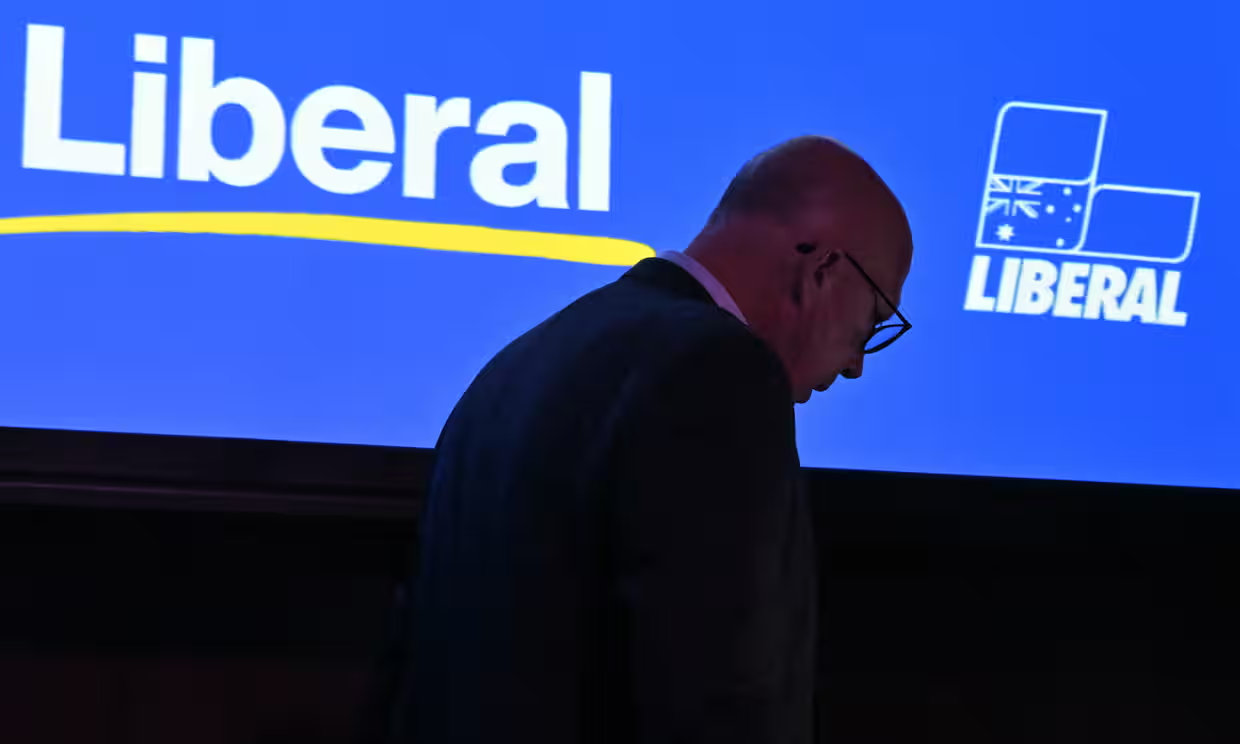

As internal divisions deepen, grassroots members push back against federal intervention — but the future of the party remains far from settled.
The Liberal Party in New South Wales, Australia’s largest and traditionally most influential division, is facing one of the most intense internal struggles in its modern history. Frustration is mounting among rank-and-file members over continued federal intervention in the state branch, which many believe is eroding grassroots democracy and party integrity.
Described by some insiders as “rambling rubbish,” the infighting has pitted long-time local members against the federal executive, revealing deep divisions over control, direction, and political ideology in a post-election era.
The Background: A Party in Transition
The NSW division of the Liberal Party has long operated with a unique balance of local autonomy and federal oversight. But that balance has tilted in recent years, particularly following poor electoral performances, internal factional disputes, and high-profile scandals.
In response to instability, the federal Liberal executive stepped in with increased authority, sidelining local preselection processes and forming committees to approve candidates — a move meant to streamline operations and avoid factional gridlock. But many NSW Liberals say it has done the opposite: eroded internal democracy and alienated the base.
Growing Frustration on the Ground
A growing number of Liberal members — from local branch activists to former MPs — are now demanding that federal control be rolled back. Many argue that the intervention has not only failed to unite the party but has actually deepened divisions, leading to a loss of trust and morale among grassroots supporters.
“There’s a sense that people outside NSW don’t understand our political culture,” one local member told The Guardian Australia. “This top-down approach is not what the Liberal Party is meant to be about.”
The sentiment was echoed at recent meetings, where members accused party leaders of ignoring the views of the rank-and-file and treating state members as a “rubber stamp” for decisions made in Canberra.
A Call for Return to Local Control
At the heart of the pushback is a simple demand: end the federal intervention and restore decision-making to the state executive or a new, locally focused committee.
Some are proposing a “streamlined” model in which a smaller, NSW-based leadership group — composed of respected party elders and neutral figures — would oversee key decisions and candidate selections. The aim would be to restore transparency and rebuild trust, while still avoiding the factional paralysis that triggered the intervention in the first place.
The Factional Divide
The NSW Liberal Party has long been plagued by factionalism, particularly between its moderate and conservative wings. Recent years have seen an intensification of this battle, as ideological lines have hardened and loyalty has become more tribal.
Moderates argue the intervention was necessary to prevent hardline elements from dominating preselections and driving the party too far to the right. Conservatives, in turn, accuse the federal executive of favouritism and of protecting a small elite from legitimate internal challenges.
The result has been open hostility — and in some cases, chaos — in key electorates, where candidates have been parachuted in or imposed without local input.
A Problem at the Ballot Box
The internal fighting isn’t just damaging morale — it’s also hurting the party at the polls. In the last federal election, the Liberal Party lost key seats in NSW, including previously safe areas that swung towards independents or Labor.
Many within the party argue that voters are picking up on the internal dysfunction and turning away. A lack of cohesive messaging, unpopular candidates, and local campaign teams feeling sidelined have all contributed to poor showings.
“If we can’t get our house in order, why should the public trust us to govern?” asked one former Liberal MP.
Voices for Reform — and Resistance
While calls for ending the intervention are growing louder, not everyone agrees. Some senior federal Liberals argue that local factions have proven incapable of managing their own affairs and that continued oversight is necessary until stability is restored.
Supporters of the intervention point to past examples of toxic preselection battles and claim that without oversight, the party risks being dominated by narrow interests rather than broad-based electability.
“There’s a fine line between local democracy and local dysfunction,” said one federal party source.
What Happens Next?
The next few months could prove decisive. Party members are pushing for a review of the intervention at upcoming state council meetings, with some calling for a vote to formally demand its end. Others are lobbying key powerbrokers behind the scenes to support a new model that would empower trusted NSW figures to take the reins.
Whether or not the federal leadership listens is another matter.
Political analysts say the internal unrest could escalate if the federal executive fails to offer a roadmap for handing back control. The party risks not only further division but also losing ground to more disciplined rivals in NSW — such as Labor or independent movements targeting Liberal-held seats.
A Party at a Crossroads
The Liberal Party in NSW is standing at a political and cultural crossroads. What began as a temporary intervention to fix procedural issues has now become a full-blown power struggle for the party’s soul.
On one side are members who believe in grassroots power, local autonomy, and a bottom-up approach. On the other are those who insist that discipline, central strategy, and top-down control are the only way to prevent factional collapse.
Whether the party can strike a balance — or whether it tears itself apart trying — may determine not only its future in NSW, but also its viability as a national political force.