
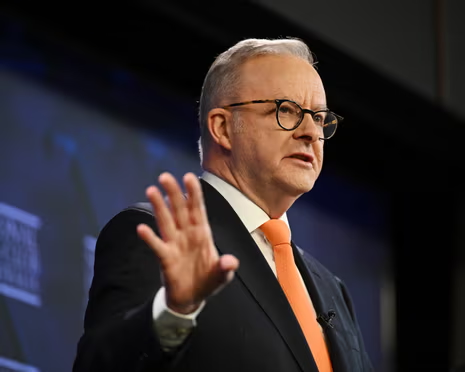
Anthony Albanese Condemns Rubber Bullet Shooting of Australian Journalist Lauren Tomasi in LA as ‘Horrific’

Australian Prime Minister Anthony Albanese has strongly condemned the shooting of Australian journalist Lauren Tomasi by Los Angeles police during protests, calling the incident “horrific.” The shocking footage, which captured Tomasi being struck by a rubber bullet while reporting, has reignited global debates on press freedom, police conduct, and the safety of journalists covering civil unrest.
This article delves into the details of the incident, the Prime Minister’s response, and the broader implications for media freedom and law enforcement accountability worldwide.
The Incident: What Happened to Lauren Tomasi?
Lauren Tomasi, a seasoned journalist working for Nine News Australia, was on assignment covering protests in Los Angeles, a city that has witnessed numerous demonstrations over social and political issues in recent years. While reporting on the events, Tomasi was unexpectedly struck by a rubber bullet fired by police officers attempting to disperse the crowd.
The incident was caught on camera, and the video quickly spread across social media and news platforms, drawing immediate attention and widespread shock. The footage shows Tomasi standing with her camera gear when the projectile hits her, causing visible distress and forcing her to seek medical attention.
Tomasi’s experience reflects a growing global concern about the dangers faced by journalists who cover volatile situations, especially protests where police tactics have increasingly come under scrutiny.
Prime Minister Anthony Albanese’s Response
In the wake of the incident, Prime Minister Anthony Albanese publicly condemned the shooting of an Australian journalist abroad. Albanese emphasized the essential role journalists play in a democratic society and underscored the need for their protection, particularly in situations involving civil unrest.
“This footage is horrific,” Albanese stated, expressing his outrage and concern over the safety of media professionals. He called on authorities to ensure that journalists can perform their duties without fear of violence or intimidation, regardless of the country in which they work.
Albanese also highlighted the importance of upholding press freedom globally, warning that attacks on journalists not only threaten individuals but also undermine democracy and the public’s right to know.
The Context: Press Freedom and Police Conduct in Protests
The incident involving Tomasi is part of a troubling global pattern where journalists face increased risks while reporting from protest sites and conflict zones. Around the world, numerous journalists have been targeted, harassed, or injured by police or other groups, raising alarms among press freedom advocates and human rights organizations.
In the United States, recent years have seen heightened tensions between law enforcement and protesters, often resulting in aggressive crowd control measures. The use of rubber bullets, tear gas, and other less-lethal weapons against protesters and, at times, journalists, has sparked widespread debate.
Critics argue that the use of such force against media workers violates international norms and the principle that journalists should be able to cover news events safely and independently. Police forces, meanwhile, contend that they must maintain order and sometimes face chaotic and dangerous situations.
The Importance of Protecting Journalists
Journalists serve as the eyes and ears of society, providing crucial information that enables informed public discourse. When their safety is compromised, the public suffers a loss of transparency and accountability.
The incident with Lauren Tomasi serves as a stark reminder of the vulnerability of reporters in the field. It underscores the urgent need for clear protections, effective training for law enforcement, and accountability mechanisms to prevent such incidents.
Press freedom groups worldwide have repeatedly called for:
- Clear guidelines ensuring journalists’ safety during protests and emergencies.
- Training for police on how to interact with media personnel.
- Independent investigations when journalists are harmed.
- Legal protections and support for journalists facing intimidation or violence.
Reactions from Media and Advocacy Groups
Following the incident, media organizations and journalist unions in Australia and internationally voiced strong condemnation and demanded action. They urged US authorities to conduct a full investigation and hold those responsible accountable.
Nine News, Tomasi’s employer, expressed deep concern for her safety and reaffirmed its commitment to protecting its journalists. International bodies like the Committee to Protect Journalists (CPJ) and Reporters Without Borders (RSF) also highlighted the incident as part of a disturbing trend of attacks on media professionals worldwide.
What This Means for Australia and Global Media
The shooting of an Australian journalist overseas puts a spotlight on the risks Australian media workers face globally. It raises questions about diplomatic responses and support mechanisms for citizens working in dangerous environments.
Prime Minister Albanese’s public statement indicates a willingness to engage diplomatically and advocate for the safety of Australian journalists abroad, signaling that media freedom remains a priority for his administration.
More broadly, the incident is a wake-up call for governments worldwide to reinforce protections for journalists and ensure that law enforcement agencies respect their critical role.
Moving Forward: Steps to Improve Safety and Accountability
As protests and civil unrest continue globally, the safety of journalists remains paramount. Addressing the challenges requires coordinated efforts from governments, law enforcement, media organizations, and civil society.
Key measures that could help include:
- International agreements emphasizing protection for journalists.
- Enhanced training for police on respecting press freedom.
- Better communication and identification of media personnel during protests.
- Transparent investigations into incidents of police violence against journalists.
- Increased support for journalists’ health and legal defense.
Australia’s government, media bodies, and civil rights organizations are likely to push for such reforms in light of recent events.
The incident involving Lauren Tomasi being shot by a rubber bullet while reporting in Los Angeles has reignited urgent discussions about journalist safety, press freedom, and police accountability. Prime Minister Anthony Albanese’s condemnation underscores the importance of protecting journalists worldwide.
As the global community grapples with balancing law enforcement and civil liberties, ensuring journalists can work without fear is essential for democracy and transparency. The world will be watching how authorities respond and what steps are taken to prevent similar incidents in the future.

