
Albanese Breaks Silence: Australia Backs US Strikes on Iran But Refuses to Confirm Pine Gap Role

Australia Supports US Strikes on Iran—but Is Cautious About War Escalation
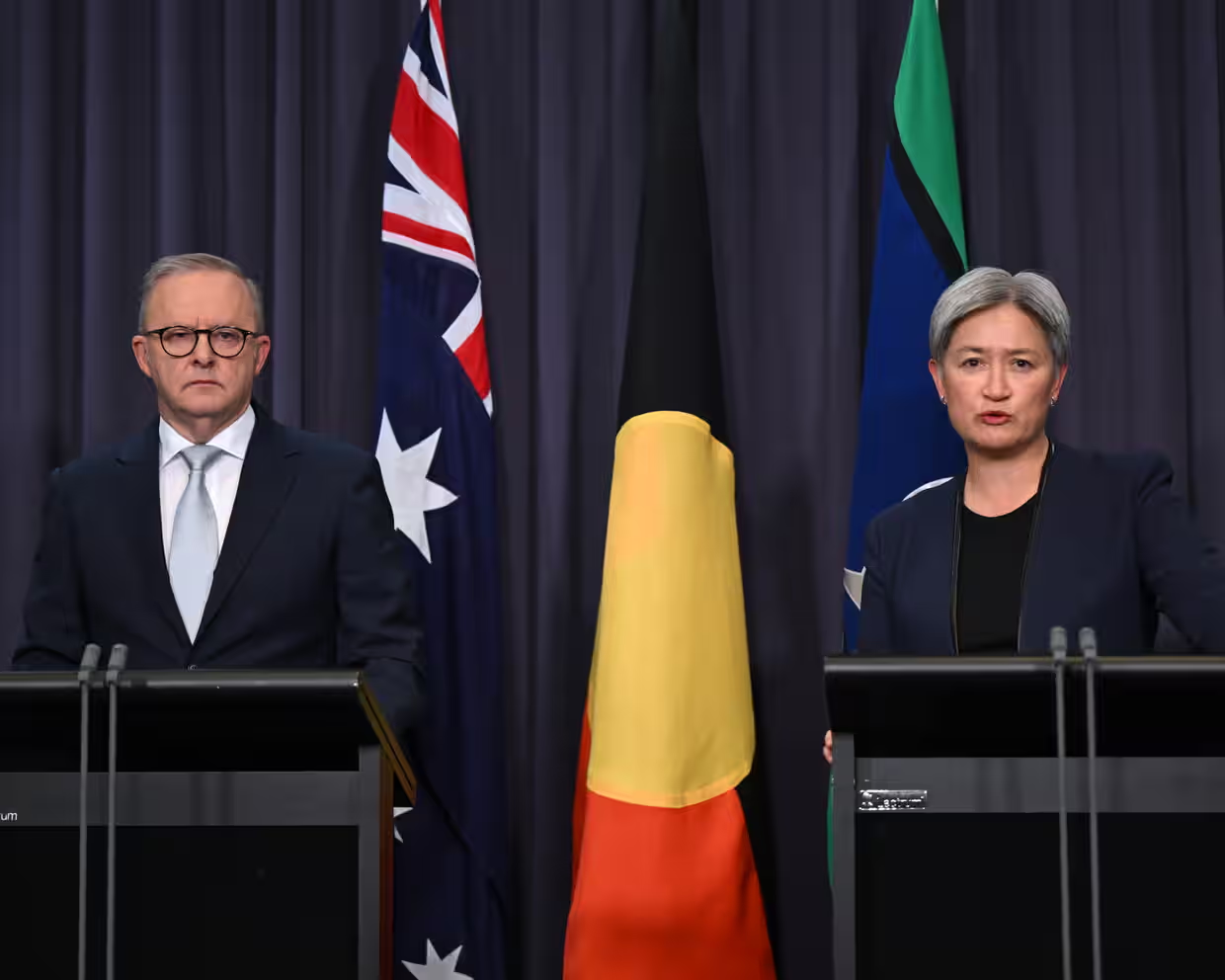
Prime Minister Anthony Albanese has officially backed the United States’ dramatic strikes on Iranian nuclear sites—but he’s also warning against pushing the Middle East closer to full-scale war. At a press conference in Canberra, Albanese said Australia supports efforts to prevent Iran from obtaining nuclear weapons, calling the American attacks part of that broader mission.
However, he refused to confirm whether Australia had any advance notice of the strike, or if any Australian resources were involved. Specifically, he wouldn’t say whether Pine Gap, the secretive communications base in the Northern Territory, played a role in the operation.
Pine Gap in the Spotlight: Silence From Canberra Raises Questions
One of the biggest unanswered questions is whether Pine Gap—a joint US-Australia spy facility in central Australia—was used to support the mission. Foreign Minister Penny Wong also refused to say whether the site played any role in the US bombing of three key Iranian nuclear locations: Fordow, Natanz, and Isfahan.
This silence has fueled speculation and criticism. Pine Gap is known to be central to US intelligence gathering and military targeting operations in the region. Yet, officials are remaining tight-lipped about its involvement in what they’re calling a “unilateral” U.S. mission.
What Albanese Said—and Didn’t Say
Albanese made it clear that no Australian personnel or military equipment were used in the strikes. He emphasized that the operation was entirely led and executed by the United States, specifically under former President Donald Trump’s administration.
Still, he stopped short of condemning the action—instead offering qualified support for the goals behind it.
“The world has long agreed that Iran cannot be allowed to get a nuclear weapon,” said Albanese. “We support action to prevent that. That is what this is.”
He added that Iran has repeatedly failed to meet its international obligations and called on Tehran to return to diplomatic talks to avoid further instability.
US Strikes Hit Three Nuclear Sites in Iran
The U.S. airstrikes reportedly “obliterated” parts of three Iranian nuclear enrichment facilities located in Fordow, Natanz, and Isfahan. These locations are believed to be central to Iran’s efforts to develop atomic weapons.
The strikes came after repeated international warnings and failed negotiations with Iran over its nuclear program. Within 24 hours of the U.S. announcement, the Albanese government publicly supported the move, marking a significant statement in Australia’s foreign policy stance.
Tensions Rise: Will Australia Be Pulled Into Future Conflict?
While Albanese and Wong have said Australia was not involved in the attack, the situation has sparked concerns about whether the country could be asked to contribute to any future military action. So far, no request has been made by the United States for Australia to participate.
That hasn’t stopped some from urging caution. Several political and defense voices are warning that even indirect support for such actions could make Australia a target or pull the country deeper into Middle Eastern conflict.
The government is trying to walk a fine line—showing support for a long-time ally while resisting being drawn into war.
Why This Matters for Australians
Australia’s alignment with the United States in foreign conflicts has always been a sensitive issue. From Iraq to Afghanistan, the country has faced hard questions about the cost of involvement in overseas wars. This latest development—especially with Pine Gap’s possible involvement—reignites those concerns.
Even without direct participation, endorsing the strikes sends a clear diplomatic signal. It suggests Australia continues to stand firmly behind the U.S. in matters of global security, particularly when nuclear threats are involved.
But it also means Australia must be prepared for any political, diplomatic, or even military fallout if tensions escalate.
Final Thoughts: A Delicate Balancing Act
The Albanese government’s response reflects a careful, cautious balancing act. On one hand, they’re backing a key ally and upholding their commitment to nuclear non-proliferation. On the other, they’re trying to avoid being pulled into a wider conflict.
With Pine Gap’s involvement left unanswered, and Iran yet to respond fully to the strikes, the situation remains tense. Australia’s role in future developments—either behind the scenes or publicly—could become a major talking point in the weeks ahead.
The bottom line: Australia supports the principle of stopping nuclear threats, but doesn’t want to fuel the fire of war.