
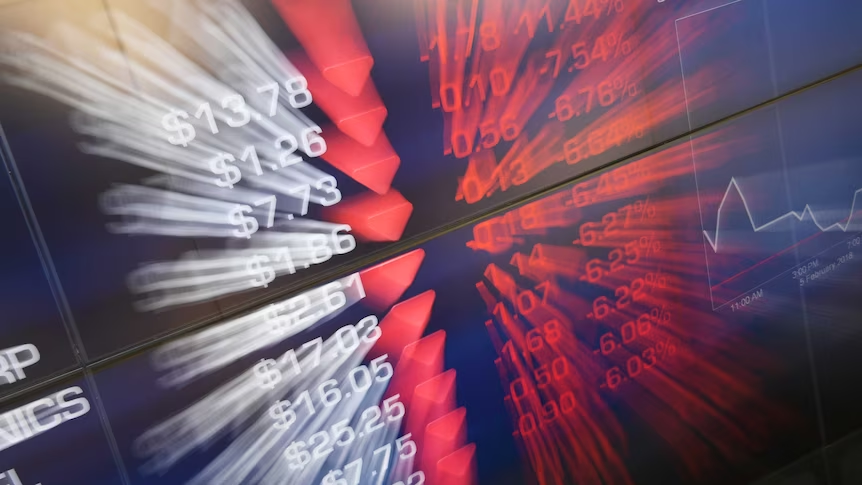
$50 Billion Vanishes from the ASX as Trump’s Tariffs Trigger Market Sell-Off and Aussie Dollar Dips

The Australian stock market has taken a major hit, losing around $50 billion in value after markets around the world reacted to the U.S. imposing tough new tariffs on Canada, Mexico, and China. This dramatic shift has sent shockwaves across global markets, and Australia hasn’t escaped unscathed.
Aussie Stock Market in Freefall: $50 Billion Gone in a Day
On Monday, the Australian Securities Exchange (ASX) suffered a sharp downturn. Both the ASX 200 and All Ordinaries indexes closed 1.8% lower, wiping out a staggering $50 billion in market value. This marks the worst performance for Australian indices since September last year.
At one point, the losses were even steeper, reaching as much as 2%. Investors across the board were feeling the pressure, as concerns over global trade tensions piled up.
The Impact of Trump’s Tariffs
The catalyst for this market collapse? The U.S. decision to slap heavy tariffs on goods from Canada, Mexico, and China. The move sparked fear in global markets, as these countries are crucial trading partners for many economies, including Australia.
As markets around the region took a hit, the Aussie stock market was no exception. The ripple effect from these tariffs made investors nervous, causing widespread sell-offs across nearly all sectors.
Aussie Dollar Hits a Five-Year Low
It wasn’t just stocks that were affected. The Australian dollar also took a heavy blow, dropping below 61 US cents, marking a fresh five-year low. This decline came as the U.S. dollar strengthened against a basket of global currencies, further signaling concern in the international markets.
Broad-Based Losses on the ASX
The losses on the Australian share market were widespread, with all sectors closing in the red. Of the 200 stocks on the ASX 200, a staggering 176 saw a drop in value. The pain was felt across the board, from mining stocks to banking giants.
Mining Stocks Take a Hit
Mining stocks were among the hardest-hit, as investors grew concerned about China’s economic outlook. As the world’s largest consumer of commodities, any slowdown in China can have major implications for Australia’s mining sector.
Major players like BHP and Rio Tinto saw their stock prices fall by 1.8% and 2.1%, respectively, as commodity prices slipped in response to fears over reduced demand from China.
Bank Stocks Weigh Down the Market
Australia’s big banks also felt the pressure. The Commonwealth Bank lost 1.5% of its value, while the National Australia Bank (NAB) dropped 2.3%. These declines added to the overall downward momentum, dragging the broader market lower.
Global Impact: Asia and Beyond
The negative trend wasn’t limited to Australia. Across the region, stock markets took a dive. Japan’s Nikkei index closed 2.6% lower, while New Zealand’s NZ 50 ended the day 1.4% down, though it did recover slightly from its worst levels.
It’s clear that the tariffs are having a global impact, as investors react to the uncertainty created by the U.S.’s trade policies.
Wall Street Braces for a Rough Day
The damage is expected to continue when U.S. markets open. S&P 500 futures were down by about 2% at the close of the Australian trading session, indicating a tough day ahead for Wall Street.
What’s Next for Australia?
As the Australian stock market reacts to the fallout from Trump’s tariffs, the big question on everyone’s mind is: what’s next? Will the market continue to struggle under the weight of global trade tensions, or will things stabilize in the coming weeks?
For now, it looks like trade uncertainty will remain a key factor influencing market movements. Investors are likely to remain cautious as they monitor further developments in the ongoing trade wars, particularly between the U.S. and China.
With the Australian dollar already at a five-year low, and the stock market still feeling the effects of this latest trade shock, it’s clear that the global economy is going through a period of turbulence. Only time will tell how long this market volatility will last.

