
YouTube Pushes Back Against eSafety Commissioner’s Call to Include Platform in Under-16 Social Media Ban

YouTube Challenges eSafety Commissioner’s Push for Under-16 Social Media Ban Inclusion
YouTube has fired back at calls from Australia’s eSafety commissioner, Julie Inman Grant, to include the platform in the upcoming ban restricting social media use for under-16s. The video-sharing giant argues that the commissioner is overlooking the voices of parents, teachers, and the broader community in her campaign.
What’s at Stake?
The Australian government is rolling out new rules that will set a minimum age requirement of 16 years for popular social media apps such as TikTok, Snapchat, and Instagram. However, YouTube has been notably excluded from this list—sparking debate over whether the platform should be subject to the same restrictions.
Julie Inman Grant, the nation’s online safety chief, has urged the government to reconsider this exclusion, warning that allowing younger users unrestricted access to YouTube could pose risks.
YouTube’s Response: Defending Its Position
In a strong rebuttal, YouTube’s public policy and government relations manager, Rachel Lord, accused the eSafety commissioner of giving “inconsistent and contradictory advice.” She pointed out that Inman Grant had previously warned that such a ban “may limit young people’s access to critical support,” implying that including YouTube might do more harm than good.
Lord argued that eSafety’s stance ignores the views of Australian families, educators, and the wider community, as well as the government’s initial draft decision to exclude YouTube.
The Commissioner’s Perspective
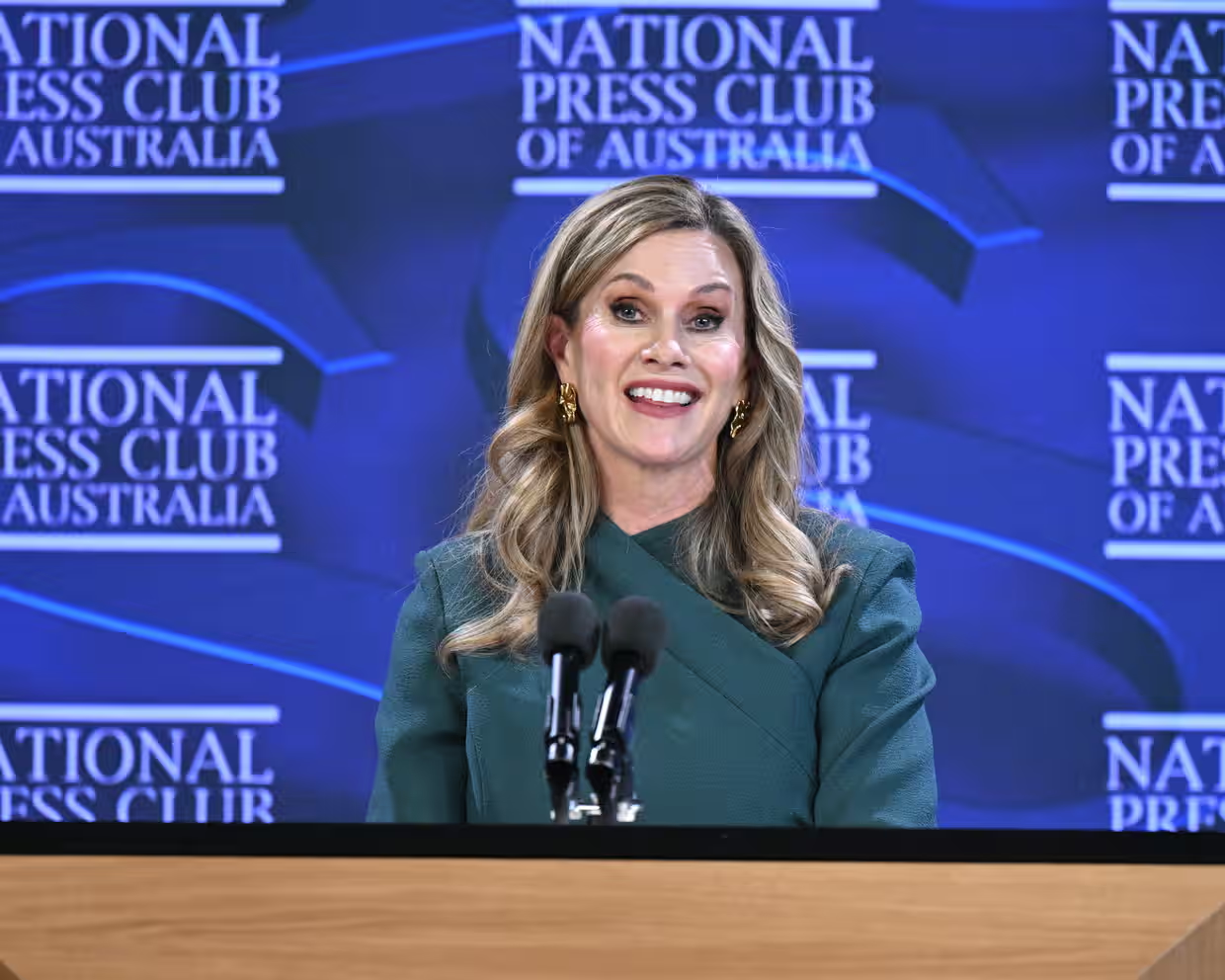
Julie Inman Grant detailed her concerns during a recent speech at the National Press Club. She highlighted the unique risks associated with video-sharing platforms, including exposure to inappropriate content and the challenges of content moderation.
Inman Grant advocates for consistent rules across all major platforms to better protect young users from harmful material and to create a safer online environment.
Parents, Teachers, and Community Voices
YouTube emphasizes that many parents and teachers value the platform as a resource for education and entertainment, and they want to maintain access for younger users. The platform argues that its policies and safety features are better suited to protect children without resorting to outright bans.
The debate highlights the complex balance between protecting young people online and ensuring they have access to valuable digital content and support networks.
What’s Next?
As the government finalizes the social media age restrictions, this clash between YouTube and the eSafety commissioner underscores the challenges in regulating digital platforms. Policymakers must weigh the risks against the benefits and consider input from families, educators, and industry players.
The decision will set an important precedent for how online safety is managed in Australia and potentially influence other countries facing similar challenges.