
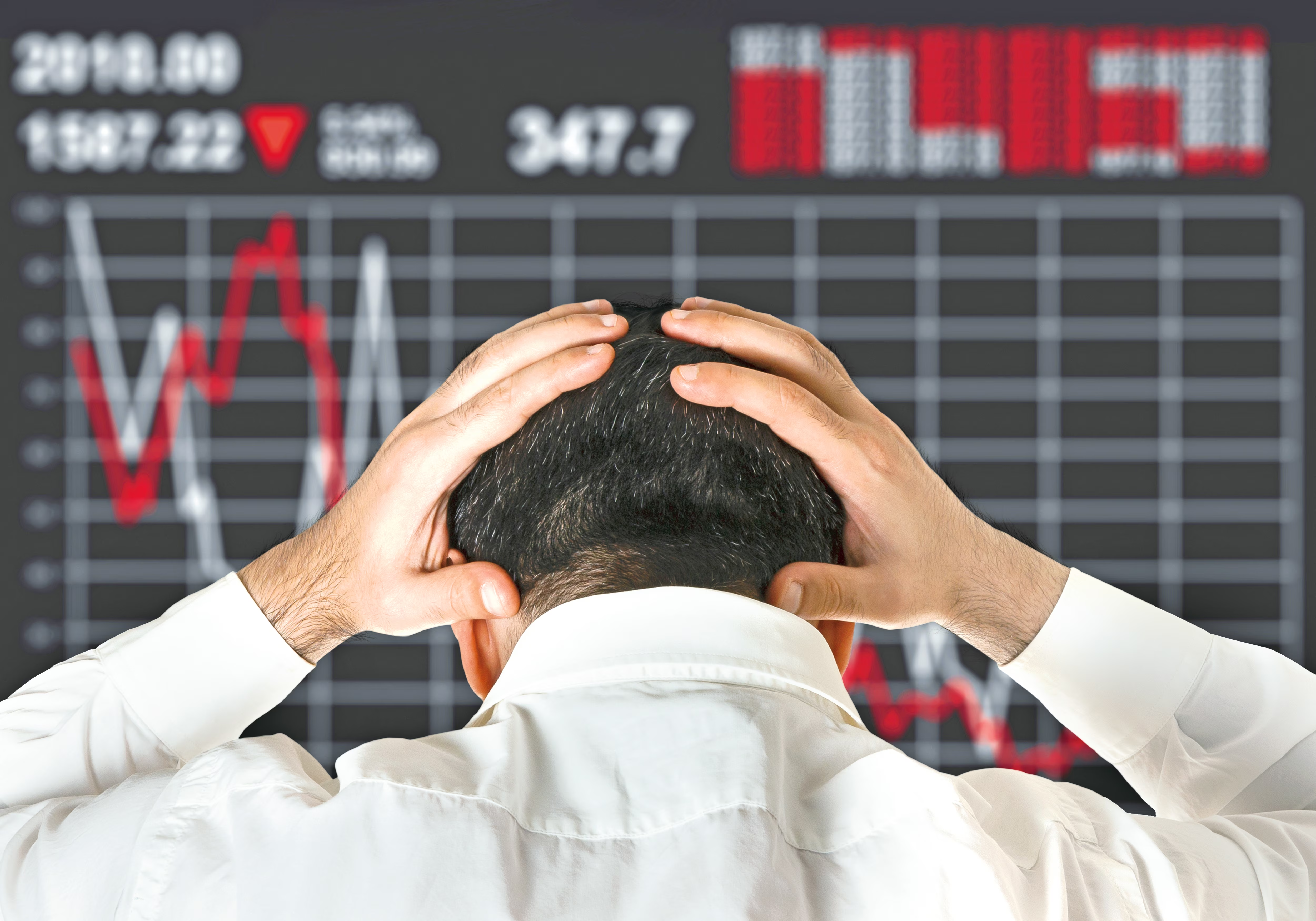

On April 23, 2013, the US financial markets experienced a sudden and dramatic loss of $140 billion (approximately $218 billion) in just a matter of minutes, triggered by a major news event that never actually happened.
The source of the panic was a tweet from the official account of the Associated Press (AP), which falsely reported that there had been an explosion at the White House and that President Barack Obama had been injured. The tweet, which was later revealed to be the result of a hack, immediately sent shockwaves through the financial markets, sparking fears of a national crisis and a potential stock market crash.
The Aftermath of the Hack
Within moments of the tweet’s publication, stocks plummeted, with major indices such as the Dow Jones Industrial Average and S&P 500 taking sharp dives. The brief but intense market reaction highlighted the power and danger of social media, where news can spread rapidly and have real-world financial consequences, even if the information is false.
The AP quickly deleted the tweet, acknowledging the hack, and clarified that the news was entirely fabricated. However, by that point, the damage to market confidence had already been done. The Dow Jones alone lost over 140 points in a matter of minutes, as investors reacted to what they believed was a genuine crisis. Thankfully, once the news was corrected and the market had time to stabilize, it recovered some of the losses.
The Role of Social Media in Modern Markets
This incident raised important questions about the vulnerability of financial markets in the digital age, where information is often disseminated instantly via platforms like Twitter and can influence investor behavior without proper verification. The hack of a major news outlet’s account underlined the need for more stringent security measures on social media platforms and highlighted the ease with which misinformation can spread.
The event also led to discussions about the speed at which markets react to news and the mechanisms in place to prevent such rapid fluctuations based on unverified reports.
Lessons Learned
Since the incident, there have been increased efforts within both financial institutions and news agencies to combat misinformation and improve verification processes for breaking news. The incident also prompted calls for better cybersecurity measures for major social media accounts and the implementation of safeguards to prevent similar situations from occurring in the future.
While the immediate impact of the hack was alarming, the event also served as a cautionary tale for both market participants and news organizations about the volatile intersection of social media, financial markets, and cybersecurity.