

Trump’s Controversial Gaza Takeover Plan: Global Outrage and Reactions
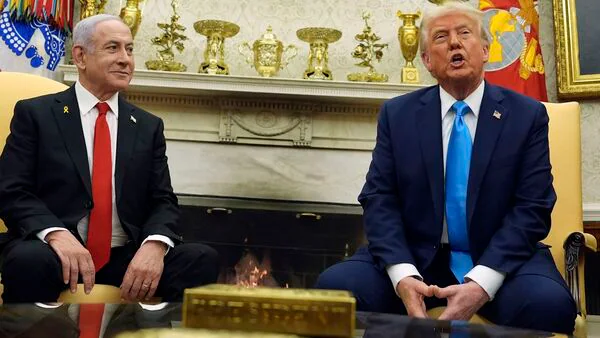
US President Donald Trump has stirred major controversy with a proposal to have the United States “take over” the Gaza Strip and oversee the resettlement of Palestinians. During a White House press conference with Israeli Prime Minister Benjamin Netanyahu, Trump shared his vision of transforming Gaza into a prosperous region, likening it to “the Riviera of the Middle East.” However, the plan has sparked strong criticism from various global leaders, including those in the Middle East, Europe, and other international powers.
Trump’s Vision for Gaza: The U.S. ‘Taking Over’
At the center of Trump’s plan is the idea that the United States would take full control of Gaza, a Palestinian territory, and oversee its reconstruction. Trump emphasized that the US would “own” Gaza and take responsibility for removing unexploded bombs and ensuring the safety of the region. The goal, according to Trump, would be to turn Gaza into a revitalized and modernized region where Palestinians could eventually return.
While Trump’s remarks about creating a paradise-like destination in Gaza might sound appealing, the implications of the plan are raising significant concerns. Critics argue that this approach would involve the forced displacement of Palestinians and undermine their rights to self-determination.
Global Reactions: Widespread Condemnation
1. Middle Eastern Reactions: A Firm Rejection
Hamas, the Islamist militant group that controls Gaza, was quick to denounce Trump’s plan as an attack on Palestinian sovereignty. They criticized the proposal as a violation of international law, emphasizing that Palestinians should have the right to self-governance in their own land. Hamas stated that such a move would further escalate tensions in the region and worsen the humanitarian crisis in Gaza.
The plan also faced backlash from Saudi Arabia, which has traditionally been a strong U.S. ally in the region. The kingdom emphasized its commitment to the two-state solution for Israel and Palestine, a long-standing diplomatic framework for peace. Saudi officials reiterated that a solution to the Israel-Palestine conflict must involve Palestinian autonomy, not external control by any other nation.
2. European Allies and Global Powers: A Unified Rejection
European nations, including major allies of the U.S. like Germany, France, and the United Kingdom, also sharply criticized the proposal. They reaffirmed their commitment to a two-state solution, which envisions an independent Palestinian state existing peacefully alongside Israel. European leaders voiced concerns that Trump’s plan would derail efforts toward achieving a lasting peace agreement and could exacerbate tensions between Israel and Palestine.
Even Russia and China, two of the U.S.’s global rivals, weighed in, warning against unilateral actions that could undermine international diplomacy in the region. Both countries expressed their support for the United Nations-backed two-state solution and urged a peaceful negotiation process to address the Palestinian issue.
3. The United Nations and International Bodies: Concerns Over Human Rights
The United Nations and other international organizations have raised alarms over the human rights violations that could arise from Trump’s proposal. UN Secretary-General António Guterres called for a peaceful resolution based on international law, emphasizing that Palestinian rights must be respected. Human rights groups have warned that forcing Palestinians to leave their homes in Gaza would lead to further displacement and suffering.
The Two-State Solution: What Does It Mean?
Trump’s Gaza proposal comes amid a long-standing debate over the two-state solution, the widely supported international framework that calls for the creation of an independent Palestinian state alongside Israel.
The two-state solution has been central to peace talks for decades, supported by much of the international community, including the European Union, the United Nations, and Arab states. The idea is that both Israel and Palestine would have their own territories, living side by side in peace. However, this solution has been stalled for many years due to ongoing conflicts, political disagreements, and territorial disputes.
Trump’s proposal, which would have the US take full control of Gaza, is seen as a drastic shift from this approach. Instead of pursuing negotiations or supporting Palestinian self-determination, the plan essentially involves the US stepping in as the governing authority in Gaza. This is a point of contention for those who believe that such actions would further alienate Palestinians and undermine the peace process.
What’s at Stake?
The proposal is more than just a political issue—it’s a deeply emotional and humanitarian concern. The Gaza Strip has long been one of the world’s most densely populated and impoverished areas, with millions of Palestinians living under severe restrictions due to Israel’s blockade. Over the years, Gaza has suffered from a humanitarian crisis, with shortages of food, water, and medical supplies, exacerbated by ongoing conflict between Israel and Hamas.
For many Palestinians, the thought of losing their homeland and being relocated to unknown territories is unthinkable. Critics of Trump’s plan argue that it would displace more families, further fragment the Palestinian community, and deepen the human rights violations already taking place in the region.
The Bigger Picture: Is Peace Possible?
Trump’s Gaza takeover proposal comes at a time when peace efforts in the Middle East are at an impasse. The Israeli-Palestinian conflict remains one of the most entrenched and complex geopolitical issues in the world. Efforts to negotiate a peaceful resolution have been stymied by ideological differences, military actions, and political intransigence on both sides.
While Trump’s plan is unlikely to gain traction with the international community, it has nonetheless highlighted the ongoing difficulties of finding a peaceful solution to the Israel-Palestine issue. The two-state solution remains a widely supported framework for peace, but political realities on the ground make its realization increasingly difficult.
Conclusion: A Controversial Proposal
President Trump’s controversial plan to take over Gaza and resettle Palestinians has ignited a firestorm of global criticism. While the idea of rebuilding Gaza into a more prosperous region may seem appealing, the proposal raises serious concerns about Palestinian rights and the future of peace in the Middle East. With leaders across the world rejecting the plan and reaffirming their commitment to a two-state solution, it’s clear that the path to peace in the region remains a long and uncertain one.
Trump’s vision for Gaza may have captured global attention, but the reality of achieving lasting peace will depend on the willingness of all parties to engage in negotiations, respect human rights, and uphold international law. Until then, the fate of Gaza and the broader Israeli-Palestinian conflict remains in the balance.