
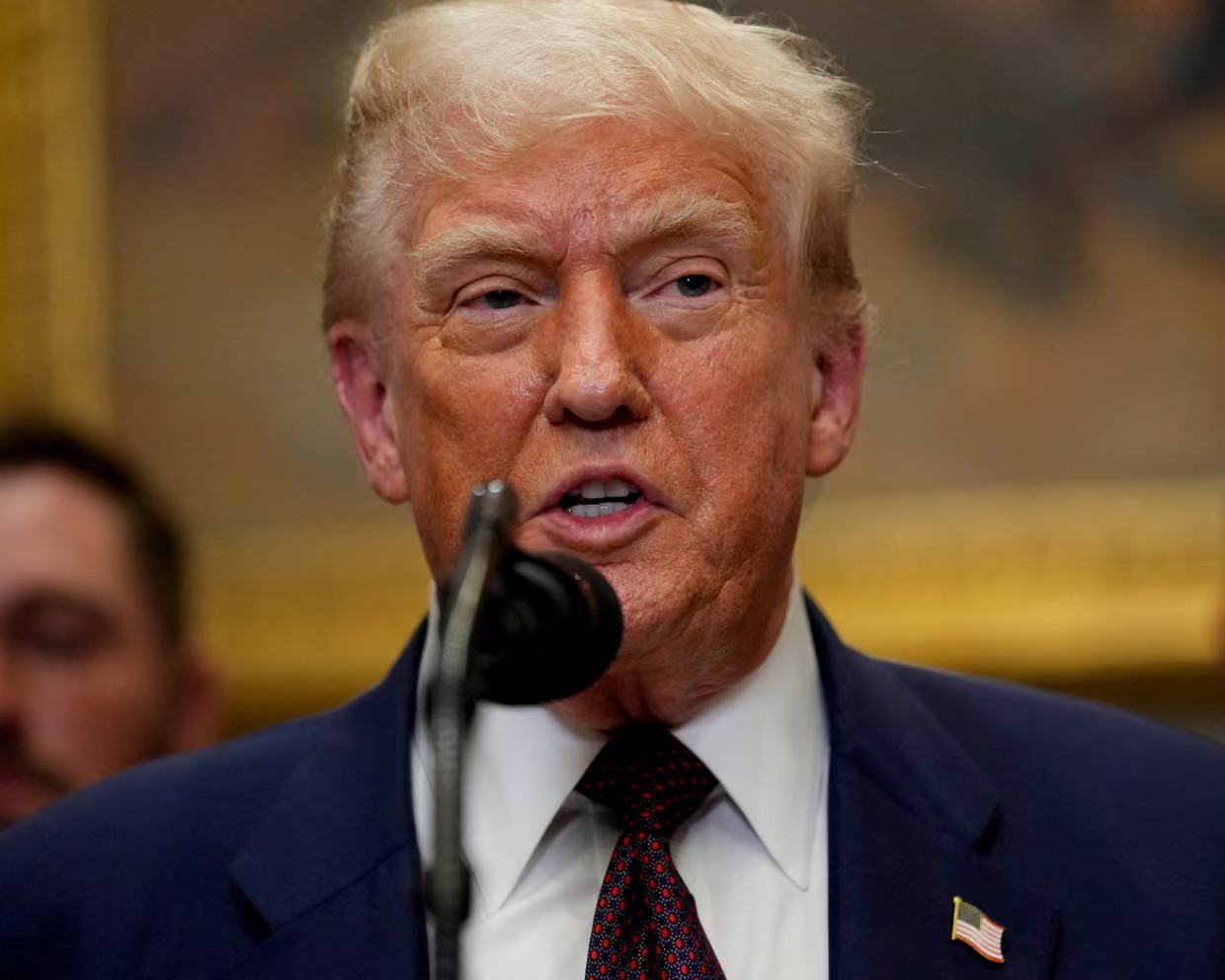

Donald Trump is back in the headlines—this time taking aim at countries like Australia over how much they pay for prescription drugs. He’s accusing foreign nations of “freeloading” off American research and demanding that U.S. pharmaceutical companies stop offering better deals overseas. But Australia? It’s not having any of it.
In a bold move, Trump sent letters to 17 major pharmaceutical companies, giving them 60 days to bring U.S. drug prices down to the lowest rates they offer elsewhere. If they don’t, he’s promising a crackdown using “every tool in our arsenal.” That’s a big threat, especially as drug prices remain one of the most controversial and expensive parts of the U.S. healthcare system.
What really got Trump’s attention is the way countries like Australia handle their drug pricing—using government-backed negotiation to keep prices low. The Australian government subsidizes medicines under the Pharmaceutical Benefits Scheme (PBS), ensuring people pay a fraction of what Americans do. And Trump doesn’t like it.
He says it’s unfair that Americans pay three to four times more for the same medications. In his view, Australia and other countries are benefiting from U.S. innovation without paying their fair share. But experts argue that it’s not about freeloading—it’s about smart negotiating.
The PBS is a uniquely Australian system. Instead of letting drug companies set whatever price they want, the government steps in. Through the PBS, the Australian Department of Health negotiates directly with drugmakers to make sure medications are both affordable and cost-effective. A powerful independent committee, the Pharmaceutical Benefits Advisory Committee (PBAC), also assesses whether a drug is worth the price before it even makes it onto the subsidized list.
Right now, Australians pay a maximum of $31.60 per prescription—or as little as $4.50 if they have a concession card. In contrast, Americans can pay hundreds, even thousands of dollars for the same medicine. And it’s not because the drugs are different. It’s the system that’s different.
Despite Trump’s warnings, Australia’s government is standing its ground. Officials from the Labor government have made it clear: the PBS is not up for negotiation. Prime Minister Anthony Albanese has publicly said Australia won’t be pressured into changing how it prices medications, no matter what Trump or U.S. pharmaceutical companies say.
Treasurer Jim Chalmers and Trade Minister Don Farrell are backing that stance. They’ve rejected any idea that PBS access should be compromised just to smooth over trade tensions. Even if Trump slaps tariffs on Australian goods, the PBS stays.
That doesn’t mean there’s no risk. If the U.S. follows through with steep tariffs—Trump has floated numbers like 200% on pharmaceutical imports or 50% on resources like copper—Australian exporters could take a hit. But so far, there’s no indication Australia is ready to trade affordable medicine for smoother U.S. trade deals.
Meanwhile, U.S. pharmaceutical companies aren’t happy with Australia either. The industry lobby group PhRMA says the PBS system devalues their products. They’ve even called it discriminatory and are lobbying for tariffs to force change. Their main complaint? That Australia’s pricing model compares new drugs to cheaper alternatives to decide what they’re really worth. In their view, that makes it harder to charge top dollar.
Health experts warn that trying to align U.S. prices with global lows may sound like a good idea, but it could backfire. For one, drug companies might raise prices in places like Australia—or pull out of government pricing schemes altogether—to avoid having those lower international prices used against them in U.S. negotiations.
Worse, the global balance in medicine pricing could shift. Countries with universal health systems, like Australia and the UK, may end up paying more just so the U.S. can pay less. That could put pressure on public budgets and reduce access to lifesaving drugs for millions.
There’s also a risk to medical innovation. If profits drop, drugmakers could cut back on research and development—slowing down the discovery of new treatments. That’s something no one wants.
Still, Trump’s 60-day deadline has created a sense of urgency. Pharmaceutical companies are now stuck in the middle, weighing how to respond to pressure from the U.S. without alienating markets like Australia that have strong public health protections.
For Australians, though, the message is clear. The PBS remains one of the cornerstones of the healthcare system. It saves lives, keeps medicines affordable, and offers predictability that few other countries can match.
So while Trump may think Australia is getting a sweet deal, the truth is this: the PBS works because Australia puts public health before profits—and they’re not about to change that for anyone, no matter how loud the shouting gets from Washington.

