
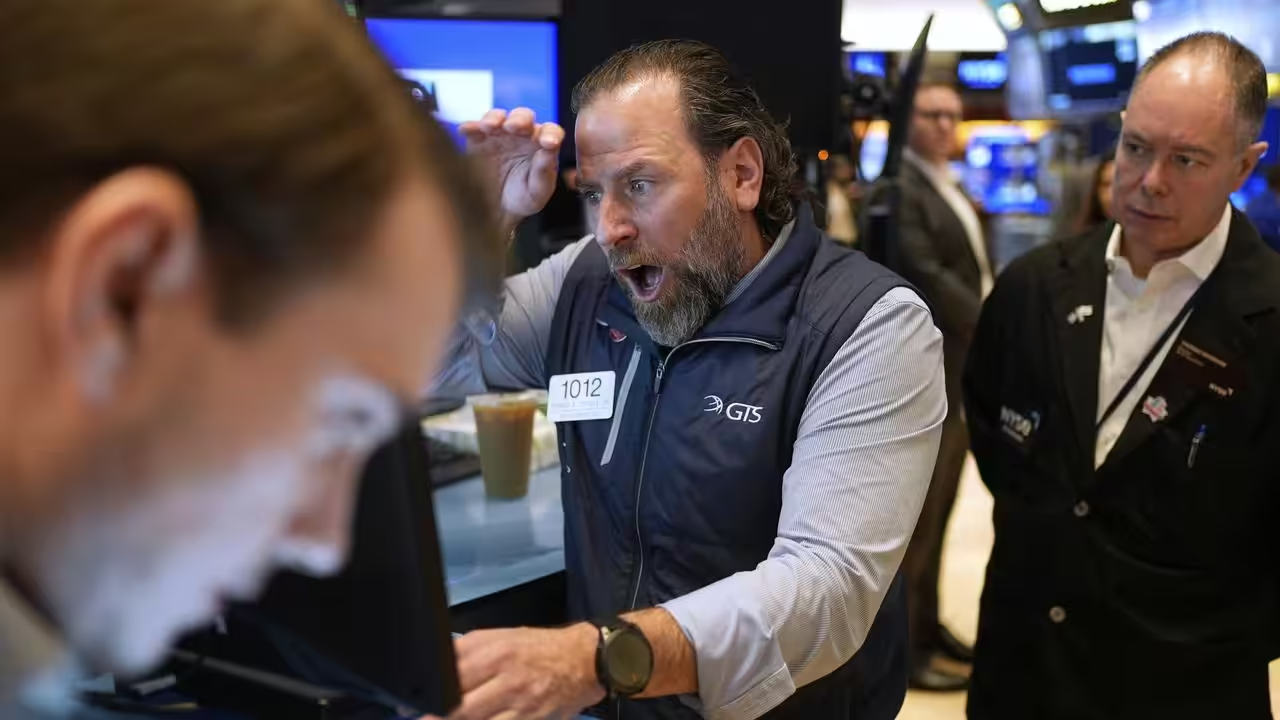

In a stunning turn of events, President Donald Trump’s recent tariff announcements have sent shockwaves through global markets, leading to a massive $10.8 trillion loss on Wall Street. This unprecedented downturn has ignited widespread concerns about a potential recession, leaving both investors and policymakers scrambling for solutions.
The Tariff Trigger
On April 2, 2025, President Trump unveiled a series of aggressive tariffs under the “Liberation Day” policy, aiming to bolster American industries by imposing steep taxes on imports. These measures included a 54% tariff on Chinese goods and a 20% levy on European products. In retaliation, China imposed a 34% tariff on all U.S. imports, escalating tensions and disrupting global trade.
Market Mayhem
The immediate impact on financial markets was catastrophic. Over a span of two days, U.S. stock indices plummeted:
- S&P 500: A 6% drop, erasing trillions in market value.
- Nasdaq: A 5.8% decline, marking one of its steepest falls in recent history.
- Dow Jones: A 5.5% decrease, contributing to the overall market carnage.
Collectively, these declines wiped out approximately $6.6 trillion in market value over just two days.
Global Ripple Effects
The repercussions were not confined to the U.S. International markets felt the tremors, with Australia’s ASX 200 falling 2.4% and the Australian dollar losing nearly 3 cents. Energy stocks, particularly Woodside and Santos, tumbled over 9% each amid declining oil prices.
Escalating Recession Fears
The aggressive tariff strategy has heightened fears of a global recession. JPMorgan raised its recession risk estimate to 60%, citing the potential economic fallout from the trade policies. Economists warn that these tariffs act as a significant tax hike, potentially leading to reduced consumer spending, disrupted supply chains, and diminished business confidence.
Federal Reserve’s Dilemma
In response to mounting economic pressures, the Federal Reserve faces a challenging balancing act. While there’s a growing call for interest rate cuts to stimulate the economy, such measures risk fueling inflation exacerbated by the tariffs. The Fed’s cautious stance reflects the complex interplay between fostering growth and controlling inflation.
Expert Insights
Renowned economist Ray Dalio expressed concerns over the U.S.’s escalating national debt, now exceeding $36.2 trillion. He warned that the government’s need to issue more debt could face diminishing demand, leading to potential economic shocks, including debt restructuring or austerity measures.
Looking Ahead
As markets reel from the effects of these trade policies, the path forward remains uncertain. Diplomatic negotiations are underway to resolve trade tensions, but the outcome is unpredictable. Investors and consumers alike are bracing for potential economic turbulence as the situation develops.
Conclusion
The recent tariff-induced market turmoil serves as a stark reminder of the delicate balance in global trade and economic policy. As the U.S. navigates these choppy waters, the world watches closely, aware that the repercussions extend far beyond Wall Street.