
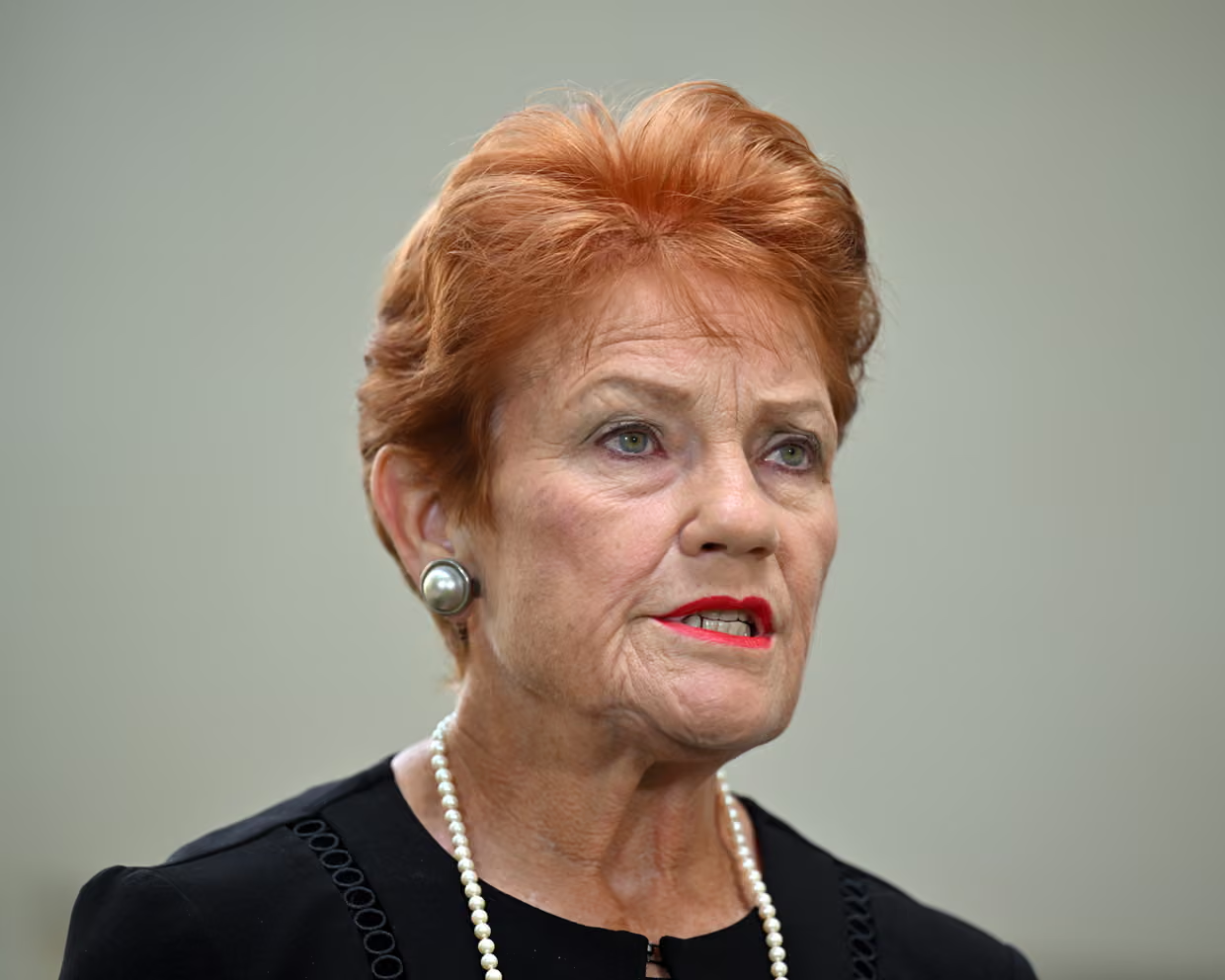

Australia’s Race Discrimination Commissioner has called on Pauline Hanson, leader of the One Nation party, to apologise following controversial comments she made about Muslims. The statements have been widely condemned as offensive and discriminatory.
Widespread Condemnation
Hanson’s remarks were criticised across political and social sectors:
- The NSW Minister for Multiculturalism described the comments as “bigoted and wrong,” highlighting the impact such rhetoric can have on community harmony.
- The Race Discrimination Commissioner labelled the statements as “reprehensible,” emphasizing that they do not align with Australia’s values of inclusion and respect for diversity.
These responses underscore concerns about the potential for inflammatory statements to fuel division and prejudice within society.
Context of the Controversy
Pauline Hanson has a history of making controversial statements on issues related to immigration, religion, and multiculturalism. In this instance, her comments targeted Muslim communities, prompting backlash from government officials, advocacy groups, and members of the public.
The controversy has sparked wider discussions about:
- Freedom of speech versus hate speech
- The responsibilities of public figures in promoting social cohesion
- Measures to protect minority communities from discrimination and vilification
Calls for Accountability
The Race Commissioner and NSW Minister have both emphasised the need for accountability. They urged Hanson to:
- Publicly apologise for her statements
- Engage in dialogue with affected communities
- Demonstrate commitment to respecting Australia’s diverse society
Advocates argue that such steps are necessary to reaffirm Australia’s commitment to multiculturalism and to prevent the normalization of discriminatory rhetoric.
Broader Implications
This incident has reignited debates in Australia over the role of political leaders in shaping public attitudes toward minority groups. Analysts note that divisive language from high-profile figures can:
- Increase social tension
- Undermine multicultural policies
- Influence voter sentiment in ways that may marginalize communities
Experts highlight the importance of consistent messaging from political leaders that promotes inclusivity and understanding.
What Happens Next
Hanson’s response in the coming days will be closely watched by government officials, advocacy groups, and the public. A formal apology could help ease tensions, while failure to address the backlash may lead to further criticism and scrutiny.
The episode serves as a reminder of the delicate balance between free expression and social responsibility, particularly in a diverse nation like Australia.

