
NSW Premier Defends Terrorism Label on Explosives Caravan, Citing Police Briefing

The New South Wales Premier, Chris Minns, is under growing scrutiny over his initial description of an explosives-laden caravan as a terrorism threat. His office now says he was acting on police briefings at the time, even though police publicly said they were pursuing alternative lines of inquiry.
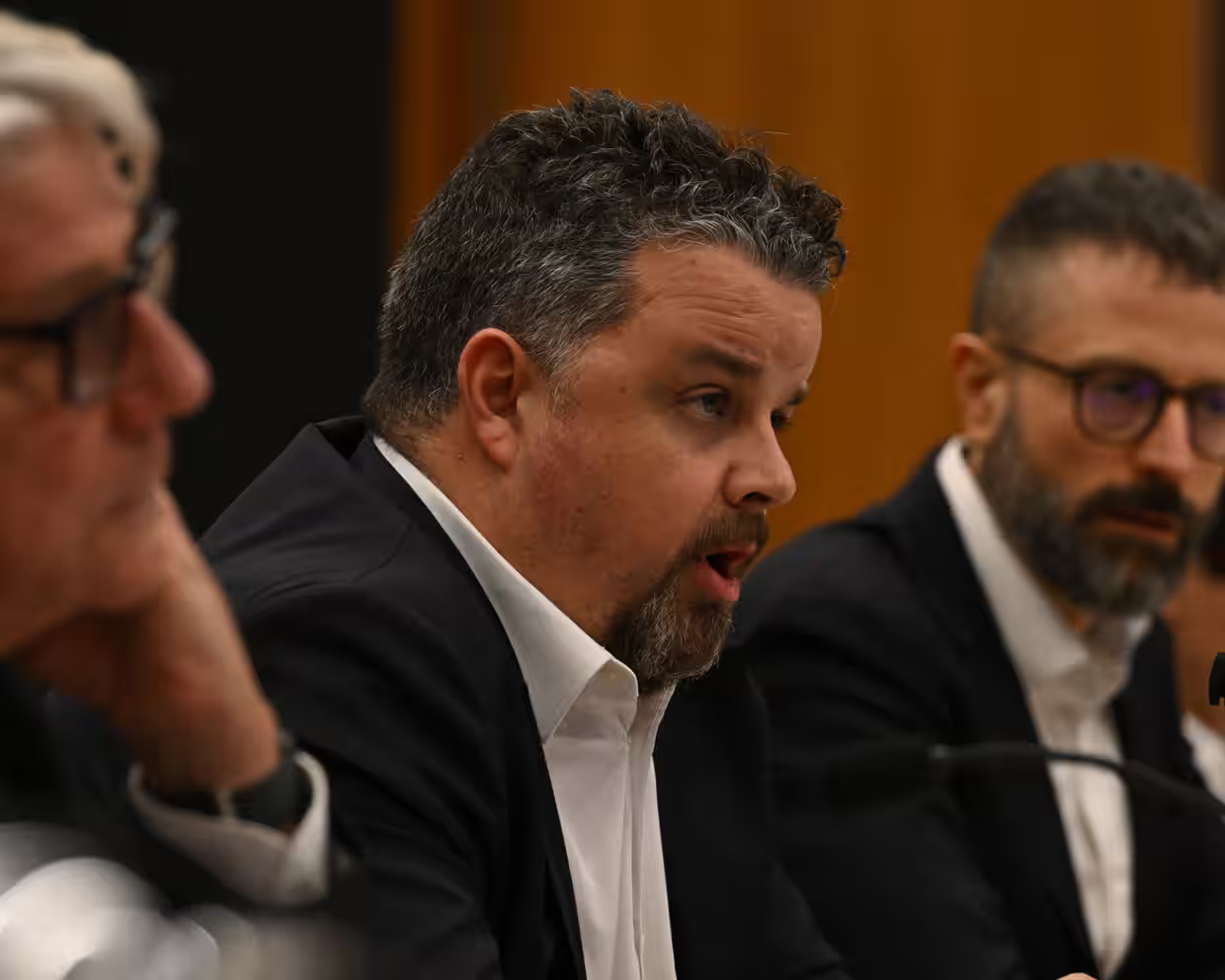
The clarification came during a tense parliamentary inquiry on Friday, where five senior staffers from the offices of both Premier Minns and Police Minister Yasmin Catley were grilled over their roles in handling the controversial incident.
Background: The Dural Caravan Plot
In January, police discovered a caravan filled with explosives at a residential property in Dural, a suburb in northwest Sydney. The find immediately triggered alarm, and Premier Minns described it as having the potential to become a “mass casualty event.”
At the time, he told the media, “There is only one way of calling it out, and that is terrorism.” That statement framed public understanding of the event and helped justify the rapid passage of new hate speech and protest laws in the state parliament.
However, months later, in March, the Australian Federal Police (AFP) made a surprising disclosure: they believed the caravan was part of a criminal hoax, orchestrated by organised crime groups aiming to mislead authorities and manipulate ongoing investigations.
The Political Fallout
This contradiction sparked accusations that the premier may have misled the public and parliament, especially since new legislation was passed partly in response to fears about the incident.
The ongoing inquiry—backed by the Coalition, Greens, and crossbench members of the Legislative Council—is focused on whether the government used the event to push through controversial laws targeting hate speech and protests, particularly in the context of rising antisemitism and tensions surrounding global conflicts.
Premier’s Office: “We Relayed What Police Told Us”
At Friday’s hearing, Premier Minns’ chief of staff defended the premier’s actions, saying he used the word “terrorism” because that was the understanding conveyed by police during briefings to the government.
Staffers admitted that while the public message from police at the time was more cautious, behind closed doors, senior government figures were briefed in more definitive terms.
The officials claimed there was no attempt to deceive parliament and that any ambiguity resulted from the evolving nature of the investigation.
Inquiry Intensifies After No-Shows
The appearance of Minns’ and Catley’s staffers followed a dramatic turn in the inquiry last week, when they failed to attend the first scheduled session. They were later threatened with arrest unless they appeared to give evidence.
Now that they’ve testified, the inquiry will examine who knew what, and when, and whether the caravan incident was deliberately used to bolster support for new protest and hate speech laws.
These laws—criticised by civil liberties advocates—grant police increased powers to restrict protests and impose heavier penalties for hate-motivated speech, amid rising concerns over antisemitism and public disorder linked to overseas conflicts.
Opposition and Crossbench Concerns
Members of the opposition and some crossbench lawmakers say the incident raises serious questions about transparency and political messaging in times of crisis.
They argue that if the government knew the caravan may not have been linked to terrorism, it should not have cited the incident so definitively when justifying new legislation.
“This goes to the heart of public trust,” one MP said. “You can’t rush through sweeping laws based on an event that wasn’t what the government claimed it was.”
Where Things Stand Now
The inquiry continues to probe:
- Whether senior officials exaggerated the nature of the Dural incident.
- What exactly was communicated by police to the government versus the public.
- Whether laws passed in response were necessary or opportunistic.
So far, neither Premier Minns nor Police Minister Catley have testified directly, but they may be called if the inquiry finds their involvement central to decision-making around the event and subsequent legislation.
A Political Storm Still Unfolding
The Dural caravan plot has gone from being described as a possible terrorist attack to a suspected criminal diversion tactic. Now, it’s at the heart of a broader political storm involving accountability, transparency, and the use of emergency powers in NSW.
With the inquiry ongoing and pressure mounting, the Minns government will need to defend both its legislative decisions and its crisis communication strategy, or risk long-term political damage.

