

The Future of Abortion Access in Public Hospitals
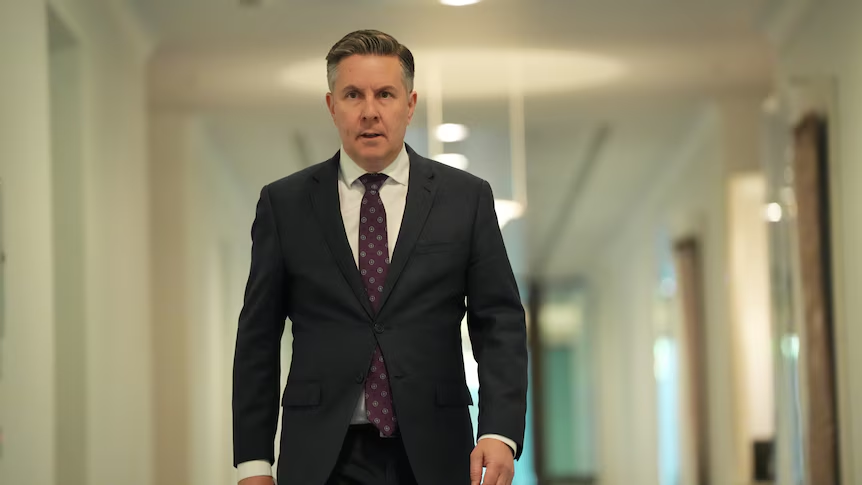
Australia’s Health Minister, Mark Butler, has effectively ruled out any new federal funding to address the issue of abortion access in public hospitals. His stance, which places the responsibility for surgical abortions on the states and territories, has left many questioning whether the federal government is doing enough to address the gaps in abortion access.
Butler’s comments come amid increasing calls for the federal government to do more, with the Greens pushing for greater action to ensure equal access to abortion services across the country. So, what exactly does this mean for Australian women seeking abortion services? And what happens next?
The Government’s Response: What Was Announced?
Recently, the Australian government unveiled a $573 million women’s health package. This funding includes increased Medicare rebates for long-term contraceptives, as well as a new rebate for menopause health assessments. The government has also committed to funding the inclusion of two new oral contraceptive pills on the Pharmaceutical Benefits Scheme (PBS).
However, the government’s response to the parliamentary inquiry into abortion access has disappointed many. Despite calls for all public hospitals in Australia to offer surgical pregnancy terminations, the response revealed that this would not be addressed with additional federal funding.
In other words, surgical abortions in public hospitals will remain the responsibility of the state and territory governments — with no new federal initiatives to change the current situation.
What Does This Mean for Abortion Access in Australia?
The omission of additional federal funding for abortion access highlights an ongoing issue in the country. Currently, access to surgical abortion services varies widely across the states and territories. This patchwork system means that some women have better access to safe and legal abortions than others, depending on where they live.
The Greens have been vocal about this inequality, with Senator Larissa Waters, who led the parliamentary inquiry on reproductive access, calling the lack of new federal policies a “glaring gap.” She expressed concern that women would feel “let down” by the government’s decision.
Why Isn’t the Federal Government Doing More?
According to Health Minister Mark Butler, the decision to leave abortion services in public hospitals as a matter for the states and territories was deliberate. He believes that the federal government has already made a significant commitment to women’s health with the $573 million package, which focuses on contraception and menopause health, rather than abortion services.
While the funding for contraceptives is seen as a positive step forward, many feel it doesn’t go far enough. Butler has also noted that the political climate and fear of a “culture war” may have influenced the federal government’s reluctance to provide additional abortion funding.
Greens Respond: A Call for Federal Leadership
The Greens have strongly criticized the federal government’s decision. Senator Larissa Waters stated that the Labor government’s approach reflects a lack of courage to tackle issues surrounding reproductive rights. She believes the government is hesitant to take stronger action on abortion access because they fear political backlash, particularly from more conservative factions.
This hesitation to act on abortion access has created a sense of frustration among women’s rights advocates, who argue that it’s time for the federal government to take a stronger stance on reproductive rights.
What’s Next for Abortion Access in Australia?
As it stands, the federal government has committed to funding initiatives that focus on contraception and menopause health. However, the issue of abortion access in public hospitals remains unresolved, with state governments continuing to bear the responsibility.
It is unclear whether this gap in abortion access will change anytime soon. The final response from the government to the parliamentary inquiry into reproductive access is expected to be released soon, but it’s likely that no new funding or policies will be announced to address the critical shortage of surgical abortion services in public hospitals.
What Needs to Happen Next?
The Greens and other advocates for reproductive rights are calling on the federal government to act. Women’s health services should be equitable across the country, and surgical abortions should be available in every state and territory’s public hospitals. The federal government’s lack of action on this issue means that women in some areas may continue to face significant barriers when it comes to accessing reproductive healthcare.
While the $573 million package is a step forward in some areas of women’s health, reproductive rights are still a significant gap in the policy framework. Without federal leadership, it is unclear whether the states and territories will be able to provide sufficient access to abortion services, especially in regional and rural areas.
Conclusion: What Can Women Expect?
While the federal government’s recent funding for women’s health initiatives is a positive development, the lack of additional funding for abortion access leaves many questions unanswered. As it stands, abortion services will remain the responsibility of individual states and territories, and women across the country will continue to face inconsistent access to surgical pregnancy terminations.
The Greens and other advocates argue that it’s time for the federal government to step up and provide national leadership on this issue. Until then, women in certain areas may continue to face unequal access to essential reproductive healthcare services.

