
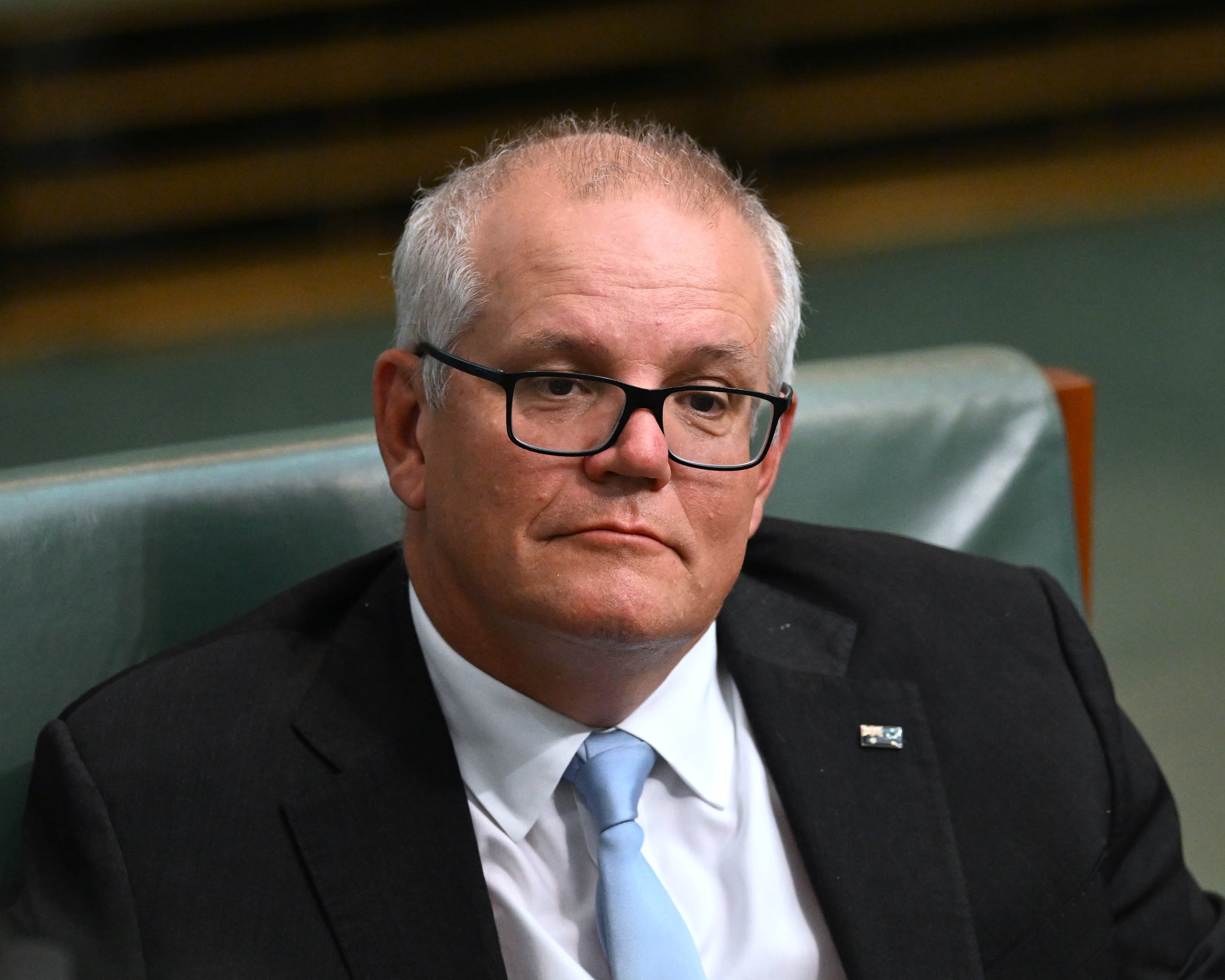
NACC Finds Serious Misconduct by Two Former Robodebt Officials, Morrison Exonerated

The National Anti-Corruption Commission (NACC) has found that two former public servants engaged in serious corrupt conduct in connection with the robodebt income-averaging scheme, while former Prime Minister Scott Morrison has been cleared of wrongdoing.
Background of the Investigation
The investigation stemmed from referrals made by the royal commission into robodebt, led by Catherine Holmes in 2023. These referrals, initially sealed from public view, questioned potential corruption linked to the unlawful income-averaging scheme.
The NACC began its inquiry in February 2025 after an independent reviewer recommended further investigation. The probe examined the actions of five former public servants and Morrison related to the scheme’s development, approval, and implementation in 2015, 2017, and 2018.
Findings
- Two former public servants were found to have engaged in serious corrupt conduct during their roles connected to robodebt.
- Four other individuals, including Scott Morrison, were cleared of any corruption.
- The findings highlight specific misconduct within the public service, while confirming that no evidence implicated the former prime minister.
Implications
The report reinforces concerns about governance and accountability in the design and implementation of government programs. While the scheme caused widespread public outcry for its legality and impact on citizens, the findings specifically identify individual misconduct rather than systemic failings alone.
The clearance of Morrison underscores the distinction between policy responsibility and personal corrupt conduct in public office.
Next Steps
The NACC report may lead to further scrutiny of public servants involved in high-profile government programs. There could also be recommendations for reforms to prevent similar misconduct in future welfare schemes.
The report adds to ongoing debates about transparency, accountability, and the role of leadership versus individual officials in controversial policy failures.

