
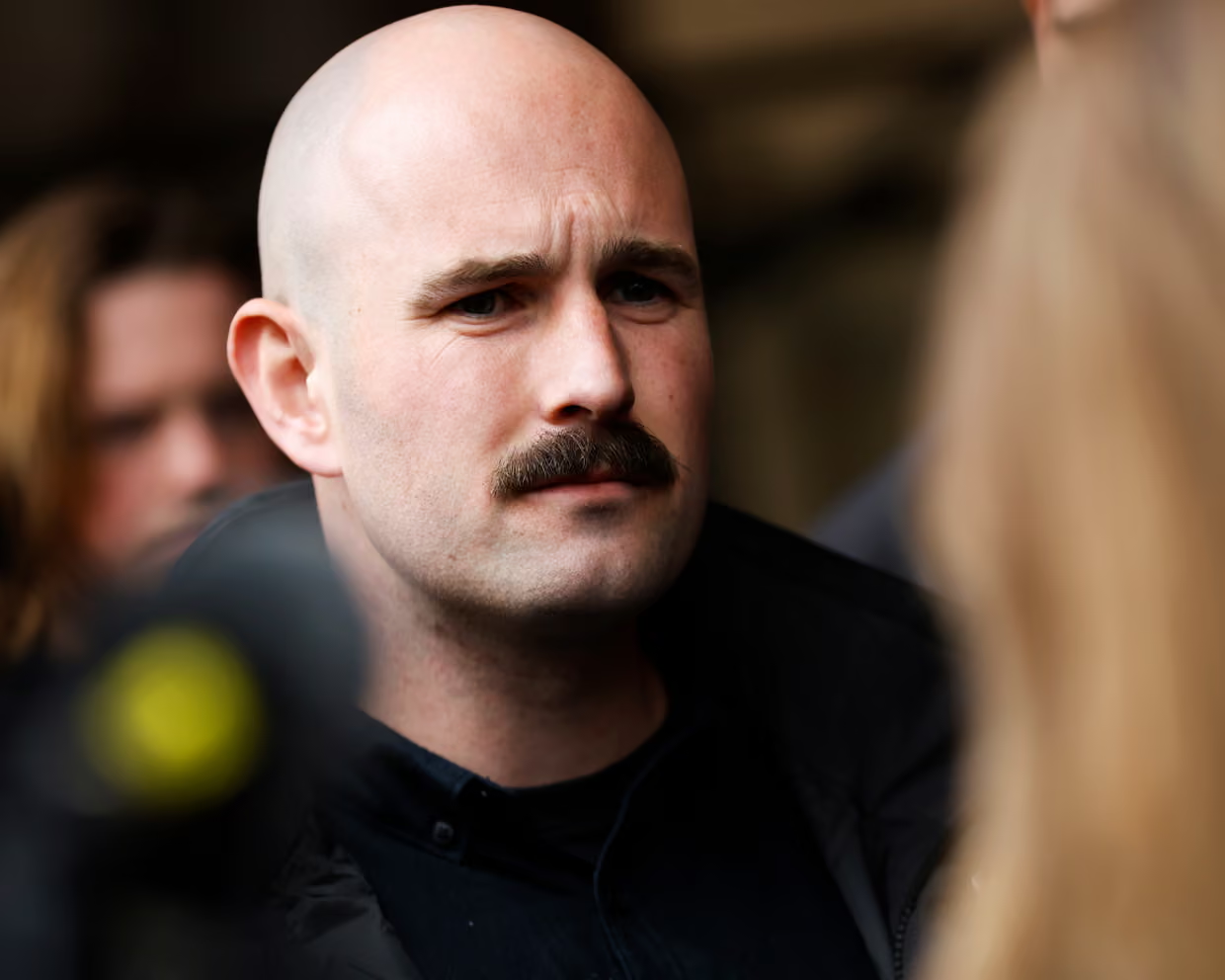
Melbourne Neo-Nazi Leader Thomas Sewell Denied Bail After Alleged Attack on Sacred Indigenous Site

Neo-Nazi Leader Thomas Sewell Denied Bail in Melbourne
Thomas Sewell, a self-proclaimed neo-Nazi and leader of the far-right group National Socialist Network, has been refused bail after allegedly leading a violent attack on an Indigenous sacred site in Melbourne.
The 32-year-old appeared before the Melbourne Magistrates Court on Friday, where Magistrate Donna Bakos ruled that releasing him posed a serious risk to community safety.
Police claim Sewell instructed dozens of his followers to storm Camp Sovereignty, an encampment on the steps of Melbourne’s Kings Domain Gardens that serves as both a protest site and a sacred burial ground for First Nations people.
What Happened at Camp Sovereignty?
According to police, the incident unfolded last weekend when about 30 members of Sewell’s far-right network allegedly charged at the camp. Witnesses reported chaos as the group disrupted the site, which holds deep cultural and spiritual significance for Indigenous Australians.
Authorities say Sewell did not simply participate—he led and encouraged the action. The charges brought against him include violent disorder and affray, both of which are serious offences under Victorian law.
Magistrate’s Strong Words
In court, Magistrate Bakos made it clear she considered the case to be severe.
“To lead and participate in, if not incite, an unprovoked attack on a sacred site can only be viewed as serious conduct,” she said.
She added that her decision to deny bail was based on Sewell’s actions and the danger he poses—not his political beliefs. “He is not being charged for his ideology, whether racially motivated or otherwise,” Bakos stressed.
Why Sewell Was Denied Bail
The court heard arguments from police prosecutors that Sewell’s history and influence make him a high risk for reoffending. They described him as a danger to the community who could potentially commit further violent acts if allowed back on the streets.
Police warned that Sewell’s involvement in violent offences could ultimately end in death if unchecked. Given his leadership role and ability to mobilize others, authorities argued that bail would only embolden him and his followers.
Magistrate Bakos agreed, concluding that the threat to public safety outweighed any grounds for his release.
Who Is Thomas Sewell?
Thomas Sewell is a known figure in Australia’s far-right circles. He leads the National Socialist Network, a group that openly identifies with neo-Nazi ideology. The organization has gained notoriety for its extremist rhetoric, paramilitary-style training, and anti-immigration campaigns.
Sewell has faced legal trouble before. He has previously been accused of violent conduct, and his far-right activities have made him a subject of close monitoring by law enforcement and counter-extremism units.
The Significance of Camp Sovereignty
Camp Sovereignty is not just a protest site; it is a symbol of Indigenous resistance and survival. Established during the 2006 Commonwealth Games, the encampment has stood as a reminder of the struggle for land rights, sovereignty, and recognition of Aboriginal sacred sites.
For Indigenous communities, an attack on Camp Sovereignty is not just vandalism or trespass—it is a direct assault on culture, heritage, and ongoing struggles for justice.
Community Reaction
While the legal proceedings unfold, community leaders and activists have voiced their concern and anger. Many see the alleged attack as part of a broader rise in extremist violence in Australia, often targeting vulnerable groups and sacred spaces.
The denial of bail has been welcomed by Indigenous representatives and anti-racism advocates, who argue that Sewell’s release would send the wrong message about accountability for hate-fueled violence.
What Happens Next?
Sewell remains in custody as the case progresses through the courts. His followers and members of the National Socialist Network may also face charges as investigations continue into the events at Camp Sovereignty.
The case will likely attract further national attention as it touches on broader issues: the threat of far-right extremism, the protection of Indigenous cultural heritage, and the responsibility of the legal system to safeguard public safety.
The Bigger Picture: Extremism in Australia
The incident has reignited debate about the presence of extremist groups in Australia. Authorities have long warned about the growing influence of neo-Nazi organizations, which exploit social tensions to recruit and radicalize young men.
Experts argue that Sewell’s case highlights the urgent need for stronger measures to counter extremist movements. From online propaganda to organized gatherings, far-right networks remain a challenge for both law enforcement and community safety.
Thomas Sewell’s refusal of bail underscores the seriousness of the charges against him and the ongoing concern about extremist violence in Australia. By allegedly leading an attack on a sacred Indigenous site, Sewell is accused of crossing a line that the courts say cannot be ignored.
For Indigenous communities, the events at Camp Sovereignty are a painful reminder of the vulnerability of their sacred spaces. For the wider Australian public, it is a wake-up call about the real dangers posed by organized hate groups.
As the case develops, all eyes will be on the courts to see how justice is served—and what message it sends about protecting communities from extremist violence.

