
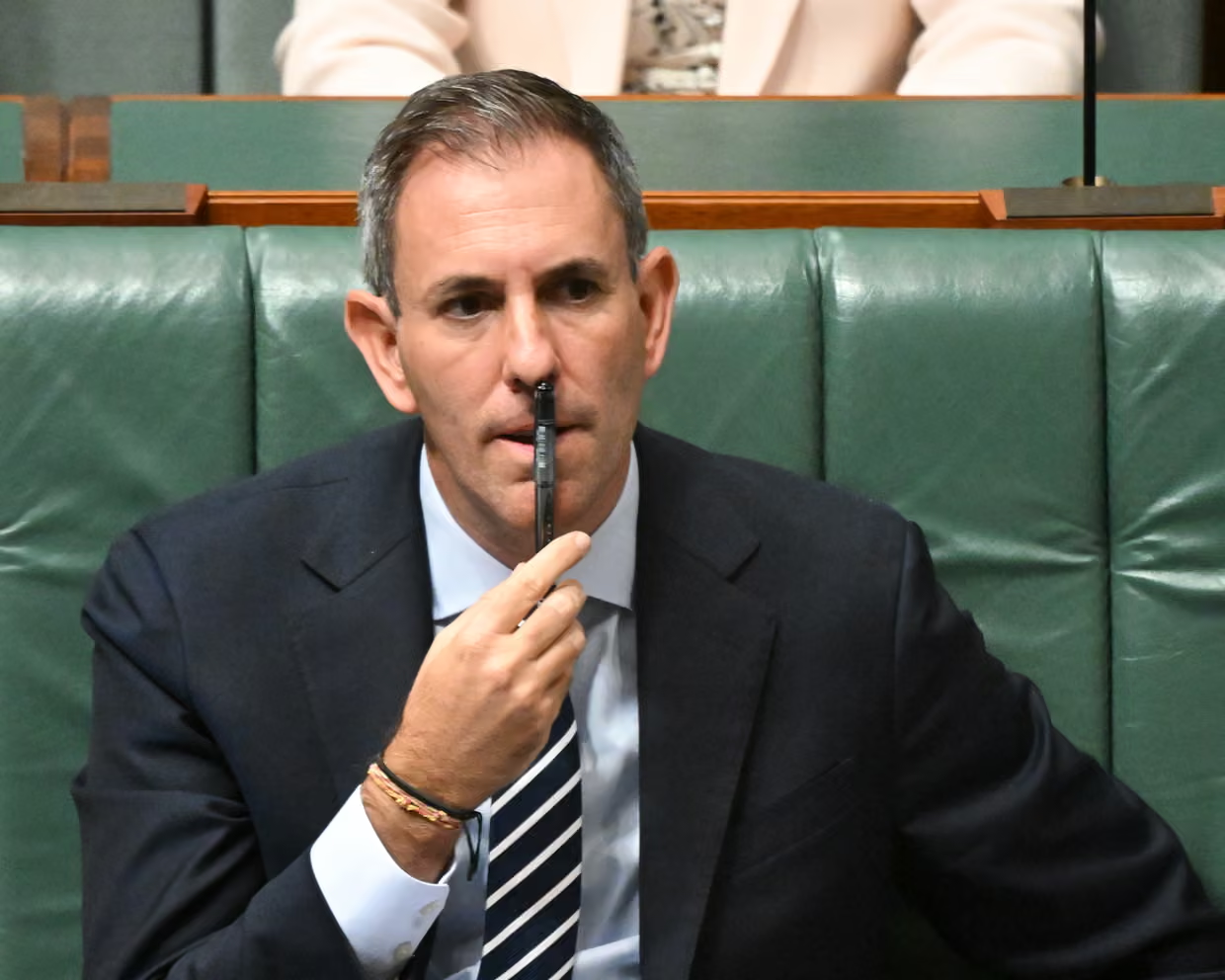

Australian Treasurer Jim Chalmers has confirmed that households will face increased cost-of-living pressures in the coming months, driven in part by the ongoing conflict in the Middle East.
Chalmers told the media that inflation, currently at 3.8%, is expected to rise beyond 4.5%, though he does not anticipate the economy entering a recession despite the geopolitical uncertainty caused by U.S. and Israeli military action in Iran.
Inflation Forecasts and RBA Response
Economic modeling by Treasury suggests that inflation could peak in the “mid to high fours”.
This outlook puts pressure on the Reserve Bank of Australia (RBA) to consider raising interest rates soon, with economists predicting rate hikes both this week and in May.
The Treasurer referenced National Australia Bank forecasts suggesting inflation could surpass 5% in the next quarter, underscoring the urgency of monetary policy adjustments.
Factors Driving Inflation
Chalmers cited several key factors contributing to rising inflation:
- Global oil prices: The war in the Middle East is driving up energy costs, which flow through to household expenses.
- Global supply chain disruptions: Escalating conflict can exacerbate price pressures on imported goods.
- Domestic cost pressures: Everyday items and services are expected to see price increases, adding to household financial stress.
Economic Outlook: No Recession Expected
Despite rising prices, Chalmers emphasized that Australia’s economy is resilient:
- Consumer demand remains steady, supporting growth.
- Labor markets continue to show stability with employment levels holding up.
- Government policies and fiscal measures are in place to cushion the impact of global shocks.
Chalmers’ message aimed to reassure Australians that while inflation is rising, the broader economy is not expected to contract into a recession.
Preparing Households for the Impact
Treasury modeling and economic analysis highlight the need for households to anticipate higher living costs:
- Energy bills and fuel prices are likely to climb.
- Grocery and retail prices may rise due to global commodity cost increases.
- Interest rate hikes by the RBA could increase mortgage repayments for variable-rate borrowers.
Chalmers urged Australians to plan for these pressures while noting that the government is monitoring developments closely.
- Inflation in Australia is expected to rise to the mid to high 4% range due to the Middle East conflict and global price pressures.
- The RBA is likely to respond with interest rate hikes in the near term.
- Despite higher inflation, a recession is not anticipated.
- Households should prepare for increased costs on energy, food, and everyday goods.
- Government and Treasury modeling continues to guide policy decisions in response to global economic shocks.

