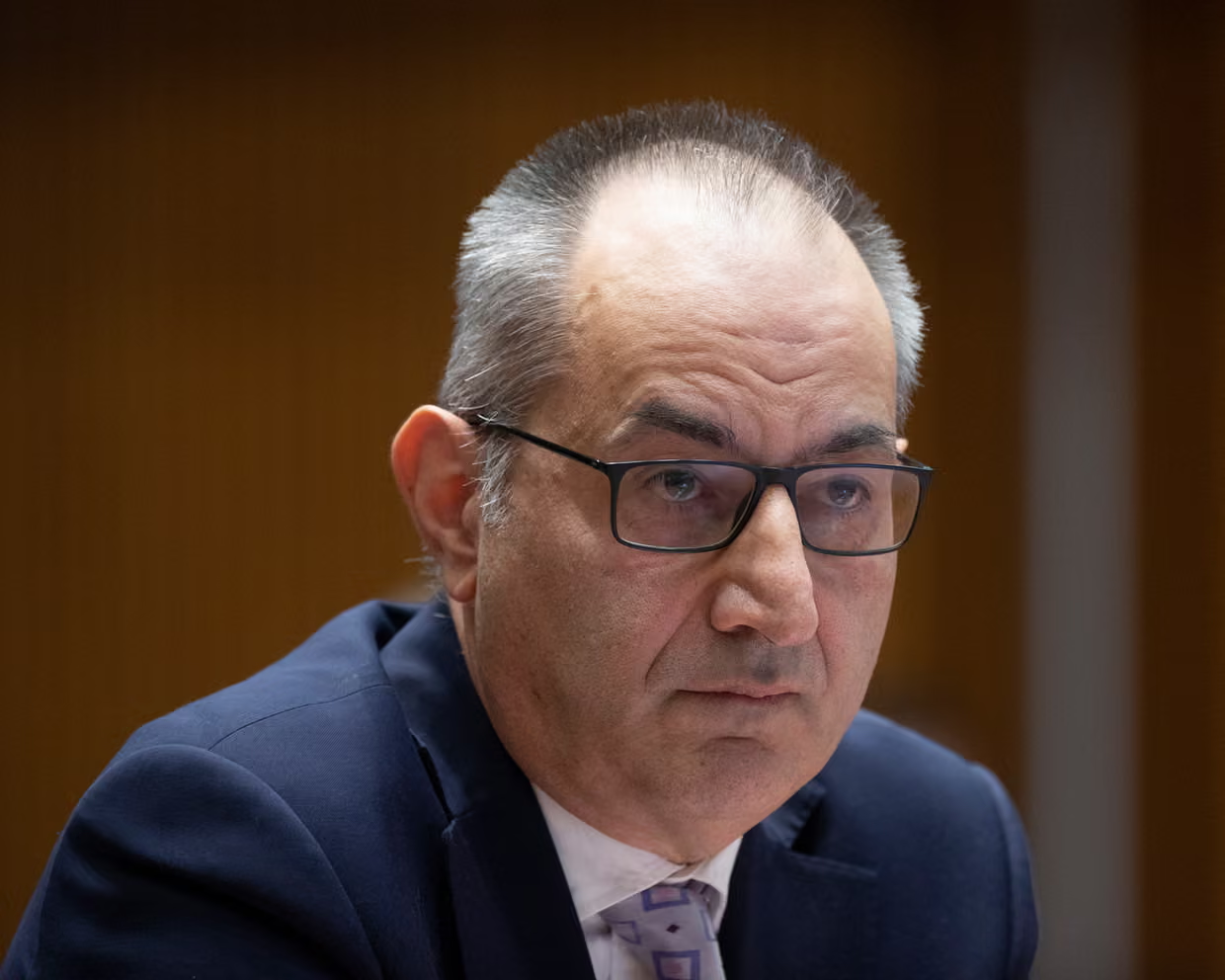


Jacinta Reddan is now the Chief Executive Officer of Cancer Council Australia. This is a change for Cancer Council Australia, which is one of the most important groups in the country that helps people with health issues and does research.
Jacinta Reddan taking over as the Chief Executive Officer of Cancer Council Australia is happening at an important time. Australia is still trying to deal with the fact that more people are getting cancer and some people do not have the access to doctors and hospitals as others. Cancer Council Australia also needs to figure out how to keep paying for things that help prevent cancer and for research to find treatments, for cancer.
Reddan has a lot of experience that she brings with her. She has been working for than twenty years in things like public policy and corporate affairs. She also knows a lot about advocacy. Working with stakeholders.
Before she started working at Cancer Council Australia Reddan had jobs in the government and in non-profit and corporate companies. She was really good at making policies better and getting people to agree on things even when they were complicated.
Reddans past experience is very helpful for her work at Cancer Council Australia. This is because the organization works on health policy and research and also tries to make people aware of things. Reddan knows how to deal with all these areas and that is good, for Cancer Council Australia.
Reddan is the boss of Cancer Council Australia. She makes sure the organization does its job as the group that represents all the state and territory cancer councils, in Australia. Her work includes planning campaigns to stop cancer from happening in the first place pushing for rules that are based on facts helping the best researchers find new ways to fight cancer and making sure people who have had cancer are heard.
Cancer is still one of the things that kills people in Australia. So Reddans leadership will probably focus more on ways to prevent cancer like stopping people from smoking protecting people from the sun and finding cancer early. Cancer Council Australia is very important. Reddans job is to lead the organization to do these things.
Reddan talked about how important it’s to make sure everyone has the same chance of getting good cancer treatment. She said we need to make things fairer for people who live in the country, Aboriginal and Torres Strait Islander peoples and people who do not have a lot of money. Reddan wants to work with the government, hospitals and people who do research to make sure that the decisions they make are based on good information and what people have actually experienced. Cancer outcomes are very important to Reddan. She wants to make sure that everyone gets the same chance of getting better no matter who they are or where they live. Reddan thinks that if we all work together we can make things better for people, with cancer.
Cancer research is very important to Reddan. He wants to make sure that cancer research and support services have the money they need to keep going. The healthcare system is under a lot of stress. So Cancer Council Australia needs to keep pushing for people to invest in cancer research for a time.
Reddan is good at talking to people who make decisions and at getting his message across to the public. This will help him get people excited about why cancer research and trying to prevent cancer are so valuable to our economy and to peoples lives. Reddans experience, with cancer research is a plus. Cancer Council Australia and Reddan will work together to make sure that people understand why cancer research is important.
Industry observers view Reddan’s appointment as a strategic move that combines policy expertise with strong organisational leadership. Her tenure is expected to reinforce Cancer Council Australia’s position as a trusted authority in cancer prevention and control, while also modernising its approach to advocacy and public engagement. As she steps into the role, expectations are high that her leadership will help shape Australia’s cancer response for the coming decade.