
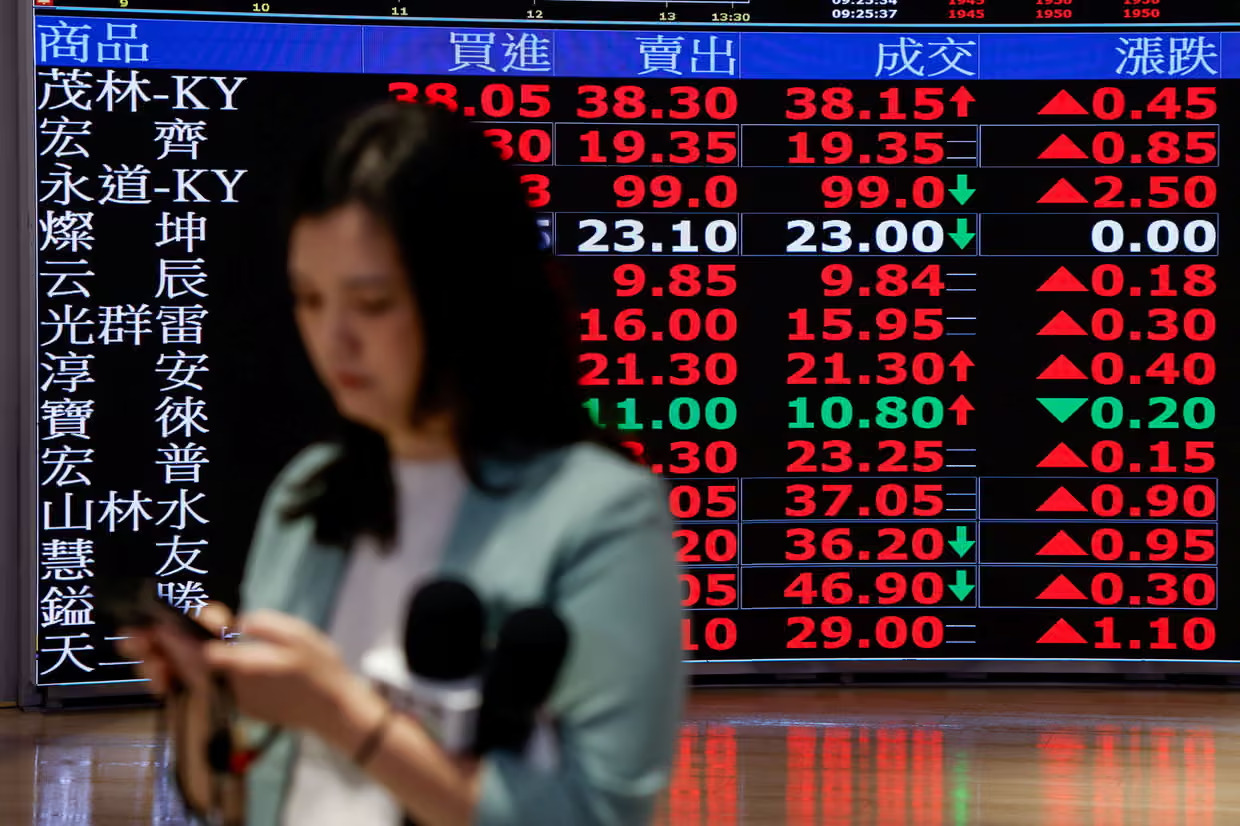

Global markets have largely shrugged off rising tensions between the U.S. and Iran, as investors assume that President Donald Trump’s military posturing will be brief. But economists warn that this optimism may be misplaced, and a longer or more disruptive conflict could have major consequences for markets, inflation, and economic growth.
Markets Growing Complacent
Over the past year, investors have become inured to Trump’s statements about military actions, treating them as temporary noise rather than drivers of long-term market trends. Stock indexes in the U.S. and elsewhere have shown surprising resilience even as the conflict escalates, and energy prices, though elevated, have not triggered major sell-offs.
Many analysts caution that this calm may reflect complacency rather than reality. Markets may be underestimating the risks if the conflict lasts longer than expected or spreads beyond the immediate region.
The Risk of a Prolonged Conflict
A key reason for market optimism is the belief that the U.S. military campaign in the Middle East will be short. However, economists warn that even a small miscalculation or escalation could extend the conflict, with serious consequences for financial markets and the global economy.
If the war drags on, energy markets could remain under pressure. Roughly one-fifth of the world’s oil and liquefied natural gas passes through the Strait of Hormuz, making the region highly sensitive to disruptions. Prolonged conflict could push oil prices much higher, increasing inflation globally and complicating central bank policies.
Impacts on Inflation and Interest Rates
Rising energy prices have a direct effect on inflation, which can ripple through economies, increasing consumer costs and production expenses. If inflation remains elevated, central banks may delay interest rate cuts that markets currently expect, reducing support for equities and other risk assets.
Higher interest rates and persistent inflation could also slow economic growth, creating a feedback loop that puts additional pressure on markets and businesses.
Potential Market Volatility
If investors begin to price in a prolonged conflict, market volatility is likely to increase. Safe-haven assets such as government bonds and the U.S. dollar may see higher demand, while equities and riskier sectors could experience sharp swings.
Global supply chains and international trade could also face disruptions, affecting corporate earnings and investor sentiment worldwide.
What Could Happen Next
The scenario for investors depends heavily on how long and how intense the conflict becomes. Key factors include:
- Energy supply disruption: Longer conflict could keep oil and gas prices high.
- Inflation pressures: Higher energy costs could worsen inflation and reduce consumer spending.
- Interest rate policy: Central banks may hold rates steady or even tighten policy in response to inflation.
- Market reactions: Increased volatility and risk aversion could affect equities, bonds, and currencies.
- Global growth: Slower economic growth may follow if the conflict disrupts trade or production.
Bottom Line
While many investors are betting on a short, contained conflict in the Middle East, there is a growing warning that markets may be too complacent. A prolonged war could lead to higher energy prices, rising inflation, increased market volatility, and slower economic growth.
Investors should be prepared for scenarios where the conflict lasts longer than anticipated, as the impact could be far more significant than current market behavior suggests.

