
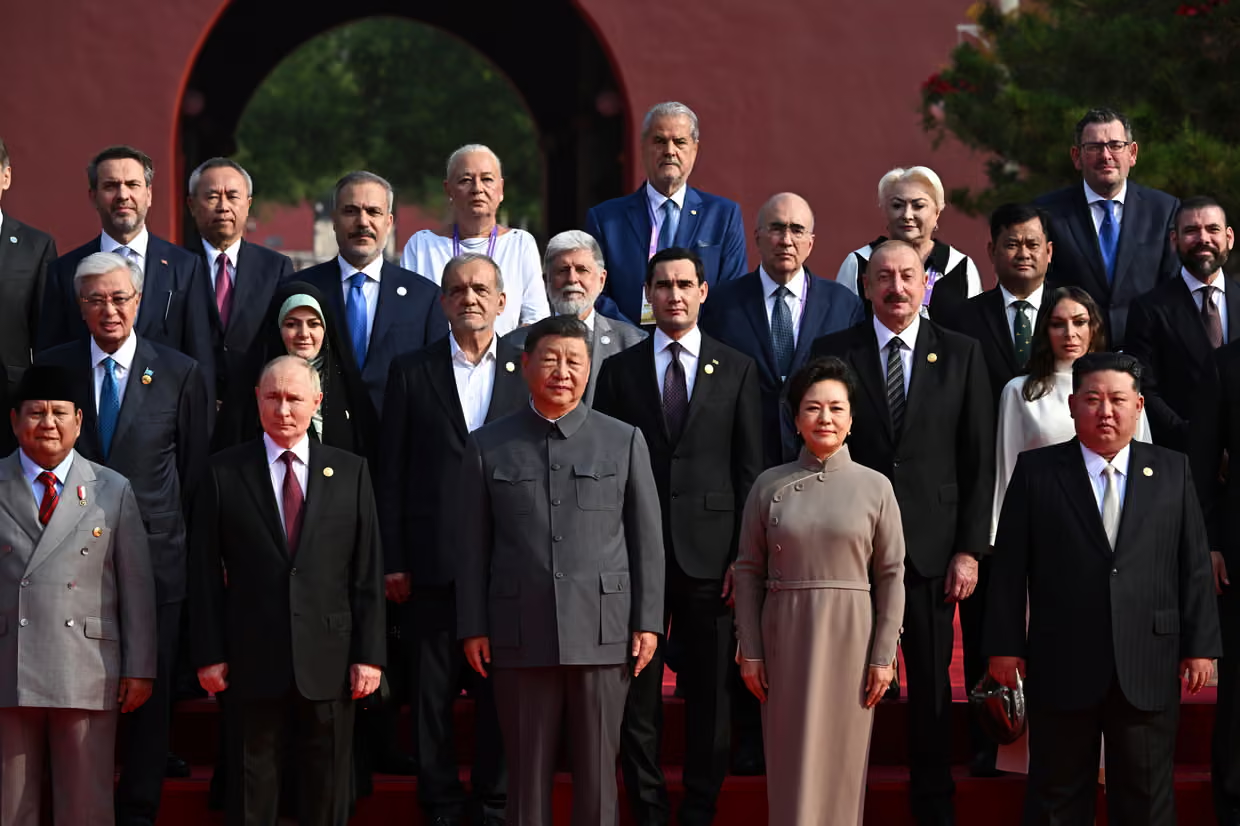
Daniel Andrews’ Beijing Photo With Dictators Exposes Australia’s Double Standards on Human Rights

The Photo That Sparked Outrage
A single photograph can sometimes reveal more than hours of political speeches. That’s what happened this week when a picture emerged of former Victorian premier Daniel Andrews standing at a Beijing military parade alongside Chinese president Xi Jinping, Russian president Vladimir Putin, and North Korean leader Kim Jong-un.
For many Australians, the image was jarring: a respected former state leader appearing shoulder-to-shoulder with three of the world’s most notorious authoritarian rulers. Each of these leaders presides over governments accused of widespread human rights abuses, censorship, and repression.
The photo quickly went viral, triggering criticism and questions: why would a former Australian premier willingly attend such an event — and what does it say about Australia’s broader foreign policy approach?
Andrews Defends His Presence
Andrews has defended his attendance, saying the event was part of his broader effort to strengthen Victoria’s ties with China. As premier, he signed a controversial memorandum of understanding with Beijing on China’s Belt and Road Initiative — a deal later scrapped by the federal government on national security grounds.
He insists the trip was not about politics but about continuing cultural and economic connections with one of Victoria’s largest trading partners. Critics, however, argue the optics cannot be ignored. By standing alongside authoritarian rulers at a military parade, Andrews risks appearing to legitimize their regimes.
Bob Carr’s Attempted Justification
Interestingly, former New South Wales premier Bob Carr pre-emptively wrote an opinion piece considering whether to attend the same parade. In the end, Carr stayed away — but the fact that both men weighed attendance shows how Australia’s political elite wrestles with the question of engagement versus condemnation.
Australia’s “Half-Care” Approach to Human Rights
The controversy surrounding Andrews’ photo points to a deeper issue: Australia’s inconsistent stance on human rights.
On the one hand, Australia routinely criticizes regimes like Russia and North Korea for their aggression and abuses. On the other hand, when it comes to China — a major economic partner — Canberra often softens its language. The official government line has long been to “cooperate where we can, disagree where we must.”
But as human rights advocates point out, this approach sends mixed messages. Can a government truly claim to champion human rights if it turns a blind eye when trade interests are at stake?
Why Hypocrisy Matters
Human rights advocacy is not just about values; it’s also about national interest. When Australia applies double standards, it undermines its credibility on the world stage. How can Canberra press smaller nations on their human rights records if it refuses to hold China accountable with the same vigor?
This inconsistency also emboldens authoritarian governments. Leaders like Xi, Putin, and Kim thrive on international recognition. A photo featuring an Australian political figure at their event serves as propaganda, signaling that even Western democracies are willing to overlook abuses in pursuit of economic or diplomatic gains.
The Human Rights Records in Question
To understand why the photo hit such a nerve, consider the human rights track records of the three men Andrews appeared beside:
- Xi Jinping: Oversees mass surveillance, censorship, and the detention of Uyghur Muslims in Xinjiang, widely described as crimes against humanity.
- Vladimir Putin: Responsible for the invasion of Ukraine, targeting of civilians, suppression of political dissent, and imprisonment of opposition leaders like Alexei Navalny (before his death in custody).
- Kim Jong-un: Runs one of the most closed and repressive regimes in the world, with political prison camps, forced labor, and extreme restrictions on freedoms.
Sharing a platform with such figures — even inadvertently — carries heavy symbolic weight.
Can Governments Distance Themselves From Former Leaders?
Supporters of the government argue that Canberra cannot control what former premiers do once they leave office. That is true, but the issue runs deeper. The fact that two former premiers even considered attending such an event reflects Australia’s ambiguous approach to balancing values and interests.
Critics say Australia should make it unambiguously clear that no current or former officials should provide legitimacy to dictatorships. Anything less suggests that engagement with authoritarian regimes is not only tolerated but quietly encouraged when money or trade is on the table.
The Bigger Picture: Trade vs. Values
Australia’s economic reliance on China complicates its foreign policy. China is the country’s largest trading partner, purchasing iron ore, coal, and agricultural exports worth billions each year. For years, Australian leaders at both federal and state levels have tried to walk a fine line: standing firm on security issues while keeping the trade relationship intact.
But human rights advocates argue this balancing act cannot last forever. As authoritarian regimes grow bolder, the cost of silence increases. The Beijing photo controversy is a reminder that Australia’s “pragmatic” approach can easily slip into complicity.
Why This Matters for Ordinary Australians
At first glance, a photo of a former premier at a parade may seem like political gossip. But it cuts to the heart of what kind of country Australia wants to be. Do we want to be seen as a principled democracy that defends human rights everywhere, or as a selective advocate that picks and chooses based on convenience?
For many Australians — especially those from migrant and refugee backgrounds who fled persecution — the answer matters deeply. Seeing their adopted country’s leaders appear alongside dictators feels like a betrayal of the very freedoms Australia promises to protect.
Daniel Andrews’ photo with Xi Jinping, Vladimir Putin, and Kim Jong-un is more than just a bad look. It’s a stark reminder of Australia’s ongoing struggle to reconcile its trade interests with its professed commitment to human rights.
Governments cannot “half care” about abuses. When Canberra adopts a “disagree where we must” policy with China, it not only enables ongoing violations but also weakens Australia’s credibility as a defender of democratic values.
The message is clear: until Australia applies its human rights principles consistently — no matter the country, no matter the cost — controversies like this will continue to expose the gap between our values and our actions.