
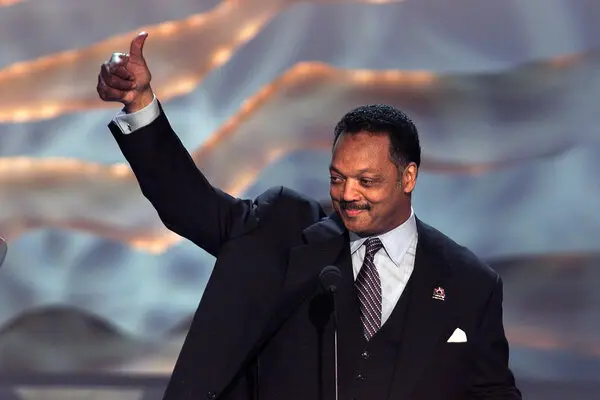

Jesse Jackson, the veteran civil rights activist and former Democratic presidential candidate, has died at the age of 84.
An ordained minister and longtime advocate for racial justice, Jackson was one of the most prominent figures of the post–civil rights era in the United States. His 1984 presidential campaign marked a historic milestone, making him the first Black man to mount a serious nationwide bid for the Democratic nomination for the White House.
His death marks the end of a decades-long public life defined by activism, political ambition, and efforts to expand representation in American politics.
From Civil Rights Movement to National Politics
Born in 1941, Jackson rose to prominence during the civil rights movement of the 1960s. He worked closely with leaders such as Martin Luther King Jr. and became known for his powerful oratory and grassroots organizing.
After King’s assassination in 1968, Jackson continued advocating for economic justice, voting rights, and equal opportunity. He later founded organizations aimed at promoting social justice and political empowerment within Black communities and beyond.
Over time, Jackson emerged as a bridge between street-level activism and institutional politics.
The Historic 1984 Presidential Campaign
Jackson’s 1984 campaign for the Democratic presidential nomination was groundbreaking.
At a time when American presidential politics had never seen a Black candidate with national viability, Jackson built a broad coalition that included minority voters, progressives, labor unions, and young activists.
While he did not secure the nomination, his campaign:
- Expanded voter registration drives
- Increased minority participation in primaries
- Shifted policy conversations within the Democratic Party
- Demonstrated that a Black candidate could compete nationally
His second presidential run in 1988 went even further, winning several primary contests and solidifying his place in American political history.
A Voice for Economic and Social Justice
Throughout his career, Jackson championed causes such as:
- Voting rights protections
- Anti-apartheid efforts in South Africa
- Workers’ rights and union advocacy
- Criminal justice reform
- Expanded educational access
He was known for blending moral language with political demands, often invoking faith and scripture in public speeches.
His work helped shape conversations around diversity and representation long before those themes became mainstream in national politics.
Influence Beyond Elections
Although Jackson never held elected office at the federal level, his influence extended well beyond campaign seasons.
He played roles in diplomatic missions, community mediation efforts, and advocacy campaigns that drew national and international attention.
For many, he symbolized a continuation of the civil rights movement into a new political era—one focused not only on legal equality but also on economic opportunity and political power.
A Complex and Enduring Legacy
Like many long-serving public figures, Jackson’s career was not without controversy. Over decades in public life, he faced criticism at various points, but his broader legacy as a trailblazer in American politics remains widely acknowledged.
His presidential bids paved the way for future generations of Black candidates and leaders. Many political observers credit his campaigns with helping lay groundwork for greater diversity within national party leadership and presidential politics.
Remembering a Political Pioneer
Jesse Jackson’s passing at 84 closes a significant chapter in American political history.
From marching in the civil rights era to standing on presidential debate stages, Jackson spent more than half a century pushing the boundaries of representation and advocacy.
His 1984 presidential campaign remains a defining milestone—proof that a nationwide campaign for the White House was within reach for Black Americans, even in an era when such a prospect seemed improbable.
He leaves behind a legacy of activism, political courage, and an enduring imprint on the American democratic process.

