
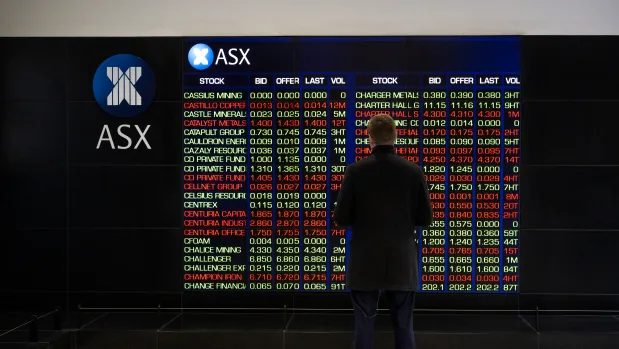
Australian Stocks Rise After Wall Street Rally, But the Aussie Dollar Hits Two-Year Low

The Australian share market closed higher today, buoyed by a strong rally on Wall Street, while the Australian dollar continued its slide, hitting its lowest point in two years. This mixed performance reflects global market movements and the impact of U.S. political developments, particularly the last-minute passing of a government funding bill that averted a shutdown. Let’s take a closer look at how the market played out today and what it means for investors and the economy.
A Strong Day for Australian Stocks
The Australian stock market ended on a positive note, following a strong performance from U.S. markets overnight. The S&P 500 and Nasdaq Composite both surged in light holiday trading, largely driven by news that a U.S. government shutdown had been avoided. Investors reacted positively to the deal, which pushed U.S. stocks higher and led to gains across global markets, including Australia.
Why Did Australian Stocks Rise?
The rally on Wall Street helped lift investor sentiment worldwide, and Australian shares followed suit. A solid rise in the S&P/ASX 200, Australia’s key stock index, reflected optimism among local investors. Major Australian companies in sectors such as materials, finance, and technology benefited from the global market surge.
While the Australian market’s overall gains were moderate, the upbeat mood on Wall Street contributed to investor confidence, creating a ripple effect in local markets.
The Aussie Dollar Struggles at Two-Year Low
While the Australian share market had a good day, the Australian dollar remained under pressure. The currency continues to hover near its two-year low against the U.S. dollar. This weak performance is largely tied to global economic factors, including the current strength of the U.S. dollar and Australia’s ongoing trade and interest rate challenges.
What’s Behind the Aussie Dollar’s Struggles?
There are several factors contributing to the Aussie dollar’s low position:
- U.S. Dollar Strength: The U.S. dollar has strengthened as investors have piled into the currency, particularly in the wake of recent positive U.S. economic data. The ongoing anticipation of further interest rate hikes by the U.S. Federal Reserve has added to the dollar’s appeal, making the Aussie dollar less attractive in comparison.
- Weakening Commodity Prices: As an economy heavily reliant on exports, particularly of commodities like iron ore, coal, and natural gas, Australia’s economy is impacted by fluctuations in global commodity prices. Recent dips in some key prices have affected the demand for the Aussie dollar.
- Reserve Bank of Australia’s Position: The Reserve Bank of Australia (RBA) has been cautious in its monetary policy stance, with no immediate signs of further interest rate hikes. The difference in interest rates between the U.S. and Australia continues to widen, making the U.S. dollar more appealing to investors seeking higher returns.
While the Australian dollar’s struggle against the U.S. dollar continues, experts are divided on whether it will recover in the near future. For now, the currency remains under pressure from the global economic environment.
Wall Street’s Impact on Global Markets
The rally on Wall Street played a pivotal role in shaping market movements, both in the U.S. and beyond. The S&P 500 and Nasdaq Composite both closed higher after a stopgap government funding bill passed in the U.S. Congress, preventing a government shutdown and easing investor fears. This political victory for U.S. lawmakers reassured markets that some political risks were mitigated for now.
What Caused Wall Street’s Rally?
The U.S. market saw broad-based gains, with both major stock indices (S&P 500 and Nasdaq) rising in holiday-thinned trading. The passing of the short-term funding bill to keep the U.S. government running for the next few weeks lifted investor sentiment. The bill averts an immediate crisis and provides a temporary sense of stability in U.S. politics.
The rally on Wall Street was especially significant considering the traditionally low volume of trading during holiday periods. While the gains were not monumental, the positive momentum was welcomed by investors who had been nervously watching the possibility of a U.S. government shutdown.
The Global Impact of U.S. Politics
Global markets, including Australia, often take cues from the U.S., given its significant economic and financial influence. The U.S. government shutdown drama had put pressure on global markets, leading to concerns about potential disruptions. The resolution, though temporary, allowed investors to breathe a sigh of relief, lifting stock markets across the globe, including in Australia.
How the Aussie Dollar Fits into the Bigger Picture
The Australian dollar’s slump is a reminder that currency markets are affected by more than just domestic events. Global economic shifts—especially those involving major currencies like the U.S. dollar—play a huge role in determining exchange rates. For the Australian dollar, the strength of the U.S. dollar has been a key factor in its struggle.
What Does the Weak Dollar Mean for Australians?
For Australians, a weaker dollar has both positives and negatives. On the downside, it makes imports more expensive, which can lead to higher prices for goods and services, especially those that rely on foreign products. For example, travel overseas becomes more expensive, and Australian consumers may face higher costs for imported goods.
However, there’s a silver lining. A weak Aussie dollar helps Australian exporters, making Australian goods and services more competitive in global markets. This could boost the profitability of businesses in industries such as mining, agriculture, and tourism, which benefit from a cheaper local currency.
What’s Next for Australian Stocks and the Dollar?
As we move further into the year, analysts are keeping a close eye on both the U.S. and Australian economies. The Australian stock market’s performance will likely continue to be influenced by global factors, including U.S. market trends, interest rates, and commodity prices. The political stability in the U.S. could also play a role in maintaining investor confidence.
As for the Australian dollar, its future depends largely on global economic dynamics and the Reserve Bank of Australia’s response to current market conditions. A change in interest rates or a shift in global demand for Australian commodities could lead to fluctuations in the currency’s value.
Key Factors to Watch
- Global Interest Rates: Any significant changes in U.S. Federal Reserve interest rate policies will continue to affect the Aussie dollar’s performance. Higher U.S. rates could further weaken the Australian dollar.
- Commodity Prices: Given Australia’s reliance on exports, any significant changes in global commodity prices will play a crucial role in determining the strength of the Australian dollar.
- Domestic Economic Policy: The Reserve Bank of Australia’s future monetary policy decisions, particularly regarding interest rates, will also be key in shaping the Australian dollar’s outlook.
Conclusion
Today’s market movements reflect a mix of optimism and caution. The Australian share market rose, following the rally on Wall Street after a political victory in the U.S. But despite the positive stock market news, the Australian dollar remains under pressure, continuing to hover at a two-year low.
For investors, the key takeaway is that global factors—especially U.S. economic and political developments—remain crucial in driving market sentiment and currency performance. As we head into the final months of the year, the outlook for both Australian stocks and the dollar will largely depend on how these global dynamics unfold.