
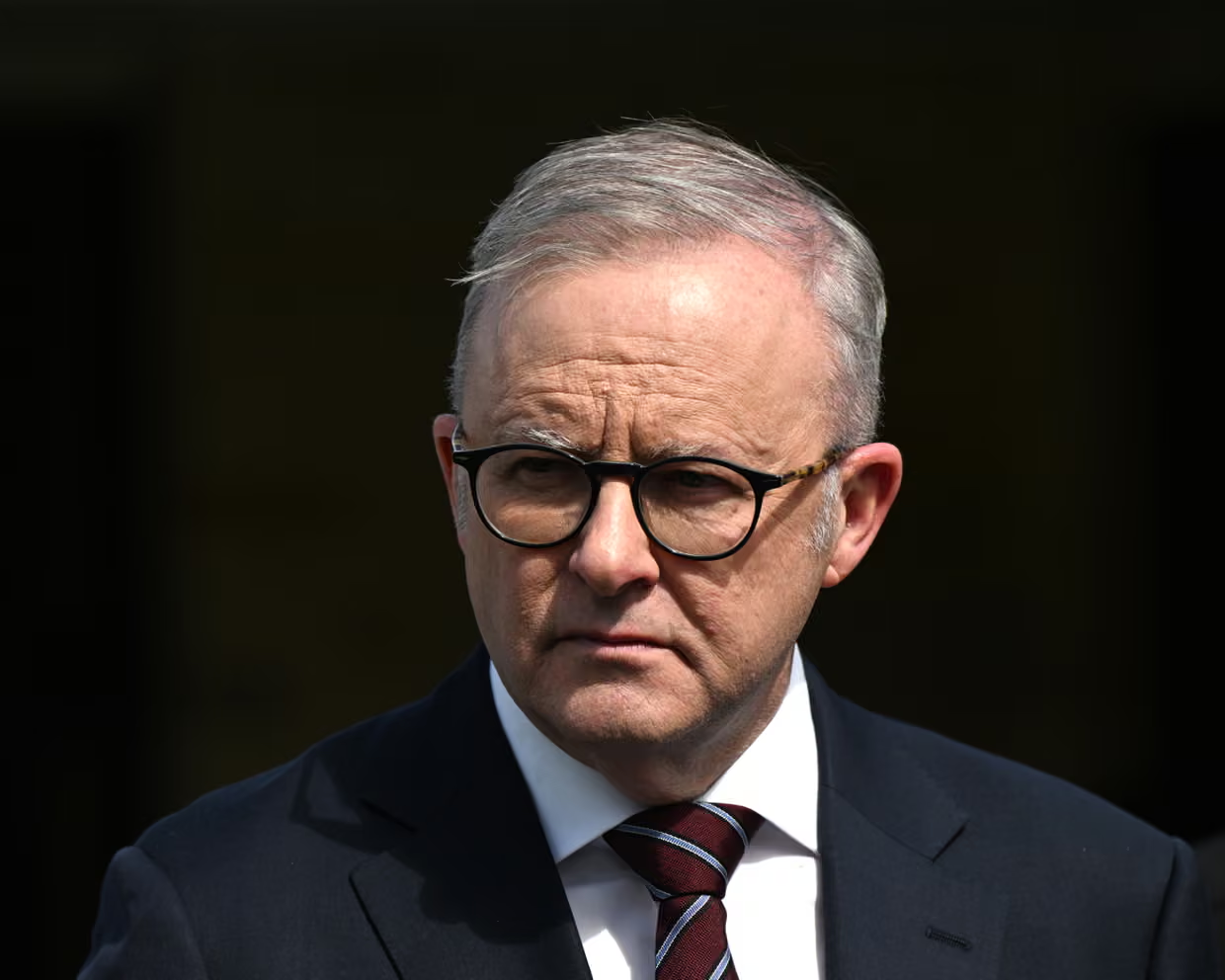
Australian Government Rejects Hamas Praise After Palestine Recognition Decision

Canberra Condemns Hamas Response to Australia’s Support for Palestinian Statehood
The Australian government has strongly criticised Hamas after the terrorist group reportedly welcomed Australia’s decision to recognise a Palestinian state. Labor leaders say Hamas is trying to “manipulate facts” to support its own propaganda agenda.
The statement comes after Prime Minister Anthony Albanese announced that Australia will formally recognise Palestine at the United Nations next month. This move aligns Australia with more than 140 countries — about three-quarters of UN member states — that already recognise a Palestinian state.
Albanese Stresses Hamas Will Be Excluded from Any Future Palestinian State
In response to backlash, the prime minister made it clear that Hamas will have no role in the formation or governance of a future Palestinian state. He reiterated that Australia supports a peaceful two-state solution and that recognition of Palestine is not an endorsement of Hamas.
“Hamas will be excluded from the process,” Albanese stated, underlining that one of the key conditions for Australia’s recognition is that any future Palestinian state must be demilitarised and governed without the involvement of terrorist organisations.
Opposition Labels Move a Propaganda Win for Hamas
The federal opposition criticised the Albanese government’s decision, saying it has unintentionally provided Hamas with a major public relations boost. Coalition leaders described the recognition of Palestine as a “massive propaganda victory” for the group.
They argued that even though the government clearly opposes Hamas and insists on peaceful terms, the decision has been used by the group to mislead the public and position itself as a beneficiary of international support.
Government Defends Its Position on Two-State Solution
The Labor government continues to stand by its decision, emphasising that Australia’s recognition is a step toward peace and justice, not a reward for violence or extremism. Officials have said that the recognition supports legitimate Palestinian aspirations and is meant to contribute to long-term stability in the region.
They also note that Hamas’s rejection of a two-state solution shows it stands against what the international community, including Australia, is working to achieve — a peaceful resolution that includes both Israeli and Palestinian states living side by side.
International Context
Australia’s recognition of Palestine follows a broader global trend, especially among countries that support a negotiated two-state solution as the most viable path toward ending the long-running Israeli-Palestinian conflict.
With over 140 UN member states already recognising Palestine, Australia’s decision puts it in line with the international majority, while still setting clear boundaries on governance and security conditions.
Final Thoughts
As the diplomatic fallout continues, the Albanese government is walking a fine line — reaffirming its rejection of terrorism while also promoting a future vision of peace in the Middle East. The recognition of Palestine may be symbolic for now, but the political reactions — both domestically and abroad — show just how sensitive and complex the path to peace remains.

