
Introduction: The Sound of Concern for Australian Aluminium Manufacturers
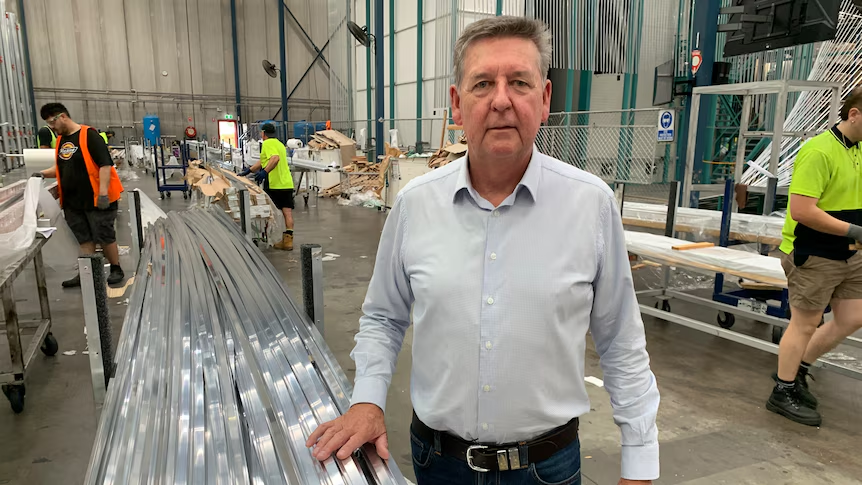
In a bustling aluminium plant in Melbourne’s north, the deafening noise of the massive extrusion press fills the air. This is the heartbeat of one of Australia’s most vital industries—aluminium manufacturing. But, despite its importance, the industry now faces a major challenge: Donald Trump’s tariffs on aluminium imports.
Tony Dragicevich, the director of Capral Aluminium, Australia’s largest aluminium manufacturing company, calls this industry crucial to the nation’s economy. Aluminium is not only one of Australia’s biggest industries, but it is also the country’s largest manufactured export. With a value of over $18 billion, it plays a significant role in Australia’s economic health.
However, the future of this industry is now under threat due to trade uncertainty. The ripple effects of Donald Trump’s tariffs are beginning to be felt across the aluminium supply chain, and many businesses are wondering what lies ahead.
The Significance of Aluminium to Australia’s Economy
Aluminium is one of the most important materials produced in Australia. As the country’s largest manufactured export in terms of dollar value, it has become a cornerstone of the economy. It’s used in a wide range of industries, from transportation to construction, packaging, and technology.
- Economic Impact: The aluminium sector is worth a staggering $18 billion, making it a key player in Australia’s economic landscape.
- Global Demand: Australia’s aluminium products are in demand around the world, making the sector an important export earner.
Tony Dragicevich emphasizes how critical this industry is to jobs and economic growth, saying, “Aluminium is not just an industry; it’s an integral part of the fabric of the Australian economy.”
Trump’s Tariffs Shake the Aluminium Industry
Uncertainty has been creeping into the aluminium sector, especially after former U.S. President Donald Trump introduced tariffs on aluminium imports. This move has raised concerns for Australian manufacturers who depend on global trade.
- Tariff Impact: Trump’s tariffs have made it more difficult for countries like Australia to sell aluminium to the U.S., one of the largest markets for the metal. The tariff increases the cost of aluminium, making it less competitive in the global market.
- Supply Chain Woes: For Australian companies, this means rising production costs and the potential loss of international customers, as their products become more expensive.
Australia’s Aluminium Industry Faces Tough Times Ahead
With Trump’s tariffs still in effect, the aluminium industry faces a period of uncertainty. For Capral Aluminium and other manufacturers, the challenge is navigating these unpredictable waters.
- Supply Chain Disruptions: From the factory floor to the global supply chain, uncertainty is spreading. Local manufacturers are worried about the ongoing trade tensions and how these might affect their bottom line.
- Rising Costs: With tariffs increasing, Australian aluminium could become more expensive in key markets like the U.S., pushing manufacturers to reconsider their pricing strategies.
Looking Forward: Can Australia’s Aluminium Industry Adapt?
Despite the challenges posed by tariffs, the Australian aluminium sector is not giving up. Companies are exploring new markets and adjusting their strategies to stay competitive.
- Seeking New Opportunities: Manufacturers are looking to expand into other international markets and reduce reliance on the U.S. market.
- Innovation in Manufacturing: Australian aluminium companies are focusing on improving production processes and investing in innovation to remain efficient and cost-effective.
While the road ahead might be tough, the industry is determined to adapt and find new ways to thrive despite external pressures.
Conclusion: The Future of Aluminium in Australia
The Australian aluminium industry is facing significant hurdles as a result of Trump’s tariffs, but it remains a crucial part of the country’s economy. Despite challenges, the sector is resilient and is working towards adapting to new market conditions. As one of Australia’s largest industries, aluminium manufacturing plays a vital role in supporting the nation’s exports, jobs, and overall economic health.