

Australia is entering a defining moment in its approach to technology, energy, and climate change as new developments across industries spark both excitement and concern. The week saw key discussions around autonomous vehicles, the ongoing debate over climate action, and the latest shakeups in the country’s financial and stock markets.
At the National Future Transport Summit in Brisbane, industry leaders painted a bold picture of Australia’s roads by the time the 2032 Olympic Games arrive. Experts suggested that fully self-driving cars, with no human behind the wheel, could be operating on Australian roads by the time the world gathers in Brisbane. This milestone, if achieved, would align with Australia’s efforts to build itself as a hub for technological innovation and sustainable infrastructure. Tesla added fuel to the optimism after announcing the launch of its self-driving software in Australia following weeks of testing. The development comes amid global speculation and growing competition in the autonomous vehicle market.
But optimism has not drowned out concerns. Speakers at the summit emphasized that strict regulations will need to be in place to ensure safety, manage liability, and control costs as these vehicles become integrated into everyday life. Australia is seen as “on track” to deliver a regulatory system tailored for this transformation. According to Uber’s global head of autonomous policy Richard Willder, the nation’s approach to regulation is considered thoughtful and nuanced, unlike other countries that rushed into self-driving adoption and were forced to revise rules in real time. With Australia’s strong track record in ride-share adoption, Uber argued that the country offers fertile ground for the next leap in transport technology.
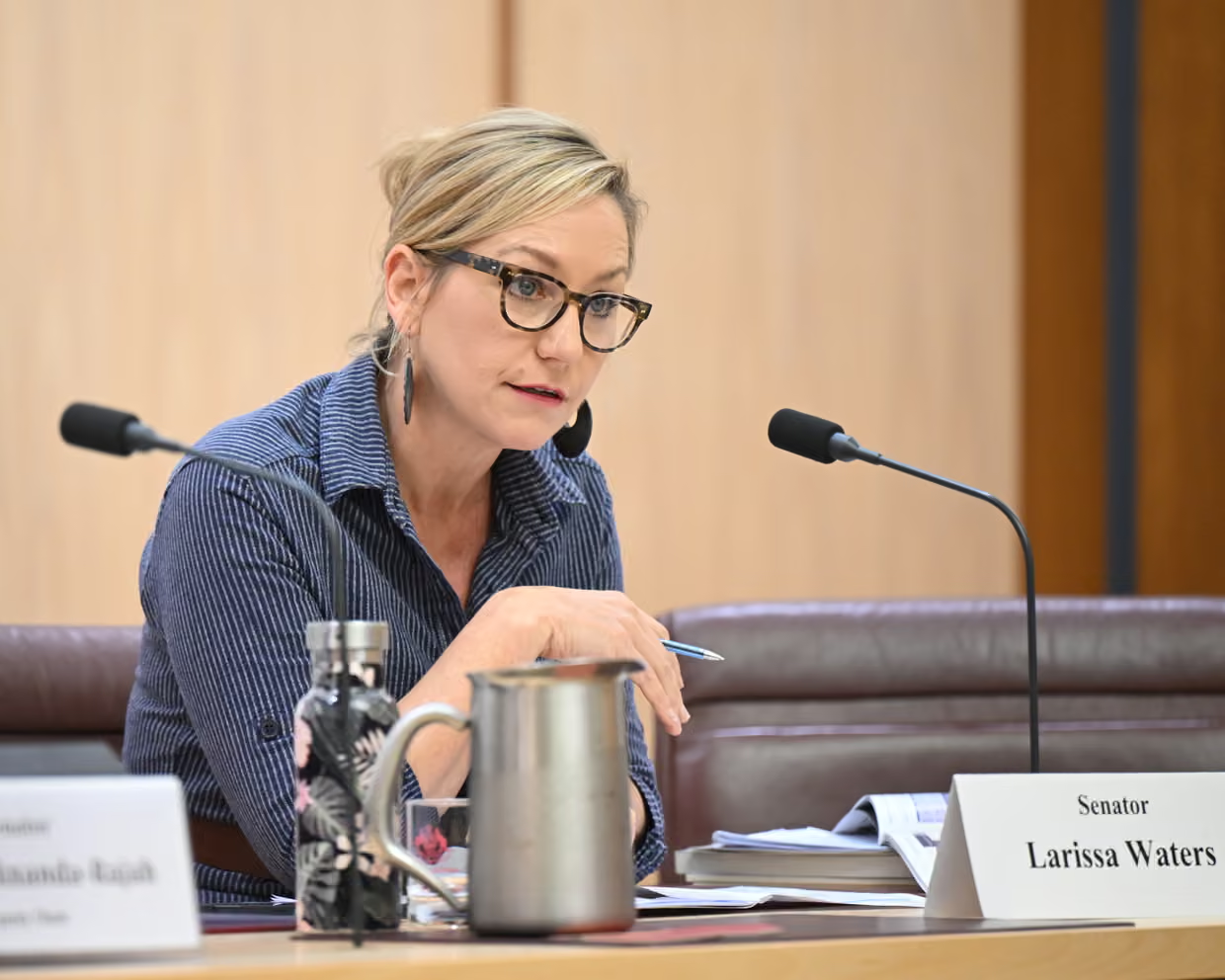
While transport innovation drew attention, Australia’s climate debate intensified after Greens leader Larissa Waters argued that the risks outlined in a recent climate report will inevitably materialize due to what she described as the government’s weak emissions reduction targets. Waters warned that without stronger national commitments, extreme weather and climate-linked risks would escalate, impacting the economy, public health, and infrastructure. Her remarks underscored the widening gap between the government and climate advocates over how to manage Australia’s transition to a low-emission future. For Labor, the balancing act remains between supporting economic growth tied to traditional industries and committing to stronger action to meet global climate expectations.
Markets, however, delivered a sobering reminder of Australia’s vulnerability to global developments. The benchmark S&P/ASX200 closed lower, falling 63.7 points or 0.72 per cent to 8,754.8, while the broader All Ordinaries lost 55.2 points, or 0.61 per cent, to finish at 9,039.7. Energy stocks were the biggest losers of the day, tumbling more than five per cent after Abu Dhabi National Oil Company walked away from its $28 billion takeover bid for Santos. The withdrawal ended weeks of speculation about one of the largest potential acquisitions in Australia’s energy sector, leaving investors wary of Santos’s future direction.
The financial and materials sectors also weighed heavily on the market. Commonwealth Bank of Australia experienced a sell-off, adding to the sector’s losses, while easing iron ore prices dragged down mining giants. The shift reflected investor caution amid uncertainty about global commodity demand and domestic policy directions. As a result, nine of Australia’s 11 local sectors closed in the red, painting a challenging picture for short-term recovery.
Currency markets echoed the sense of pressure, with the Australian dollar slipping to 66.24 US cents, down from 66.74 US cents the previous day. The weaker performance followed lower-than-expected August jobs data, which tempered expectations for additional interest rate relief in the near term. Analysts noted that while the Reserve Bank of Australia has signaled a cautious approach, continued soft economic data could push policymakers to consider fresh moves to stabilize growth.
Together, these developments highlight Australia’s crossroads. On one side, the country is pushing ahead with ambitious projects like the integration of autonomous vehicles, positioning itself as a leader in regulatory foresight and innovation. On the other, it faces mounting pressure to address climate risks more aggressively and navigate the financial volatility tied to global energy and commodity shifts. The Santos deal collapse and the Australian dollar’s weakness underscore how interconnected the domestic market is with global forces, leaving little room for complacency.
For everyday Australians, these headlines represent more than policy or market updates. The debate on climate targets could determine how communities are protected against disasters. The conversation on self-driving cars could reshape how cities function and how people move. Market swings tied to energy and finance directly affect superannuation returns, job creation, and consumer confidence. Each story is part of a larger narrative about how Australia balances growth, innovation, and sustainability in an era of rapid change.
Looking ahead, policymakers will be tested on multiple fronts. Regulators must finalize a framework for autonomous vehicles that reassures the public while encouraging innovation. The federal government will continue to face calls for stronger climate action, with growing evidence that current policies may not go far enough. At the same time, investors and businesses will be watching closely how global commodity markets and takeover opportunities play out, particularly in sectors that remain crucial to the Australian economy.
As the world watches Brisbane prepare for the 2032 Olympics, Australia has the opportunity to showcase not only its sporting achievements but also its ability to adapt to a changing world. Whether through driverless cars, climate leadership, or resilient markets, the nation’s choices over the next decade will help define its role in the global future.

