
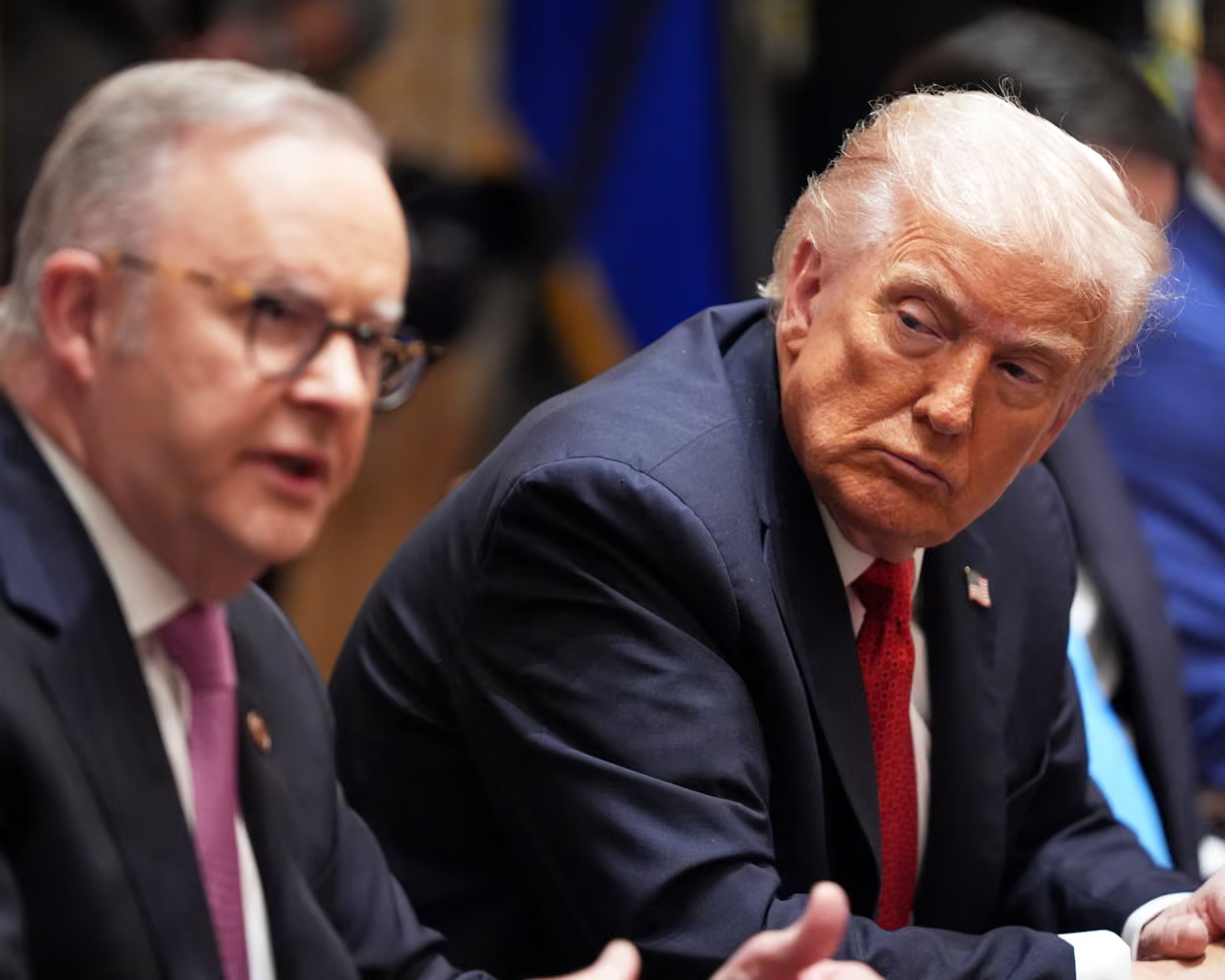

Australia’s Prime Minister Anthony Albanese has been praised for exercising restraint in dealing with the US-Iran crisis, even as former US President Donald Trump has been publicly criticizing America’s allies.
Commentators argue that Australia’s approach reflects a careful understanding of regional realities and global diplomacy.
The Strait of Hormuz Challenge
Iran’s Control of Strategic Waters
Analysts note that the Australian government has limited options regarding Iranian control of the Strait of Hormuz, a critical maritime passage for global energy supplies.
- Direct confrontation is risky
- Diplomatic channels offer a safer, more sustainable path
- Coordination with allies must balance national interest and regional stability
Australia’s Calculated Response
By avoiding public condemnation or unilateral actions, Australia positions itself to:
- Protect its trade and security interests
- Maintain regional stability
- Preserve diplomatic credibility
Criticism of US Strategy
Trump’s Public Railing
Former President Donald Trump has been criticized for publicly attacking US allies while addressing international crises.
- Analysts describe his approach as counterproductive
- It can complicate coalition-building
- Risks escalating regional tensions unnecessarily
Australia’s Distinct Path
Prime Minister Albanese’s cautious approach contrasts sharply with public confrontations, emphasizing:
- Strategic diplomacy
- Engagement with international partners through measured channels
- Focus on long-term regional stability over short-term rhetoric
Importance of Measured Diplomacy
Avoiding Global Catastrophe
Observers argue that Albania’s strategy helps Australia avoid entanglement in potentially catastrophic conflicts stemming from escalations between the US and Iran.
- Protects Australia’s international standing
- Ensures consistent engagement with allies without public disputes
- Promotes pragmatic solutions to complex security issues
Leveraging Diplomatic Influence
Australia continues to advise and collaborate with allies behind the scenes, using diplomacy to:
- Encourage restraint and negotiation
- Balance interests in a volatile region
- Safeguard international trade and energy routes
Final Thoughts
The contrast between the US’s public confrontation and Australia’s measured diplomacy highlights the importance of restraint in international relations. Prime Minister Anthony Albanese is widely seen as taking the right approach—engaging carefully while avoiding actions that could worsen an already tense situation.
In a world of complex geopolitical pressures, Australia’s focus on strategic diplomacy may prove essential in maintaining stability and protecting its national interests.

