
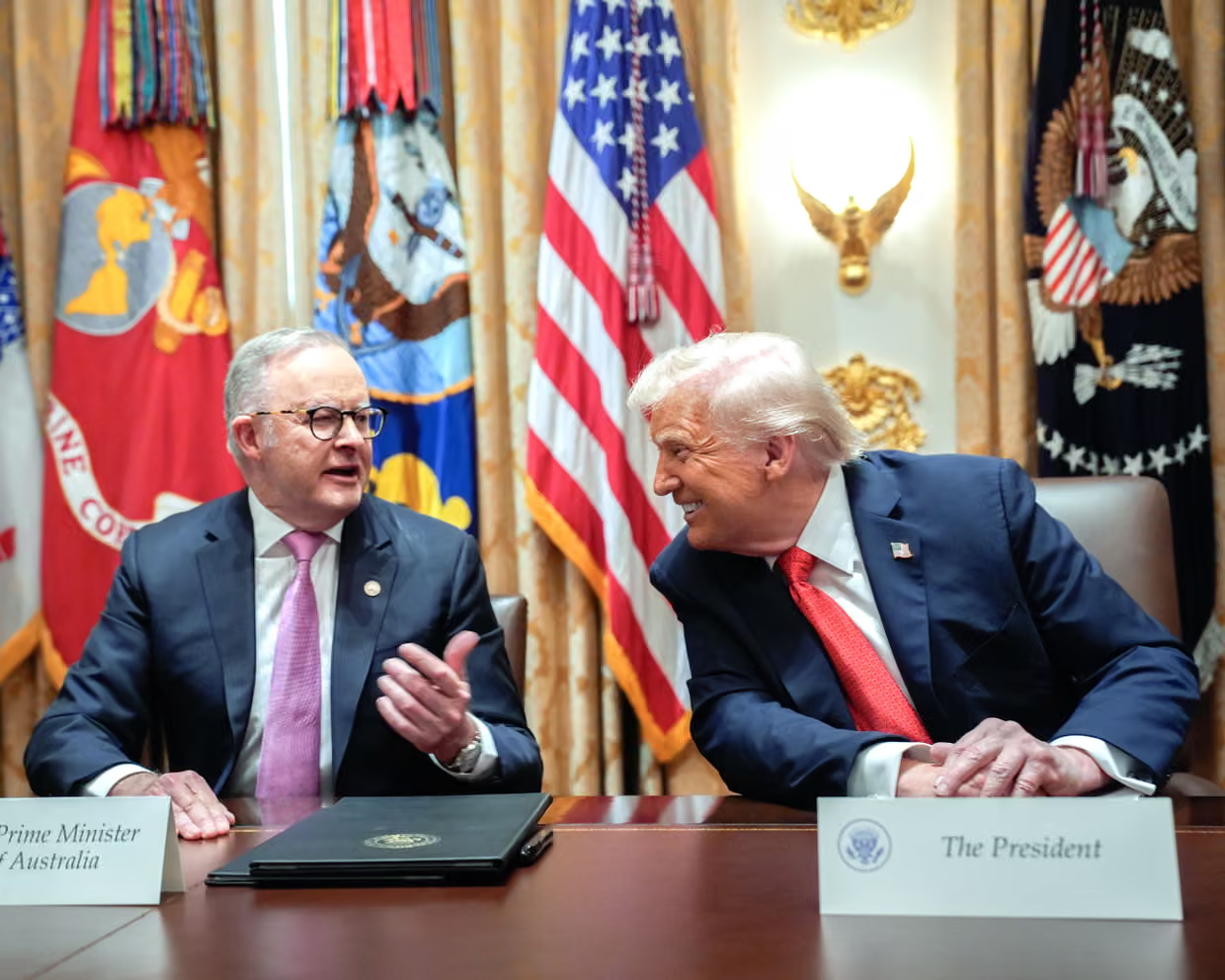

Australian Prime Minister Anthony Albanese has downplayed criticism from US President Donald Trump, who recently took aim at Australia, the UK, NATO, and much of the world for not providing more support in the US-Israel war against Iran.
Albanese emphasized that he had not received any direct request from Trump for Australian assistance and noted that the government had no prior notice of the US-Israel military strikes on Iran.
Trump Criticizes World Leaders
At a White House press conference, Trump was asked about his calls with UK Prime Minister Keir Starmer.
- Trump described Starmer as a “lovely man”
- But he claimed Starmer “did something that was shocking: he didn’t want to help us”
- He extended similar criticism to Australia and NATO allies, suggesting a lack of support in the conflict
Australia’s Response
No Request Received
Albanese’s office confirmed:
- Australia had not received any formal request for support
- There was no prior information about US-Israel strikes on Iran
Staying Cautious
The prime minister’s approach highlights Australia’s cautious stance, balancing international alliances with domestic and regional priorities.
Implications for International Relations
- The comments underline tensions between the US and some of its traditional allies
- Critics argue that public rebukes like Trump’s could complicate diplomacy
- Australia’s measured response signals a focus on careful engagement rather than reactionary involvement
Key Takeaways
- Trump criticized Australia, the UK, and NATO for not supporting US-Israel military action.
- Albanese stated no direct requests were received, and Australia had no prior notice of strikes.
- Relations remain intact, but the episode highlights differences in approach between Washington and its allies.
- Public criticism of allies may influence how nations navigate ongoing conflicts in the Middle East.
Final Thoughts
While Trump has taken public swipes at Australia, Prime Minister Albanese maintains a steady, cautious approach, stressing that decisions on involvement are based on formal requests and strategic priorities—not political pressure.

