
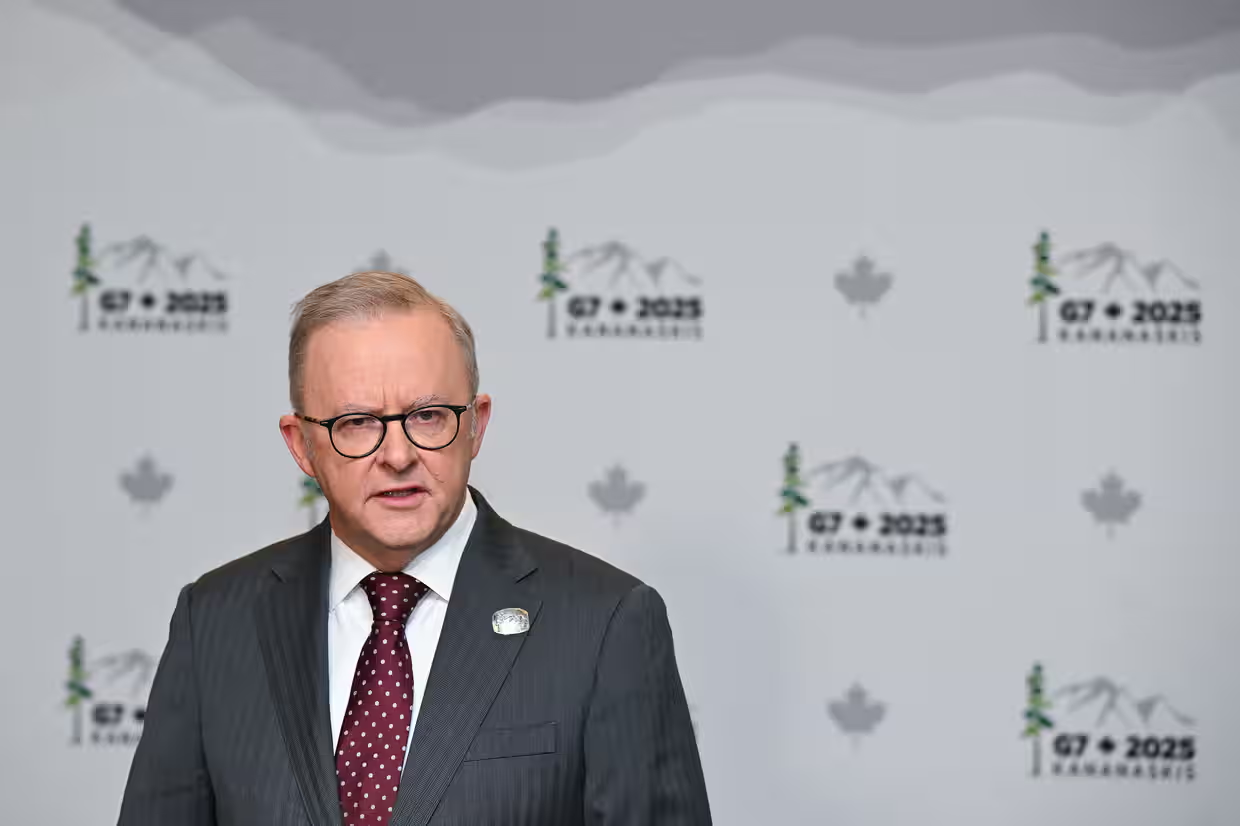
A “Boring” Trump Meeting: Albanese’s G7 Holy Grail Before a Crucial White House Visit

Strategic Simplicity at the G7 Summit
At the 2025 G7 Summit in Alberta, Canadian Rockies, Australian Prime Minister Anthony Albanese aimed to accomplish something deceptively simple: a low-drama, low-profile meeting with U.S. President Donald Trump.
It wasn’t about headline-grabbing announcements or fiery soundbites. Albanese’s goal was much more subtle — to avoid controversy, reinforce strategic ties, and quietly pave the way for a formal White House visit later this year. In an era of unpredictable international diplomacy, especially with Trump’s return to the global stage, such a subdued encounter may be just the diplomatic holy grail Albanese needs.
Why a “Boring” Meeting Is a Diplomatic Win
Avoiding Public Clashes
Trump’s track record at international summits is anything but dull — surprise withdrawals, trade war threats, and personal jabs at fellow leaders have become trademarks. In contrast, Albanese’s mission was to minimize spectacle. Rather than risk a public dispute over climate policy, defence spending, or trade disagreements, he kept engagement with Trump behind closed doors and tightly managed.
A calm, professional meeting allowed both leaders to focus on substance over style — an unusual but valuable outcome with a president known for theatrics.
Locking in Strategic Priorities
At the top of the Australian agenda was ensuring ongoing U.S. support for AUKUS — the trilateral defence pact between Australia, the U.S., and the U.K. Albanese needed to reassure Trump that Australia is a reliable partner on defence cooperation, Indo-Pacific security, and industrial expansion.
Without public confrontation, the prime minister was able to privately reinforce Australia’s commitment to expanding its defence capabilities while navigating pressure from Trump to boost defence spending significantly.
Setting the Stage for Economic Discussions
Trade tensions between the two allies have surfaced before, particularly regarding tariffs on Australian exports like beef, wine, and aluminium. Rather than challenge Trump publicly, Albanese’s backroom diplomacy created space for future negotiations on exemptions, updated trade mechanisms, and potentially enhanced cooperation on critical minerals.
A calm conversation offers a foundation to pursue trade policy improvements during a future White House visit, where Trump may be more willing to reward personal rapport and loyalty.
How Albanese Managed the Summit Environment
Choosing Quiet Diplomacy Over the Spotlight
While other G7 leaders leaned into high-visibility debates on Ukraine, Gaza, and economic sanctions, Albanese chose a different path. He engaged actively in multilateral sessions but avoided public comments that could provoke Trump or spotlight divisions.
This approach protected Australia from becoming a target while allowing Albanese to build consensus on important issues with other leaders, such as Canadian PM Mark Carney and UK’s Keir Starmer.
Private, Purposeful Talks
The sideline meeting with Trump — though short and unsensational — served its purpose. Albanese focused on three key points: continued U.S. support for AUKUS, clarity on Australia’s defence commitments, and laying the groundwork for revisiting trade barriers.
The meeting ended without controversy or miscommunication — a rarity and a strategic victory, especially with an American president whose unpredictability often derails summit diplomacy.
Why This Matters for the Upcoming White House Visit
Rebuilding Trust and Access
Australia has had a rocky relationship with Trump in the past, including previous diplomatic snubs and tariff battles. A smooth G7 interaction offers a much-needed reset — not a grand reconciliation, but enough goodwill to reopen direct lines of communication between Canberra and Washington.
A successful White House visit later this year could unlock tangible progress on key issues like submarine construction, energy security, and trade.
Advancing the AUKUS Timeline
With Trump now re-engaged on international security issues, Albanese’s efforts to keep AUKUS on track are critical. Australia’s defence investments and nuclear submarine plans require deep cooperation and clear commitments from Washington.
By sidestepping confrontation and re-establishing working dialogue, Albanese positioned himself — and Australia — as pragmatic, consistent partners amid a shifting geopolitical environment.
Creating Space for Economic Progress
Beyond defence, trade tensions remain a major issue. Australian exporters continue to face challenges in the U.S. market. Trump’s tariff-first approach still looms large, but a smooth diplomatic channel offers hope for future deals, especially around beef traceability and rare earth mineral supply chains.
The upcoming visit could focus on trade carve-outs and investment partnerships — especially if presented as “win-win” propositions that align with Trump’s “America First” narrative.
Risks Still Remain
Trump’s Volatility
While the G7 meeting was low-key, there’s no guarantee the White House visit will follow the same script. Trump is known for last-minute decisions, shifting allegiances, and demanding political loyalty in return for deals. Albanese must be prepared for sudden pivots and unexpected demands.
Political Pressure at Home
Albanese will face pressure in Australia to ensure any future commitments — especially regarding increased defence spending or trade concessions — deliver measurable outcomes. Domestic critics may question whether quiet diplomacy leads to real results or simply delays difficult conversations.
Global Events Could Disrupt Momentum
With the Middle East conflict escalating and tensions in the Taiwan Strait rising, global distractions could delay or derail Albanese’s visit. He’ll need to act quickly to lock in dates and finalize a mutually beneficial agenda before global crises push the opportunity aside.
A Blueprint for Modern Diplomacy
In an age where political theatre often overshadows substance, Anthony Albanese’s G7 strategy shows the value of quiet diplomacy. A boring meeting — meticulously planned and intentionally uneventful — might be exactly what Australia needed to protect its interests and build the foundation for a stronger relationship with the United States.
The upcoming White House visit will test this approach further. If Albanese can turn this understated G7 performance into real progress on trade, defence, and strategic alignment, he will have pulled off a rare diplomatic achievement: winning in Washington by keeping things calm.

