
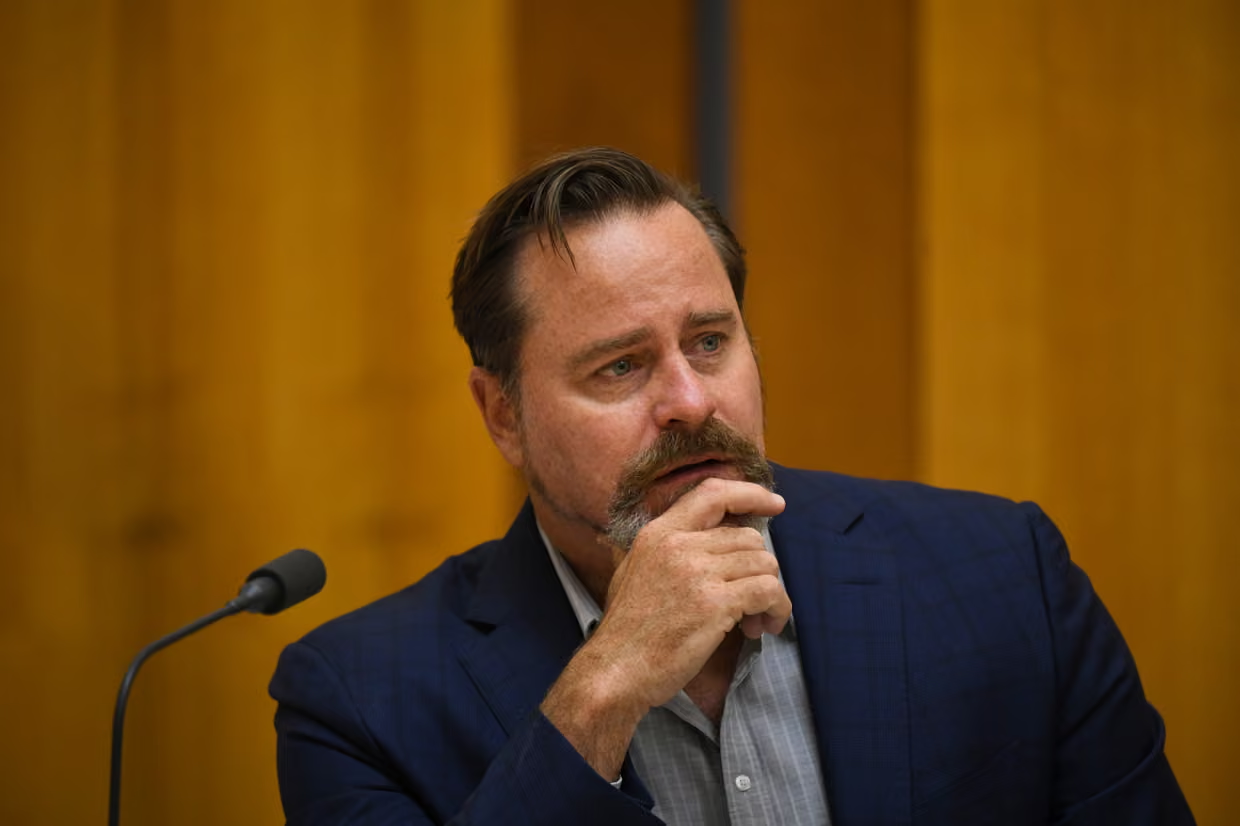

A major inquiry in Australia has found that climate misinformation and disinformation are fueling conflict within communities and slowing progress on renewable energy projects.
The cross-party Senate inquiry warns that false and misleading information about climate change is undermining public understanding and creating divisions across the country.
What the Inquiry Found
The report describes Australia’s climate and energy information space as a “denial machine,” highlighting how misinformation is spreading across digital platforms.
Key Findings
- Climate misinformation is confusing the public
- It is contributing to community tensions
- It is slowing down renewable energy projects
- It is weakening policy responses to climate change
The findings suggest that information itself has become a key battleground in the climate debate.
Call for Tech Accountability
The inquiry also recommends stronger regulation of technology companies.
Proposed Measures
- Make tech platforms more accountable for harmful content
- Address “psychosocial harms” caused by misinformation
- Improve oversight of online information ecosystems
The goal is to reduce the spread of false narratives that impact public opinion and decision-making.
Strengthening Education and Awareness
The report emphasizes the role of education in combating misinformation.
Recommendations for Schools
- Improve media literacy in the national curriculum
- Teach students how to identify misinformation
- Increase oversight of corporate involvement in education
By improving critical thinking skills, the inquiry hopes to build a more informed population.
Funding for Research and Monitoring
Another key recommendation is increased funding for research into misinformation.
Suggested Actions
- Support independent studies on disinformation
- Develop systems to track hidden digital influence
- Create funding models for monitoring online content
This would help authorities better understand how misinformation spreads and how to counter it.
Impact on Climate Policy
The report highlights how misinformation is affecting real-world climate action.
Key Impacts
- Delays in renewable energy projects
- Public resistance to climate policies
- Increased political and social division
These challenges could slow Australia’s transition to cleaner energy.
A Growing Global Issue
The findings in Australia reflect a broader global trend where misinformation is influencing major policy debates.
Countries around the world are grappling with:
- Online disinformation campaigns
- Social media influence
- Public trust in science and policy
Climate change, in particular, has become a highly contested topic.
Why This Matters
The inquiry underscores that misinformation is not just an online issue—it has real-world consequences.
Key Concerns
- Impacts on public opinion
- Delays in environmental action
- Increased social division
- Challenges for policymakers
Addressing misinformation is now seen as essential to effective climate action.
The Senate inquiry warns that climate misinformation is contributing to division and slowing progress in Australia’s transition to renewable energy.
By calling for stronger tech accountability, improved education, and increased research funding, the report aims to tackle what it describes as a growing “denial machine.”
As climate policy continues to evolve, the fight over information may prove just as important as the policies themselves.

