
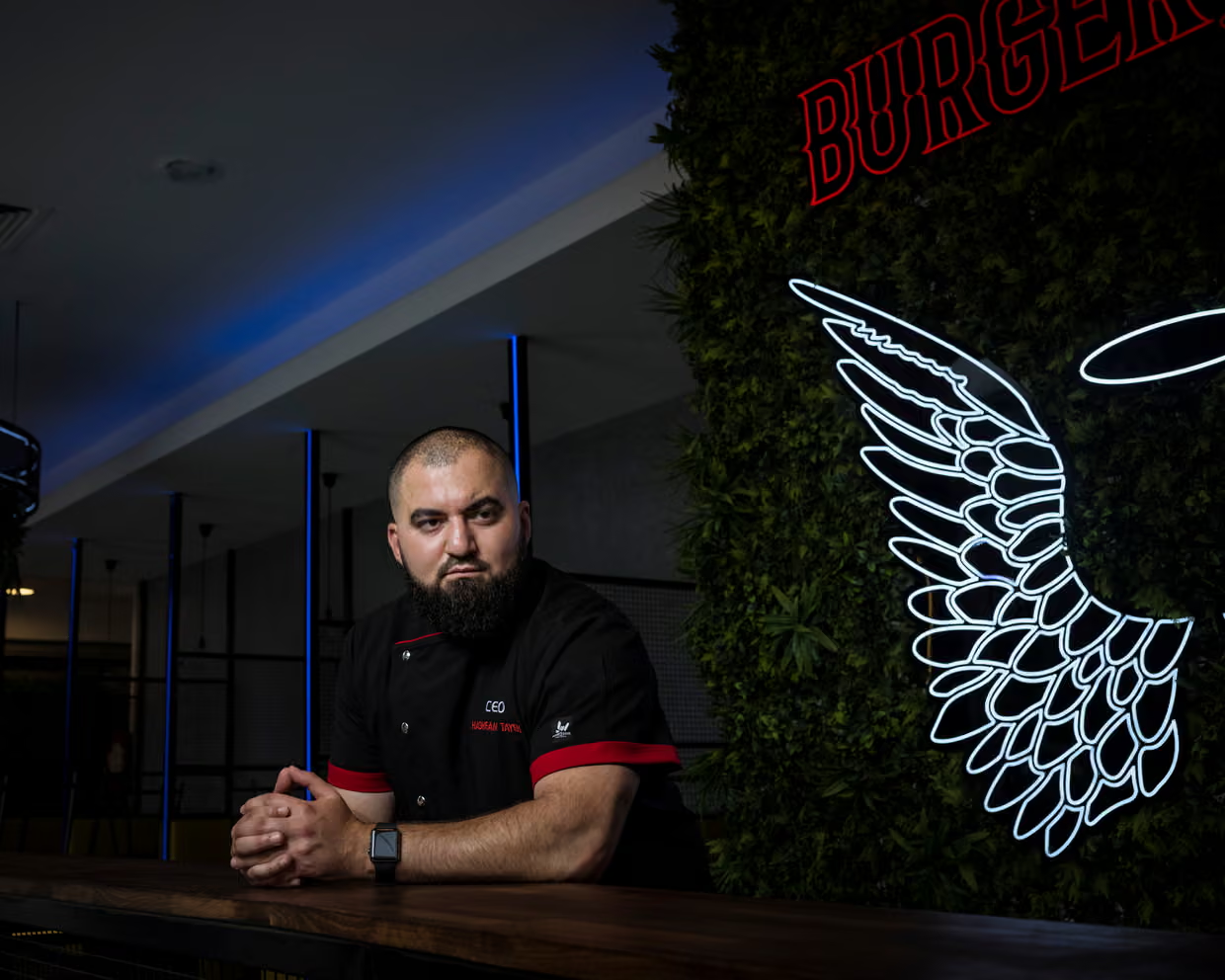

A Victorian tribunal has found that the founder of Burgertory incited hatred against Jewish people with a chant used at a pro-Palestine rally in Melbourne last year.
Hash Tayeh has flagged an appeal against the decision, challenging the findings of the Victorian Civil and Administrative Tribunal (VCAT).
What Happened at the Rally
The controversy centers on a chant delivered by Tayeh during a public demonstration in Melbourne.
The tribunal found that the phrase:
- Went beyond political expression
- Targeted Jews collectively rather than individuals
- Was capable of inciting hatred or hostility
The ruling emphasizes the distinction between free speech and speech that crosses into unlawful incitement.
Tribunal Findings
VCAT’s decision stated that the chant constituted vilification under Victorian law, noting that:
- It could reasonably create a hostile environment for Jewish people
- It contributed to community division and fear
- Political context does not excuse incitement to hatred
The ruling forms part of Victoria’s legal framework prohibiting hate speech and vilification based on religion, race, or ethnicity.
Hash Tayeh’s Response
Tayeh has indicated he will appeal the tribunal’s decision.
In public statements, he suggested that the chant was intended as a political message in support of Palestinian rights, rather than as an attack on Jewish individuals.
The appeal will focus on:
- Legal interpretation of incitement vs. political expression
- Context of the rally and intended audience
- Limits of vilification law in public demonstrations
Legal and Social Implications
The ruling has drawn attention to the fine line between political protest and unlawful vilification.
Victorian anti-vilification laws are designed to:
- Protect minority communities from public hatred
- Ensure accountability for speech that spreads hostility
- Balance free expression with public safety and cohesion
Legal experts say the appeal could clarify how these laws apply to political rallies and public demonstrations in Australia.
Broader Context
This case follows a pattern of increased scrutiny of public demonstrations and social media speech in Australia, particularly when protests intersect with religious, ethnic, or cultural communities.
The decision may set a precedent for future cases involving:
- Political activism and advocacy
- Religious or ethnic vilification
- Free speech in public forums
What Happens Next
The appeal will be heard in a higher court or tribunal, where Tayeh will argue against VCAT’s ruling.
If the appeal fails, the decision may require:
- Public acknowledgment of wrongdoing
- Removal or retraction of the statement
- Possible penalties under anti-vilification law
The case remains closely watched by legal observers, advocacy groups, and the Melbourne community.
Final Take
VCAT’s ruling underscores the responsibility of public figures and business owners to avoid speech that could incite hatred or vilification, even in the context of political protests.
Hash Tayeh’s appeal will test the boundaries between legitimate political expression and unlawful hate speech, with implications for free speech and community relations across Victoria.

