
Australia’s Proposed Antisemitism Plan: What It Means and Why Some Are Concerned

Australia is stepping up efforts to tackle antisemitism with a new government-backed plan that aims to root out hatred and discrimination against Jewish communities. While many welcome the initiative as a crucial move toward inclusivity and safety, certain elements of the plan—particularly those linked to funding for universities and arts—are raising alarms among legal experts, free speech advocates, and civil rights groups.
This article breaks down Australia’s proposed antisemitism strategy, the government’s intentions, and the controversy around potential impacts on freedom of expression.
What Is Australia’s Antisemitism Plan?
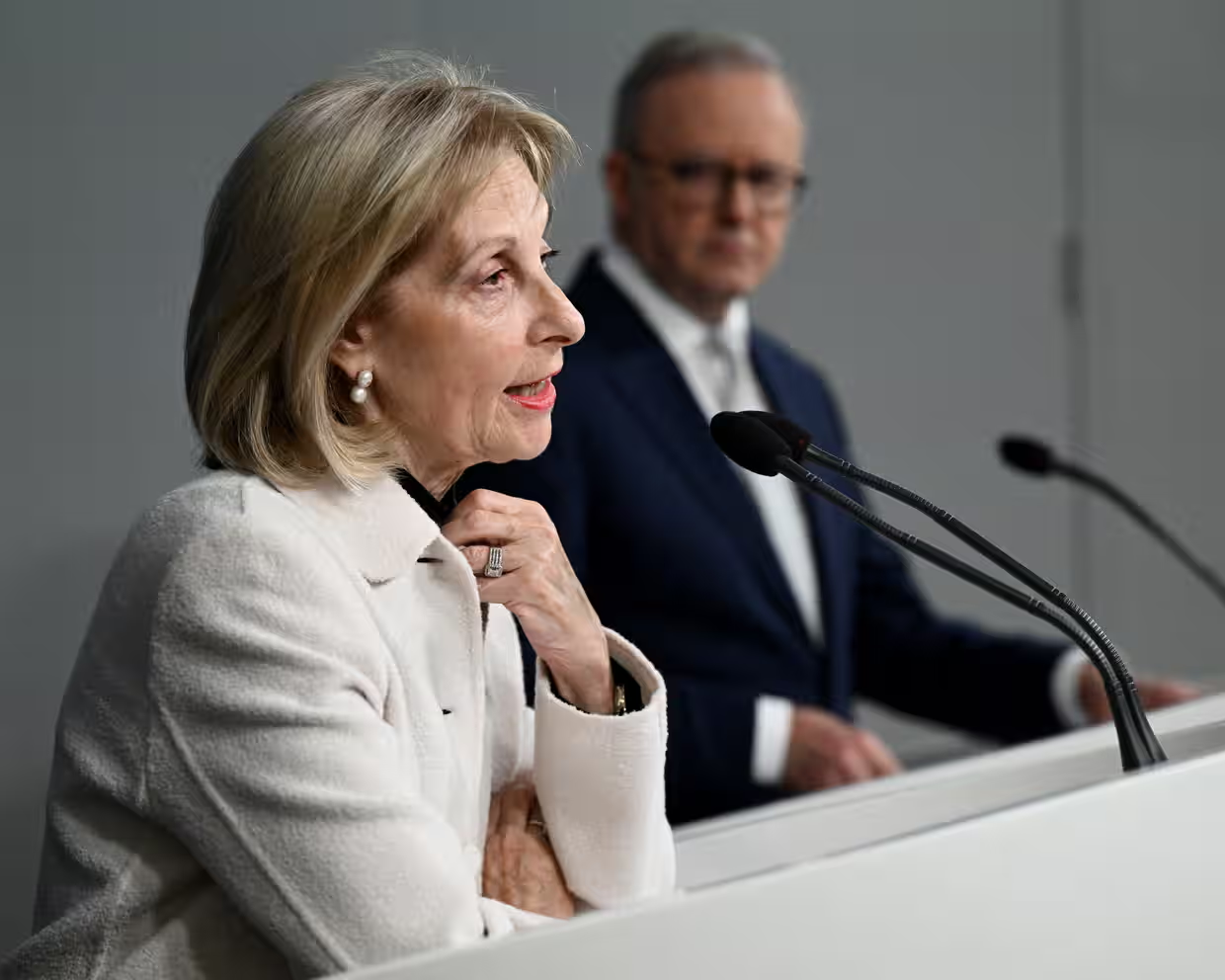
The Australian government, under Prime Minister Anthony Albanese, has announced an ambitious plan to combat antisemitism in all its forms. The plan is framed around the goal of fostering an environment where Jewish Australians can live, learn, and work free from hate or fear.
Key Features of the Plan
- Appointment of an Antisemitism Envoy: The government will work closely with an antisemitism envoy who will monitor incidents, advise on policy, and coordinate community outreach.
- Educational Programs: Increased funding and support for educational initiatives aimed at raising awareness about antisemitism, its history, and contemporary forms.
- Legal and Security Measures: Strengthened efforts to address antisemitic hate crimes and online hate speech through law enforcement and digital platforms.
- University and Arts Funding Tied to Antisemitism Policies: A notable—and contentious—aspect involves linking government funding for universities and arts organisations to their adherence to policies that combat antisemitism and hate speech.
Why Is the Government Taking This Step Now?
Antisemitism, both subtle and overt, remains a significant issue in Australia, mirroring global trends. Reports indicate an increase in antisemitic incidents in recent years, ranging from verbal abuse and vandalism to threats of violence.
Prime Minister Albanese and his administration have emphasised their commitment to protecting minority communities and promoting social cohesion. They argue that decisive action is necessary to prevent hate crimes and ensure public spaces, including campuses and cultural institutions, are safe and welcoming.
The Role of the Antisemitism Envoy
The envoy will serve as a bridge between the Jewish community, government agencies, and civil society. This role includes:
- Monitoring antisemitic incidents across Australia
- Advising government on policy improvements
- Engaging with educational institutions to promote understanding
- Working with law enforcement to improve responses to hate crimes
The government has pledged to “work constructively” with the envoy to ensure the plan is effectively implemented.
The Controversial Link to University and Arts Funding
One of the plan’s most debated points is the potential conditioning of funding for universities and arts organisations on their commitment to fight antisemitism.
What Does This Mean?
Government grants or financial support could be withheld if institutions are perceived to tolerate antisemitic behaviour or fail to implement robust policies against hate speech.
Why Is This Causing Concern?
- Freedom of Speech Fears: Critics argue that this could undermine academic freedom and artistic expression. They worry that funding threats might pressure universities and cultural bodies to censor controversial viewpoints or self-censor to avoid losing money.
- Vague Definitions: Some legal groups point to the lack of clarity about what constitutes antisemitism or hate speech in this context, raising fears that legitimate criticism—particularly of Israeli government policies—could be mislabelled as antisemitic.
- Potential for Overreach: The power to withhold funding could be used arbitrarily or politically, impacting diverse voices and stifling healthy debate.
Voices from Legal Experts and Free Speech Advocates
Legal organisations and civil rights groups have publicly expressed their reservations about parts of the plan:
- Legal Ambiguity: They caution that without precise legal definitions, the plan risks conflating protected speech with hate speech.
- Chilling Effect: The threat of funding cuts may lead to excessive caution or suppression of legitimate political, academic, or artistic discussions.
- Need for Balance: Advocates stress the importance of protecting Jewish communities while also upholding democratic freedoms.
Government Response to Criticism
The Albanese government maintains that the antisemitism plan is carefully designed to protect minority rights without infringing on free speech. Officials have said:
- The funding conditions will be applied fairly and transparently.
- There will be clear guidelines to distinguish hate speech from legitimate expression.
- Engagement with stakeholders, including universities and arts groups, will continue to refine the plan.
- The primary focus remains on eliminating antisemitism and ensuring safe, inclusive spaces for all Australians.
Why Tackling Antisemitism Matters
Antisemitism is not just a problem for Jewish Australians—it is a societal threat that undermines values of equality, respect, and multicultural harmony. Acts of hatred and discrimination can escalate into violence, threaten social stability, and erode trust within communities.
Addressing antisemitism helps to:
- Protect vulnerable communities
- Promote social cohesion
- Uphold Australia’s commitment to human rights
- Foster an environment where diversity thrives
The Challenge of Defining and Policing Hate Speech
One of the core challenges in antisemitism policies worldwide is balancing protection from hate with freedom of speech. Hate speech laws vary globally, but many countries wrestle with questions like:
- When does criticism cross the line into hate?
- How to prevent misuse of hate speech laws to silence dissent?
- How to educate without censoring?
Australia’s approach will need to navigate these complexities carefully to avoid unintended consequences.
What’s Next for Australia’s Antisemitism Plan?
The government is expected to:
- Consult further with Jewish communities, legal experts, universities, and artists
- Develop clear guidelines and definitions on antisemitism and hate speech
- Launch educational campaigns to build awareness
- Monitor and review the impact of funding conditions on free expression
Final Thoughts: A Delicate Balance
Australia’s antisemitism plan is a crucial step toward confronting and reducing hatred against Jewish Australians. However, it also raises fundamental questions about how to balance protection from discrimination with preserving democratic freedoms.
As this plan unfolds, the debate will likely continue—highlighting the ongoing challenge of ensuring safety and respect for all, while safeguarding the right to free speech and open dialogue.